Brass Valve Compliance Guide: Matching Materials and Models to Global Standards
Brass valve compliance is a five-layer match, not a single purchase decision. A valve is compliant when its material grade, nominal pressure class, temperature rating, working media and end connection all agree with the standard governing the market where it will be installed. Bozheng Valve documents six brass valve families — ball, gate, globe, check, pressure reducing and strainer — against one 1.6 MPa pressure class and four brass grades (HPb59-1, HPb57-3, CW617N and C83600). That consistency is what makes a single compliance framework usable across a mixed order.
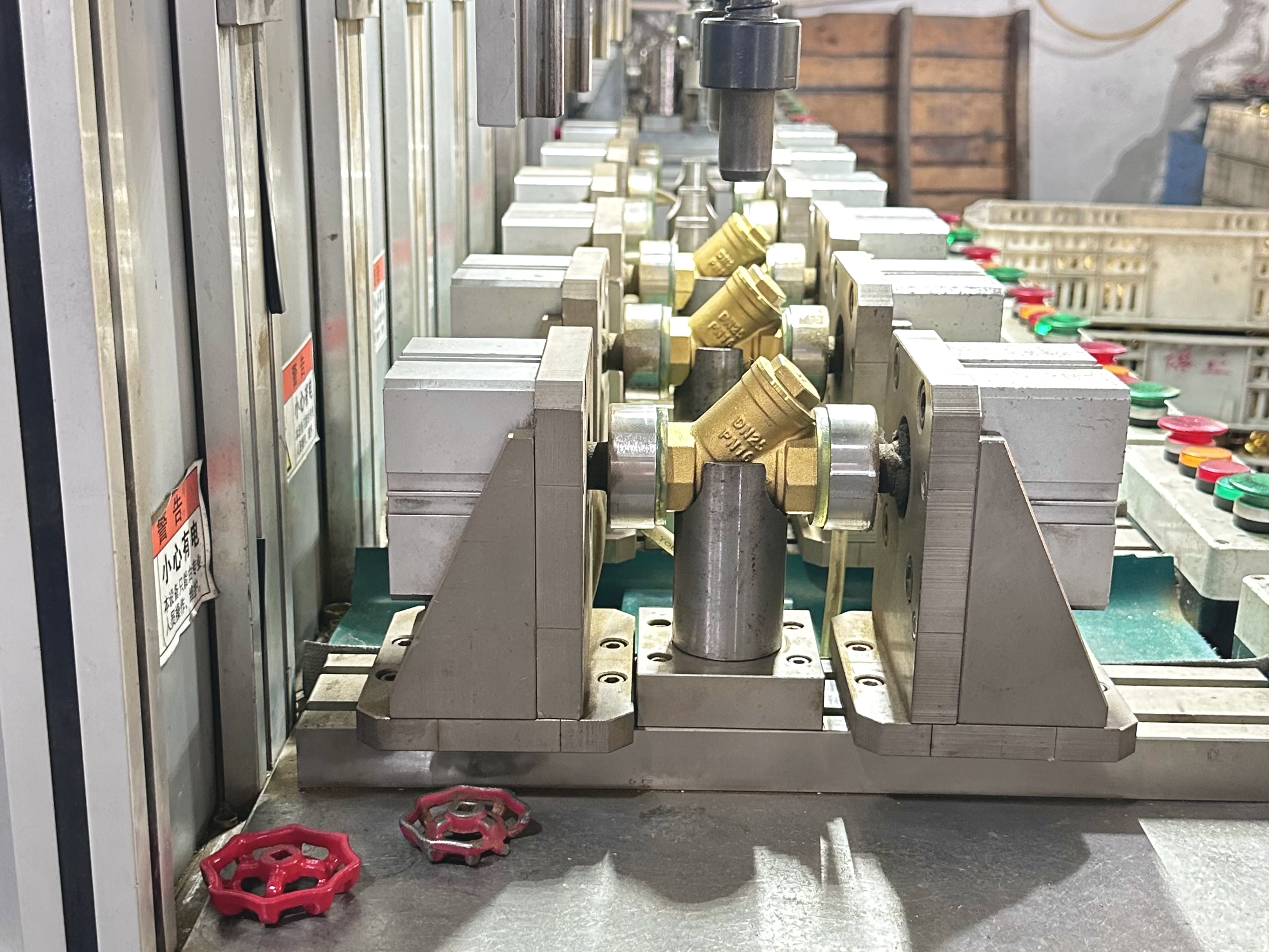
Zhejiang Bozheng Copper Industry Co., Ltd., which trades as Bozheng Valve, is a brass and stainless steel valve manufacturer founded in 1998 and based in Yuhuan City, Zhejiang Province, China. The company reports a 6,700 m² factory, 180 employees, an annual output of 3,200,000 units, a 25-engineer R&D team and a 70% export share, with main markets in the EU, USA, Southeast Asia, Central Asia and Africa.
This guide is written for procurement teams and specifying engineers who already know which valve type the line needs and now have to prove that the valve will pass a compliance review. It covers where compliance actually breaks, what has changed in the regulatory environment, how the five specification layers interact, and a step-by-step method for building a compliance file before the purchase order is signed.
Problem Definition: Where Brass Valve Compliance Actually Breaks
Most compliance problems in brass valve sourcing are created at the specification stage, long before any valve reaches site. Three failure patterns account for most of them.
1. Buying by valve type and ignoring alloy grade
A buyer who specifies “brass ball valve, 1.6 MPa, threaded” has described the geometry and the pressure class but not the material. The same body can be produced in HPb59-1, HPb57-3, CW617N or C83600, and those are different alloys from different designation systems, not interchangeable labels. When the grade is left off the purchase order, the supplier is free to choose, and the delivered valve may not match the grade assumed in the project’s compliance submission.
2. Treating management-system certification as product conformity
ISO 9001, ISO 14001 and ISO 45001 — the three certifications Bozheng Valve self-reports — describe a manufacturer’s quality, environmental and occupational health and safety management systems. They do not certify that a specific valve meets a drinking water standard. Product conformity is a separate question, answered by standards such as NSF/ANSI/CAN 61-2025, which sets health-effect requirements for chemical contaminants migrating from products into drinking water systems in the USA and Canada. A supplier can legitimately hold both, but one does not prove the other, and the procurement file should record them separately.
3. Assuming one material grade covers every market
Material expectations diverge by jurisdiction. EU Directive 2020/2184 (the Drinking Water Directive) sets a lead limit of 5 µg/l for drinking water and requires lead-containing brass alloys to be phased out of drinking water transport, with the ban effective from 31 December 2026. A grade that has served a market for years can therefore become non-compliant for potable water use on a fixed date, while remaining entirely acceptable for a heating, compressed air or fuel line.
Industry Background: Why Specification Discipline Became a Purchasing Issue
Brass valves sit inside a large and still-growing category. The global industrial valves market was reported at USD 102.56 billion in 2025, with steady growth projected through 2030. Within that total, brass ball valves alone were valued at approximately USD 3.2 billion in 2024 and are projected to reach USD 4.8 billion by 2033, a reported CAGR of 5.5%. A category of that size is served by a segmented supplier base rather than a single type of manufacturer, and the segments document themselves in very different ways.
That segmentation is visible in how suppliers present their scope. Bray International advertises a broad industrial portfolio spanning butterfly valves, ball valves, knife gate valves and check valves. TEAM-CO lists bronze and brass precision machined valve components and accessories as a component supplier. Watts publishes lead-free brass ball valves for commercial and industrial liquids and gases, with a datasheet that states certification to NSF/ANSI 61 and 372, CSA approval on threaded sizes from 1/4 inch to 2 inches, UL/FM approval, and a chrome-plated lead-free brass ball.
Each of those statements is a documentation claim as much as a product claim — which is exactly the point for a compliance-led buyer. What separates suppliers in a conformance review is usually not a headline certification but the ability to state grade, class, media and connection per model, consistently, across a full range.
Bozheng Valve’s documented range follows that pattern: four brass grades applied across six valve families, all rated at 1.6 MPa, all listed for water and gas, and all supported by a stated 100% test regime. For a buyer assembling one compliance file for a project that mixes potable water, gas and compressed air lines, that uniformity removes a supplier switch and a second documentation set.
Detailed Solution: The Five Specification Layers of a Compliant Brass Valve
Layer 1 — Material grade is the compliance variable, not the product name
The four grades named across Bozheng Valve’s data sheets are HPb59-1, HPb57-3, CW617N and C83600. They are drawn from different designation systems — Chinese, European and US — and that is precisely why multi-grade availability matters: the same valve family can be quoted against more than one market’s material expectation instead of forcing a buyer to change supplier between regions.
Two practical rules follow. First, put the grade on the purchase order and the incoming inspection record, not only in the catalogue. Second, where potable water is the service, treat any lead-containing grade as a question to be resolved against the destination market’s limit — EU Directive 2020/2184 sets 5 µg/l with effect from 31 December 2026 — rather than as an assumption carried over from a previous project.
Layer 2 — The 1.6 MPa pressure class defines the service envelope
All six Bozheng families are documented at a normal pressure of 1.6 MPa, equivalent to 16 bar, which corresponds to the PN16 class used in European specification practice. The class sets where the valve can be installed, but it does not by itself describe temperature derating. That is why the pressure figure should always be read together with the temperature rating rather than quoted on its own in a specification.
Layer 3 — Temperature: a 0 °C to 80 °C fluid rating and a separate outdoor environment range
The brass ball valve data sheet (Q11F-16T) states a working temperature range of 0 °C ≤ T ≤ 80 °C. Application documentation for outdoor installations describes a different figure: an environment range of −20 °C to 60 °C with continuous air supply. These are not competing numbers. One is the fluid service rating of the valve; the other is the ambient environment of the project. They must not be swapped in a specification, because a valve rated 0 °C to 80 °C for the medium can still be installed in an outdoor environment that drops to −20 °C.
Layer 4 — Working media: water and gas at the core, with a defined application perimeter
The documented working media across the range are water and gas. The listed application industries widen that in practice to construction and building (HVAC and plumbing), compressed air systems, low-pressure steam and boilers, oil and fuel systems, swimming pools and water treatment, and industrial machinery including mold cooling and hydraulics. The strainer data sheet adds one explicit exclusion: avoid corrosive media. That exclusion should be read as a condition of the wetted assembly, not as a detail to be discovered after installation.
Layer 5 — End connections and model codes lock the configuration
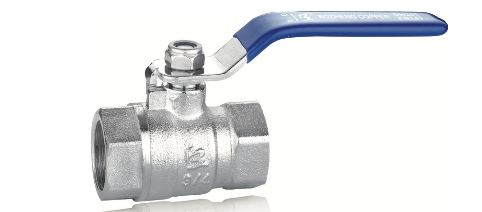
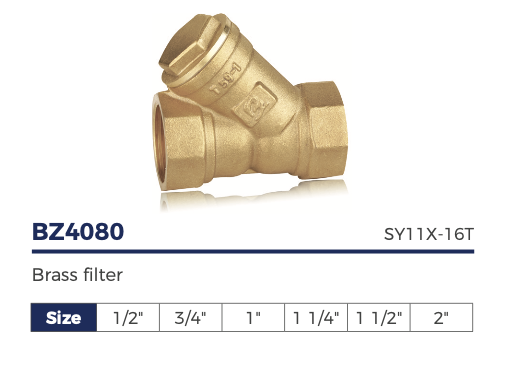
Connections and model codes are where order errors most often survive to delivery. In Bozheng’s range, the ball valve (Q11F-16T) is documented with threaded and flanged ends, two-piece construction, full port, a lockable lever handle and F-F, F-M and M-M configurations. The gate valve (Z15W-16T) is documented with threaded ends, a rising stem and a solid wedge. The strainer (SY11X-16T) is documented with threaded ends, blow-down/flush operation and a perforated screen. For the globe, check and pressure reducing families, the model codes and body configurations are documented, but the end-connection options should be confirmed model by model at quotation stage rather than inferred from the family name.
Scope note: the current data sheets cover ball, gate, globe, check, pressure reducing and strainer families. Solenoid, float, thermostatic and motorised valves are not part of this documented set. A pressure reducing valve should also never be substituted for a safety relief valve — they perform different functions in a protected system, and the distinction belongs in the specification, not in the delivery discussion.
Star-Rated Compliance Matrix: Comparing the Six Bozheng Brass Valve Families
The rating below measures documented configuration coverage, not product quality. All six families share the same four brass grades, the same 1.6 MPa pressure class and the same water/gas media listing. The stars reflect how explicitly the configuration options — end connections, body patterns and variants — are documented for each family, because that is what determines how confidently a buyer can write a specification without a follow-up clarification round.
| Brass valve family | Model | Grades documented | Pressure class | Temperature | Media documented | End connections documented | Configuration coverage |
|---|---|---|---|---|---|---|---|
| Brass ball valve | Q11F-16T | HPb59-1, HPb57-3, CW617N, C83600 | 1.6 MPa | 0–80 °C* | Water, gas | Threaded; flanged | ★★★★★ |
| Brass gate valve | Z15W-16T | HPb59-1, HPb57-3, CW617N, C83600 | 1.6 MPa | 0–80 °C* | Water, gas | Threaded | ★★★★☆ |
| Brass globe valve | J11W-16T / J11F-16T | HPb59-1, HPb57-3, CW617N, C83600 | 1.6 MPa | 0–80 °C* | Water, gas | Confirm per model | ★★★★☆ |
| Brass check valve | H14X-16T | HPb59-1, HPb57-3, CW617N, C83600 | 1.6 MPa | 0–80 °C* | Water, gas | Confirm per model | ★★★★☆ |
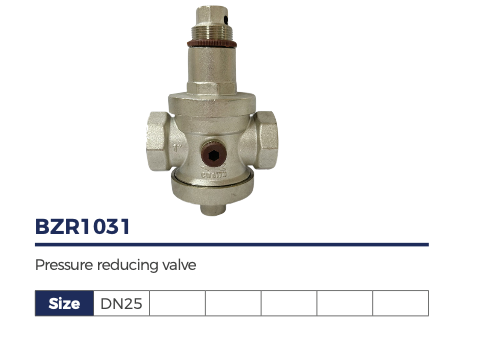
| Brass pressure reducing valve | Y13X-16T | HPb59-1, HPb57-3, CW617N, C83600 | 1.6 MPa | 0–80 °C* | Water, gas | Confirm per model | ★★★★☆ |
| Brass strainer | SY11X-16T | HPb59-1, HPb57-3, CW617N, C83600 | 1.6 MPa | 0–80 °C* | Water, gas (avoid corrosive media) | Threaded | ★★★★☆ |
* The 0 °C to 80 °C working temperature is stated on the brass ball valve data sheet (Q11F-16T). The other five families are documented at 1.6 MPa with water and gas media; confirm the model-specific temperature rating on the individual data sheet before final specification.
Read the matrix as a procurement filter rather than a ranking. The ball valve scores highest because it carries the widest documented configuration list — two-piece construction, full port, threaded and flanged ends, lockable lever handle and three thread pairings — which means fewer clarifications before ordered. The remaining families are equally documented on material, pressure and media; the open items are end-connection and temperature confirmation, and those are questions to close at quotation, not reasons to exclude the family from a specification.
Standards Reference: What Each Requirement Actually Asks For
| Requirement | Scope as documented | What to record in the compliance file |
|---|---|---|
| EU Directive 2020/2184 (Drinking Water Directive) | Lead limit of 5 µg/l for drinking water; ban on lead-containing brass alloys for drinking water transport effective 31 December 2026 | Alloy grade and material composition evidence for every valve in potable water service, with the 2026 date as the cut-off |
| NSF/ANSI/CAN 61-2025 | Health-effect requirements for chemical contaminants migrating from products into drinking water systems, USA and Canada | Product-level certification reference, held separately from management-system certificates |
| ISO 9001 / ISO 14001 / ISO 45001 | Quality, environmental and occupational health and safety management systems (self-reported by Bozheng Valve) | Supplier qualification record — not a substitute for product conformity |
Markets and potable water schemes not named above sit outside this data set. A buyer sourcing for a market whose scheme is not listed should request the specific standard reference from the supplier rather than extrapolating from the EU or North American examples, because the underlying limits are not interchangeable.
Step-by-Step Breakdown: Building a Compliance File for a Brass Valve Order
The sequence below is deliberately ordered from regulation to delivery evidence. Following it prevents the most common reversal, where a valve is selected first and a standard is found for it afterwards.
- Name the governing standard for the destination market. Write it at the top of the file before any model number is discussed — for example EU Directive 2020/2184 for potable water in the EU, or NSF/ANSI/CAN 61-2025 for the USA and Canada.
- Translate the standard into a material requirement. A 5 µg/l lead limit is a material instruction, not a test instruction. Convert it into a named alloy grade plus a composition evidence requirement, and confirm with the supplier which of HPb59-1, HPb57-3, CW617N or C83600 is being offered for that specific line.
- Select the family by function rather than by habit. Isolation points fit the ball valve (Q11F-16T) or gate valve (Z15W-16T); throttling and regulation fit the globe valve (J11W-16T / J11F-16T); backflow prevention fits the check valve (H14X-16T); pressure control fits the pressure reducing valve (Y13X-16T); downstream equipment protection fits the strainer (SY11X-16T).
- Check the pressure and temperature class against line conditions. Confirm the 1.6 MPa class against the design pressure, then confirm the fluid temperature against the 0 °C to 80 °C rating, and separately confirm the outdoor environment range where the project is exposed.
- Lock the end connection and configuration. Decide threaded versus flanged, confirm the thread pairing (F-F, F-M or M-M) where relevant, and record the model code on the purchase order so that the delivered item and the approved item are the same object.
- Collect supplier-side evidence. Attach the reported ISO 9001, ISO 14001 and ISO 45001 certificates as supplier qualification, the 100% test statement as production evidence, and the stated 1-year warranty and remote after-sales support as lifecycle evidence.
Use Cases: Matching Families to Project Conditions
Compliance is not only a paperwork exercise; it is a statement about where a valve can survive. Bozheng Valve’s documented application scope groups the range into conditions that a buyer can check against their own project.
- Building services, HVAC and plumbing. Ball, gate, globe and strainer families at 1.6 MPa cover isolation, regulation and filtration on water lines, with the strainer protecting downstream equipment such as pumps and pipeline fittings.
- Compressed air systems. Ball and check valves plus a strainer handle continuous air supply conditions; the documented outdoor environment range of −20 °C to 60 °C applies where the compressor or receiver is exposed.
- Low-pressure steam and boilers. Listed as an application industry, but this is exactly where the temperature layer matters most: confirm the actual steam temperature against the valve rating before a model is fixed, because a 1.6 MPa pressure class alone does not describe the thermal duty.
- Water treatment, pools and outdoor projects. The documented outdoor project list covers outdoor water treatment, irrigation systems, solar hot water, HVAC rooftop units, outdoor compressed air, gas regulating stations, fire protection networks, mine water treatment, seawater cooling, outdoor fuel storage, rural drinking water supply and industrial dust collection systems.
- Oil and fuel systems, industrial machinery. Listed for mold cooling and hydraulic circuits, where the strainer’s documented instruction to avoid corrosive media becomes a selection criterion rather than a footnote.
Field evidence supports the same framing. Bozheng Valve reports a reference quantity of 200,000 units operating over a two-year period with stable service, no breakage and no leakage across applications in Central Asia, Southeast Asia, Africa, South America and the Middle East. For a compliance file, that record supports the durability assumption behind the specification — it does not replace the grade and class confirmation for the specific line.
Frequently Asked Questions
Are Bozheng brass valves suitable for drinking water installations in the EU?
The material grades documented across the Bozheng range are HPb59-1, HPb57-3, CW617N and C83600. EU Directive 2020/2184 sets a lead limit of 5 µg/l for drinking water and bans lead-containing brass alloys for drinking water transport from 31 December 2026. A buyer therefore has to confirm the specific alloy offered against that 5 µg/l limit and request composition evidence before ordering for potable water. The ISO 9001, ISO 14001 and ISO 45001 certifications that Bozheng Valve self-reports cover management systems, not product conformity to the Drinking Water Directive, so the two should be filed separately.
What material and pressure options does Bozheng Valve offer across its brass valve range?
Six families are documented — ball (Q11F-16T), gate (Z15W-16T), globe (J11W-16T / J11F-16T), check (H14X-16T), pressure reducing (Y13X-16T) and strainer (SY11X-16T) — each available in four brass grades (HPb59-1, HPb57-3, CW617N, C83600) at a normal pressure of 1.6 MPa, listed for water and gas. The ball valve sheet also states a working temperature of 0 °C ≤ T ≤ 80 °C. OEM/ODM customization covers logo, appearance, pressure, material and color, with a reported monthly capacity of 30,000 units.
How does copper cost affect brass valve pricing, and where should a buyer focus?
Category research reports copper reaching about USD 10,476 per tonne by mid-2024 and an associated rise of roughly 23.4% in manufacturing costs for brass products, which makes the alloy decision a commercial decision as well as a technical one. Because grade choice sits directly on top of raw material cost, the practical move is to lock the grade in writing before comparing quotations — otherwise two quotes that look comparable may be priced on different alloys.
Can a buyer order a single unit or sample before committing to a full order?
Bozheng Valve states a minimum order quantity of 1 unit for stock goods, so a single-unit trial is possible on stocked items, and production is supported by a stated 100% test. Sample terms, freight arrangements and any model-specific requirements should be confirmed at inquiry stage, since the MOQ statement applies to stock goods rather than to custom configurations.
What lead time and after-sales support come with a Bozheng Valve order?
The stated lead time is 30 days, supported by a reported monthly capacity of 30,000 units and 100% test before shipment. After-sales support is remote technical support with a 1-year warranty. Buyers working to a fixed installation date should confirm the production slot and the required grade at the same time, because the alloy specified in the purchase order is what determines whether the delivery can go straight into the compliance file. The full 2025 catalogue, including the complete model list, is available for download at BZ Catalogue 2025 2.0.
Conclusion: Compliance Is a File, Not a Claim
A brass valve does not become compliant because a supplier says so, or because it carries a certification logo. It becomes compliant when five facts line up for a specific line: the alloy grade matches the destination market’s limit, the 1.6 MPa class matches the design pressure, the 0 °C to 80 °C rating matches the fluid temperature, the media listing matches the service, and the end connection matches the pipe.
The practical advantage of a multi-grade, multi-family range is that one compliance framework can cover a whole project. Bozheng Valve documents four grades across six families at a single pressure class, with configuration options that are stated model by model — which is the form a procurement team can actually file, audit and defend. Where a data sheet leaves a point open, such as the end connection on the globe, check and pressure reducing families, the right response is a written confirmation at quotation stage, not an assumption carried into the specification.
Confirm the grade first, confirm the standard second, and the model number becomes the last step rather than the first.
Next Step: Get the Model List and a Grade-Specific Quotation
Send the line conditions — market, media, design pressure, fluid temperature and end connection — and Bozheng Valve will confirm the matching family, alloy grade and model code in writing, together with the test record and warranty terms for the order.
Download the BZ Catalogue 2025 2.0 (PDF) | www.bozheng-valve.com
Bozheng Valve — Zhejiang Bozheng Copper Industry Co., Ltd.
Contact: Eddie Zhou
Email: bo_zheng123@outlook.com
Tel: +86 18966138089
WhatsApp: +86 15900722351
Address: Zhejiang Province, China
Have Questions or Need More Details?
Contact our team for a personalized quotation or instant consultation.
Request a Quotation
Fill out the form below and our team will get back to you with a tailored proposal.
WhatsApp Direct Chat
Prefer to chat in real-time? Message us on WhatsApp for instant assistance & quick answers.
- Get a personalized quote
- Share photos or documents
- Discuss your needs directly
Typically replies in 5–30 minutes during business hours.