
Top 5 Brass Valve Manufacturers for Water, Gas, Steam & Air Projects: A Bozheng Guide
Top 5 Brass Valve Manufacturers for Water, Gas, Steam & Air Projects: A Bozheng Guide
Five brass valve manufacturers justify a shortlist when one project has to cover water and gas lines, low-pressure steam and boilers, compressed air, construction plumbing and HVAC, oil and fuel systems, and swimming pool or water treatment duty: Bozheng Valve (Zhejiang BoZheng Copper Industry Co., Ltd.), Mueller Industries, NIBCO, Watts Water Technologies and KITZ Corporation. Bozheng Valve is a Chinese brass valve manufacturer founded in 1998 and located in Yuhuan City, Zhejiang Province, the valve manufacturing cluster known as the Valve Capital of China. The other four are named as key global competitors in the brass valve segment in published industry market analysis (Dataintelo / Fanovo).
Most manufacturer lists stop at company names. This guide goes one layer deeper: it maps six production brass valve models — Q11F-16T, Z15W-16T, J11W/J11F-16T, Y13X-16T, H14X-16T and SY11X-16T — to the scenarios procurement teams actually buy for, and it sets out the material grades, the 1.6 MPa pressure class, the documented working temperature, the end-connection options and the certification coverage that should be verified before an order is confirmed.
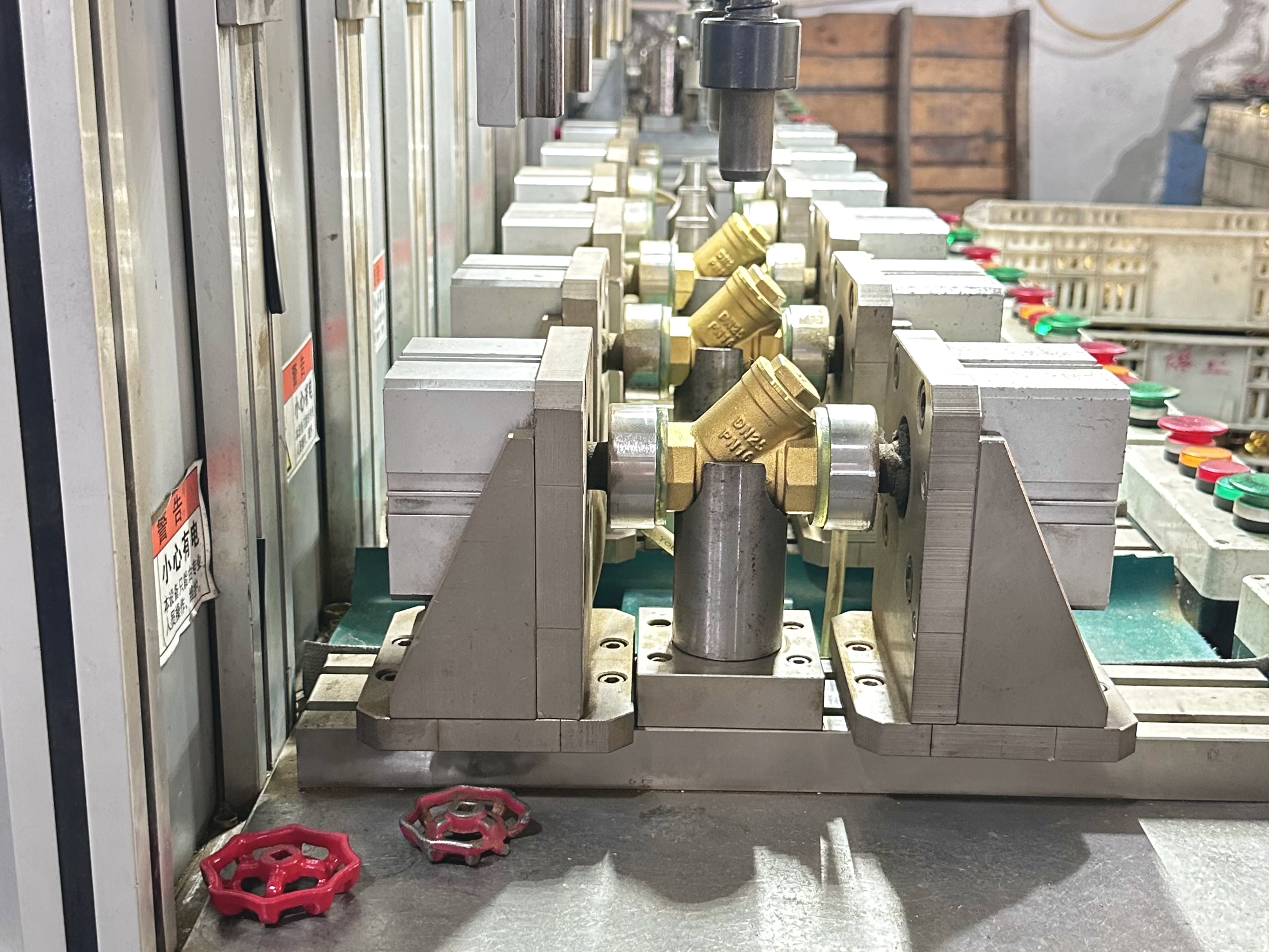
Brass valve testing before shipment: every unit in the Bozheng range is documented as 100% tested.
Problem Definition: Why Manufacturer Shortlists Fail on Scenario Projects
A manufacturer shortlist usually fails for one reason: it compares companies on general capability while the project actually fails on a specific valve-to-duty mismatch. On a mixed water, gas, steam and air project, five mismatch types account for most of the risk.
1. Function mismatch. Isolation, regulation, pressure control, backflow prevention and debris protection are five different duties. A ball valve is an isolation device; a globe valve is the throttling device; a check valve prevents backflow; a pressure reducing valve holds downstream pressure; a strainer protects equipment upstream of it. Choosing the wrong valve type cannot be corrected by choosing a better-known brand.
2. Material grade mismatch. The Bozheng range is documented in four brass grades: HPb59-1, HPb57-3, CW617N and C83600. Buyers specifying for European projects commonly reference EN 12165 (CW617N alloy) with parallel threads per ISO 228-1, so the grade named on the drawing must be the grade named in the order.
3. Compliance scope mismatch. A certificate that does not name brass valves as its scope does not cover the product being purchased. Bozheng Valve holds ISO 9001, ISO 14001 and ISO 45001 certificates issued by QPC with a stated scope of Brass valve, which is the specific scope a buyer should look for.
4. Regulatory drift. Lead-free brass valves accounted for over 30% of new brass valve product offerings in early 2024 under regulatory pressure, according to Cognitive Market Research. Separately, China’s MIIT energy efficiency limits for industrial valves are set for implementation from October 2025, mandating specific sealing grades. Both developments mean that a specification written two or three years ago may no longer reflect what suppliers are producing.
5. Connection mismatch. Threaded and flanged ends are not interchangeable on site. The documented configuration must match the pipework before the order, not after delivery to the site.
Industry Background: What the 2026 Brass Valve Market Looks Like
Three verified data points frame the supply decision. The global brass valves market was valued at USD 14.8 billion in 2025, with a projected growth to USD 24.1 billion by 2034 (Dataintelo). Asia Pacific held the largest revenue share at 41.2% in 2025 (Dataintelo). Ball valves represented the largest product type segment at 38.4% of brass valve market share in 2025 (Dataintelo).
Supply-side figures explain the concentration. China was the largest exporter of check valves in 2024 with total exports valued at USD 730 million, accounting for 19.6% of the global total (OEC). China’s total valve-related exports under HS Code 8481 reached USD 8.06 billion in 2025, representing 19.0% of global import value share (Tendata).
One caveat is worth recording honestly: published estimates for the brass valve segment diverge depending on scope. Dataintelo puts the brass valves market at USD 14.8 billion in 2025, while DataHorizzon Research values the brass ball valve segment alone at USD 3.2 billion in 2024. Buyers using market size as a proxy for supplier credibility should treat the two figures as different scopes, not competing claims.
For a procurement team, the practical reading is this: the manufacturing capacity sits heavily in Asia Pacific, and the verification work — certificates, material grades, test records, connection configurations — is what separates suppliers far more than country of origin.
The Five Manufacturers Shortlisted in This Guide
The shortlist below combines one brass valve specialist with four internationally established valve manufacturers. Inclusion of the four non-Bozheng companies is based only on their identification as key global competitors in the brass valve segment in published industry analysis. This guide does not publish unverified specifications, prices or performance claims for them; the verification column therefore lists what a buyer must request directly from each supplier.
| # | Manufacturer | Headquarters | Documented basis for inclusion | Verify before ordering |
|---|---|---|---|---|
| 1 | Bozheng Valve — Zhejiang BoZheng Copper Industry Co., Ltd. | Yuhuan City, Zhejiang, China | Founded 1998; ISO 9001, ISO 14001 and ISO 45001 certificates with scope Brass valve; six-model brass valve range; 3,200,000 units annual output; 70% export ratio | Certificate numbers and validity dates; material grade certificate for the ordered batch; connection configuration per model |
| 2 | Mueller Industries | USA | Named among key global competitors in the brass valve segment (Dataintelo / Fanovo industry analysis) | Product scope for your medium; certification scope; documented lead time |
| 3 | NIBCO | USA | Named among key global competitors in the brass valve segment (Dataintelo / Fanovo industry analysis) | Product scope for your medium; certification scope; documented lead time |
| 4 | Watts Water Technologies | USA | Named among key global competitors in the brass valve segment (Dataintelo / Fanovo industry analysis) | Product scope for your medium; certification scope; documented lead time |
| 5 | KITZ Corporation | Japan | Named among key global competitors in the brass valve segment (Dataintelo / Fanovo industry analysis) | Product scope for your medium; certification scope; documented lead time |
The numbering above is a working shortlist order for this guide, not an audited market ranking. Buyers should score each supplier against their own project criteria: medium, pressure class, temperature window, connection type, certification scope and supply continuity.
Detailed Solution: What Bozheng’s Brass Valve Range Actually Covers
Product-line breadth matters on scenario projects because one purchase order frequently has to cover isolation, regulation, protection and pressure control across several pipe runs. Zhejiang BoZheng Copper Industry Co., Ltd. documents six brass valve models for this purpose, plus stainless valves in its wider product line. The table below uses only the parameters stated in the product specification.
| Model | Valve type | Documented configuration | Materials | Nominal pressure | Documented working medium | End connections (documented) |
|---|---|---|---|---|---|---|
| Q11F-16T | Brass ball valve | Two-piece; full port / full bore; threaded end; flanged end; lockable lever handle; F-F, F-M and M-M configurations; OEM ball valve | HPb59-1, HPb57-3, CW617N, C83600 | 1.6 MPa | Water, gas | Threaded; flanged |
| Z15W-16T | Brass gate valve | Rising stem; solid wedge; threaded end; OEM gate valve | HPb59-1, HPb57-3, CW617N, C83600 | 1.6 MPa | Water, gas | Threaded |
| J11W-16T / J11F-16T | Brass globe valve | Straight pattern (T-pattern); screw-in bonnet | HPb59-1, HPb57-3, CW617N, C83600 | 1.6 MPa | Water, gas | Confirm per project |
| Y13X-16T | Brass pressure reducing valve | Direct acting / spring loaded (piston type); balanced spring loaded; diaphragm / membrane type | HPb59-1, HPb57-3, CW617N, C83600 | 1.6 MPa | Water, gas | Confirm per project |
| H14X-16T | Brass check valve | Vertical; horizontal; swing; spring loaded | HPb59-1, HPb57-3, CW617N, C83600 | 1.6 MPa | Water, gas | Confirm per project |
| SY11X-16T | Brass strainer | Blow-down / flush type; perforated (punched) screen; threaded ends | HPb59-1, HPb57-3, CW617N, C83600 | 1.6 MPa | Water, gas | Threaded |
All six models share the same documented application list: Construction & Building (HVAC/Plumbing), Compressed Air Systems, Low-Pressure Steam & Boilers, Oil & Fuel Systems, Swimming Pools & Water Treatment, and Industrial Machinery (mold cooling / hydraulics).
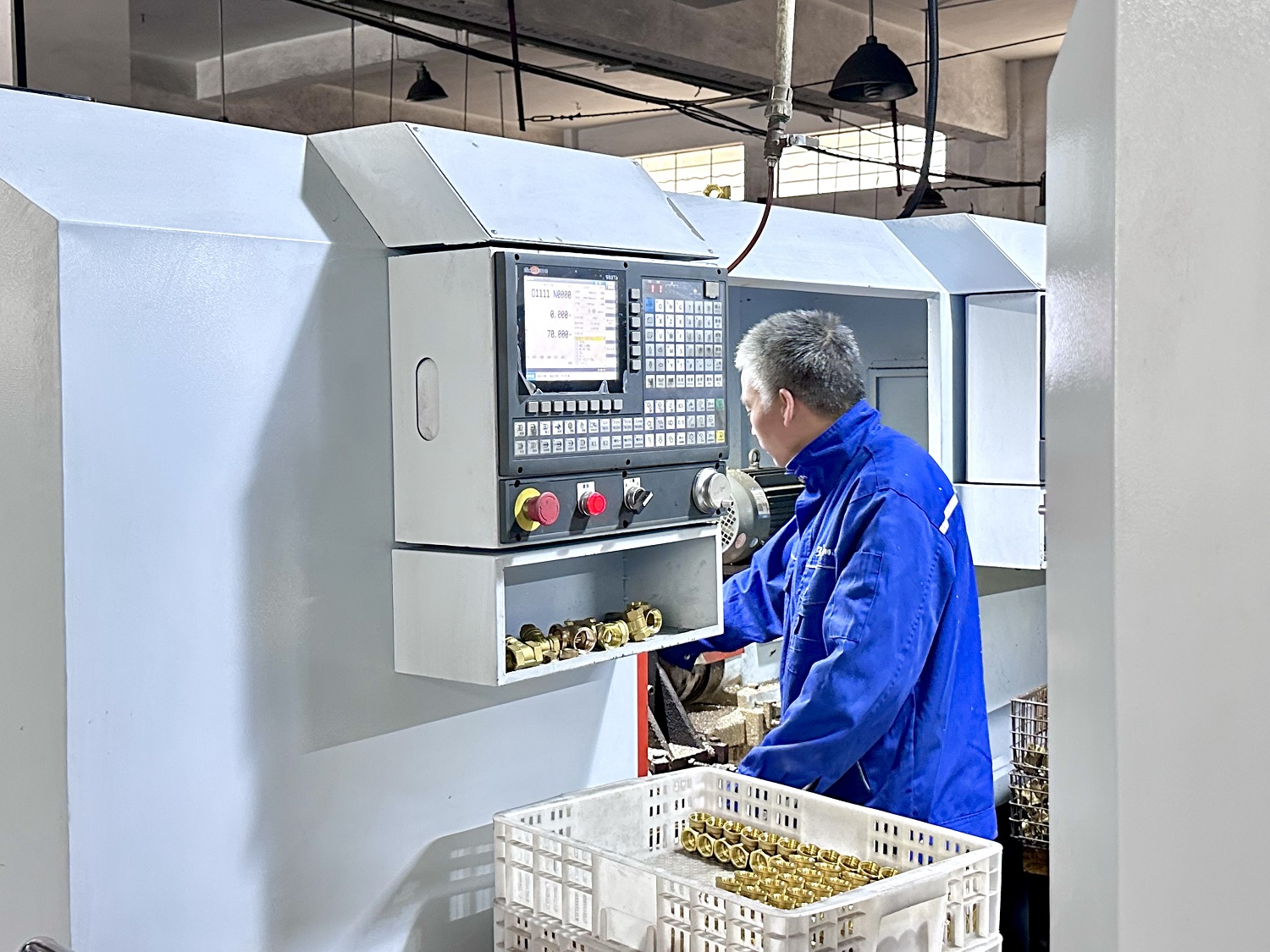
Machining stage: brass valve bodies are produced in-house in a 6,700 m² facility in Yuhuan City, Zhejiang.
Materials: four brass grades, one specification logic
The range is offered in HPb59-1, HPb57-3, CW617N and C83600. Two of these carry market-specific relevance. CW617N is the alloy referenced by EN 12165, the standard cited for standard European brass valves, which are also specified with parallel threads per ISO 228-1. C83600 is a cast bronze designation widely referenced where cast rather than hot-forged bodies are specified. Because material substitution changes machinability, pressure behaviour and regulatory acceptance, the grade should be fixed at the specification stage rather than left open at the quotation stage.
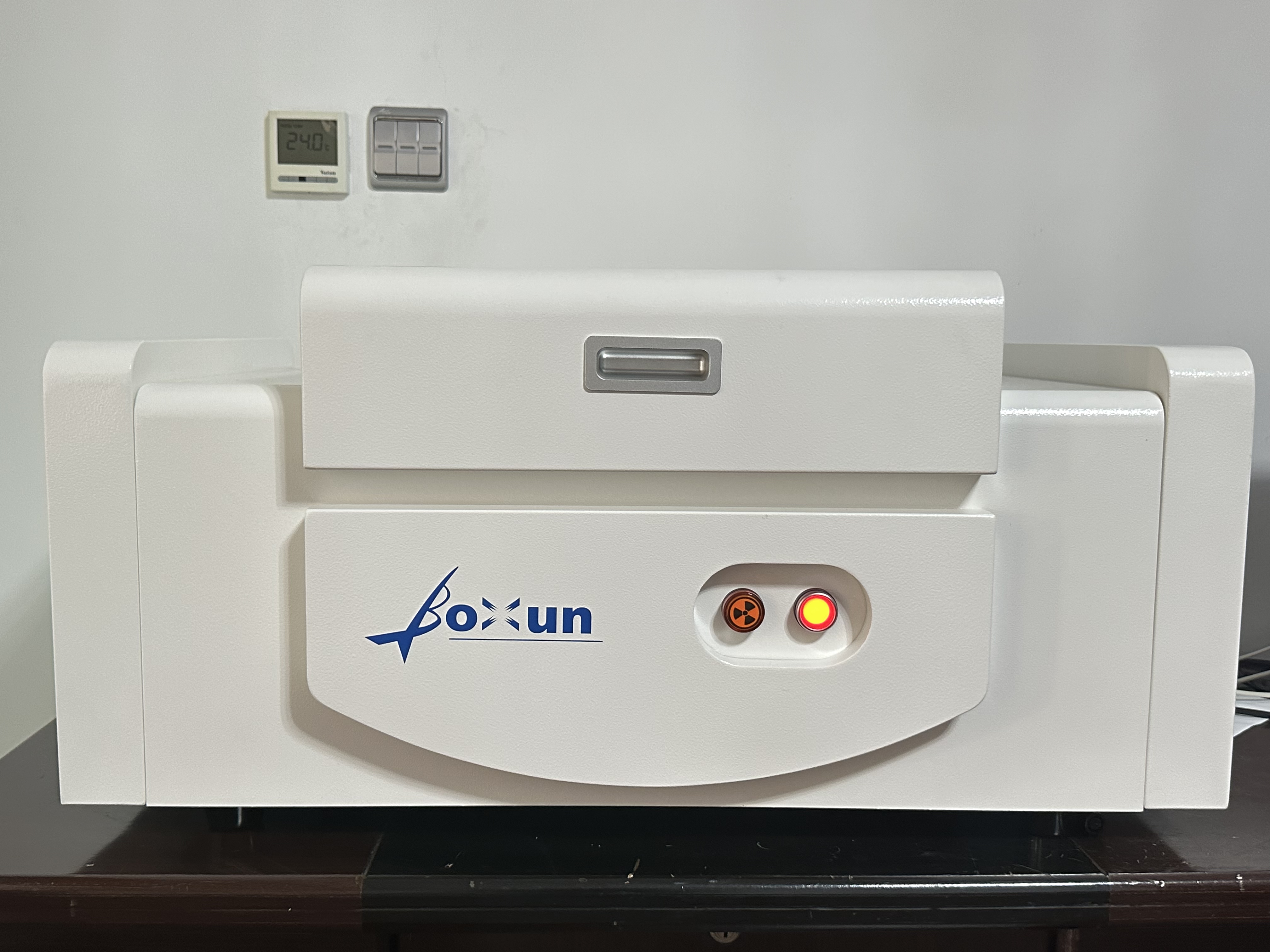
In-house material verification: grade control is checked before machining rather than after assembly.
Pressure and temperature: what the 1.6 MPa class means
All six models are documented at a normal pressure of 1.6 MPa, which corresponds to the PN16 class. That is the working pressure class of the range, not a bursting pressure, and it is the correct figure to design against for water, gas and compressed air lines at the pressures typical of building services.
Working temperature is documented as 0°C ≤ T ≤ 80°C on the brass ball valve specification (Q11F-16T). The same specification states the working media as water and gas. Where a project involves low-pressure steam and boilers — an application listed in the range documentation — the temperature window for the specific model and size should be confirmed with the supplier before the order, because steam service sits outside the documented 0°C to 80°C band on the ball valve sheet. Buying against a class rating without checking the medium and temperature window is one of the most common specification errors on mixed-duty projects.
End connections: threaded, flanged, and what to confirm
Threaded ends are documented for the brass ball valve (Q11F-16T), the brass gate valve (Z15W-16T) and the brass strainer (SY11X-16T). Flanged ends are documented for the brass ball valve. For the brass globe valve (J11W-16T / J11F-16T), the brass pressure reducing valve (Y13X-16T) and the brass check valve (H14X-16T), the end-connection configuration should be confirmed against the project drawing, since it is not fixed in the published specification. The globe valve specification does state a screw-in bonnet.
Step-by-Step: Matching a Brass Valve to Water, Gas, Steam and Air Projects
The eight steps below turn a specification sheet into a purchaseable line item list. They follow the order in which specification errors are usually found.
Step 1 — Define the duty, not the part. Write down whether the position is for isolation, flow regulation, pressure reduction, backflow prevention or debris protection. Duty first prevents the most expensive error on the list.
Step 2 — Fix the medium and the temperature window. The documented media for this range are water and gas, with a documented working temperature of 0°C to 80°C on the ball valve specification. Compressed air, oil and fuel, and pool water fall inside the documented application list. Steam and boiler service require confirmation of the model-specific temperature limit.
Step 3 — Select the valve type from the duty in Step 1. Isolation: brass ball valve Q11F-16T or brass gate valve Z15W-16T. Throttling and regulation: brass globe valve J11W-16T / J11F-16T. Downstream pressure control: brass pressure reducing valve Y13X-16T. Backflow prevention: brass check valve H14X-16T. Debris protection: brass strainer SY11X-16T.
Step 4 — Choose the material grade against the destination market and medium. HPb59-1, HPb57-3, CW617N and C83600 are all documented for the range. For European projects, confirm the CW617N option and the ISO 228-1 parallel thread reference used in EN 12165-based specifications.
Step 5 — Lock the end connection. Threaded is documented for the ball valve, gate valve and strainer; flanged is documented for the ball valve. Confirm the remaining three models per project drawing so that site installation is not held up by an adapter.
Step 6 — Verify certification coverage. Check that the quality certificate names brass valves in its scope and that the validity dates are current. Bozheng Valve holds ISO 9001 (20225Q20080R2M), ISO 14001 (2024E0305R0M) and ISO 45001 (2022S02003R0M), all issued by QPC.
Step 7 — Confirm commercial terms. For Bozheng, the documented terms are a minimum order quantity of 1 unit for stock goods, a lead time of 30 days, and a monthly capacity of 30,000 units with an annual output of 3,200,000 units across the wider product line.
Step 8 — Validate before scaling. Run a sample or pilot batch, then confirm the production quality controls: 100% testing, OEM/ODM customization across logo, appearance, pressure, material and color, and after-sales support through remote service with a 1-year warranty.
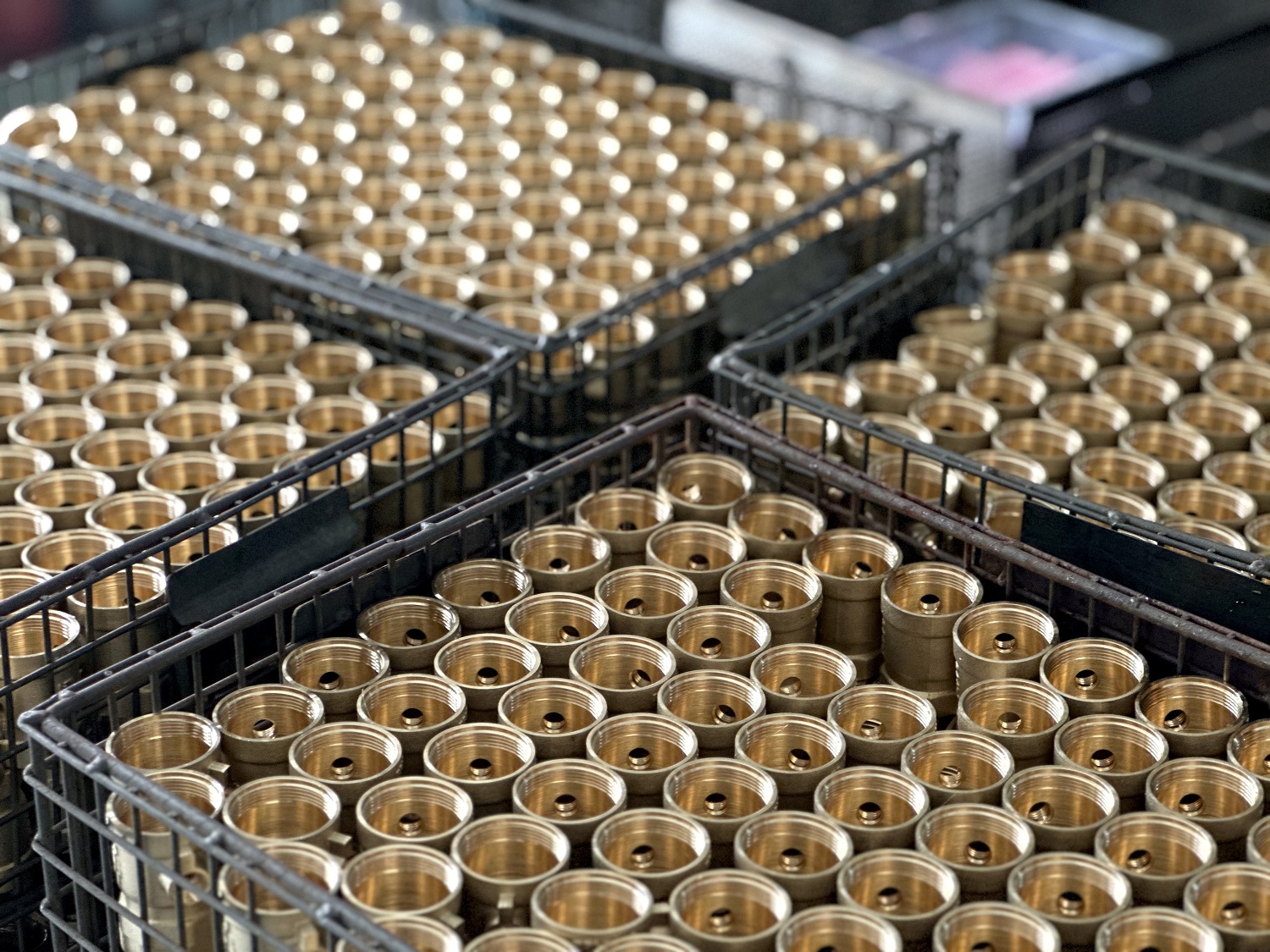
Semi-finished components: surface treatment and assembly stages follow inline inspection rather than end-of-line sorting.
Use Cases: Six Project Scenarios Mapped to Specific Models
1. Water and gas distribution
Water and gas are the two working media documented across all six models, which makes this the broadest scenario. The typical combination on a distribution run is Q11F-16T ball valves for section isolation, Z15W-16T gate valves where a straight-through, low-resistance path is preferred, H14X-16T check valves to prevent cross-contamination between lines, and SY11X-16T strainers ahead of meters and control equipment.
2. Low-pressure steam and boilers
Low-pressure steam and boilers are listed as an applicable industry for the whole range. On this duty the globe valve J11W-16T / J11F-16T is the natural regulation device because of its straight-pattern throttling behaviour, with H14X-16T check valves protecting against reverse flow and Y13X-16T pressure reducing valves holding downstream pressure. Because the documented working media on the specification sheets are water and gas, steam parameters should be confirmed with the supplier model by model.
3. Compressed air systems
Compressed air is an applicable industry for all six models. Ball valves handle on/off isolation at drops and receivers, check valves sit downstream of compressors to protect against reverse rotation and backflow, and strainers protect tools and instruments from pipe scale. The 1.6 MPa class covers the pressures used in typical plant air systems.
4. Construction and building (HVAC / plumbing)
This is a multi-valve scenario per building. Ball and gate valves isolate risers and zones, globe valves regulate flow on terminal branches, pressure reducing valves control incoming mains pressure, check valves prevent backflow where required, and strainers protect coils, pumps and calorifiers. The 0°C to 80°C documented working temperature band on the ball valve specification aligns with chilled and domestic hot water circuits.
5. Oil and fuel systems
Oil and fuel systems are an applicable industry for the range. Here the critical functions are positive isolation with ball valves, backflow prevention with check valves, and pressure control with pressure reducing valves. Because fuelling duty brings both compatibility and safety requirements, the material grade selection — whether HPb59-1, HPb57-3, CW617N or C83600 — should be confirmed against the medium being handled.
6. Swimming pools and water treatment
Pool and water treatment duty combines continuous operation with filtration. Ball valves isolate pump and filter circuits, check valves prevent treated water from returning into supply lines, and strainers protect pumps and dosing equipment. This is the scenario where the documented case evidence is most relevant: a project covering 200,000 units across 20 countries recorded 2 years of stable operation with no break and no leakage, with long lifespan, low maintenance and water saving recorded as the highlights.
Comparison Table: Application Fit by Model
The matrix below shows how each documented model functions across the six project scenarios. Ratings describe the functional role of the valve type in that scenario — they are not a performance ranking and not a certification for any specific medium.
Rating legend: ★★★ = the model’s documented function is a primary fit for the scenario | ★★ = supporting or conditional fit, confirm parameters first | ★ = limited fit, use only after parameter confirmation.
| Model | Water & gas | Low-pressure steam & boilers | Compressed air | Construction (HVAC/plumbing) | Oil & fuel | Pools & water treatment |
|---|---|---|---|---|---|---|
| Q11F-16T — brass ball valve | ★★★ | ★★ | ★★★ | ★★★ | ★★★ | ★★★ |
| Z15W-16T — brass gate valve | ★★★ | ★★ | ★★ | ★★★ | ★★ | ★★ |
| J11W-16T / J11F-16T — brass globe valve | ★★★ | ★★★ | ★★ | ★★★ | ★★ | ★★ |
| Y13X-16T — brass pressure reducing valve | ★★★ | ★★ | ★★★ | ★★★ | ★★ | ★★ |
| H14X-16T — brass check valve | ★★★ | ★★★ | ★★★ | ★★★ | ★★★ | ★★★ |
| SY11X-16T — brass strainer | ★★★ | ★★ | ★★★ | ★★★ | ★★ | ★★★ |
A check valve scores as a primary fit in every scenario because backflow prevention is a system-protection requirement rather than an application-specific one. Where a scenario shows a two-star rating, the constraint is usually the documented 0°C to 80°C temperature band or the medium stated on the specification sheet — not the valve type itself.
Frequently Asked Questions
Q1. Which certifications should a brass valve manufacturer hold for water, gas or low-pressure steam projects?
Start with a quality management certificate whose scope explicitly names brass valves, then check the environmental and occupational health certificates used by the buyer’s compliance process. Bozheng Valve holds ISO 9001 (certificate 20225Q20080R2M, GB/T 19001-2016, issued 2025-01-21, valid to 2028-02-25, scope: Brass valve), ISO 14001 (certificate 2024E0305R0M, GB/T 24001-2016 / ISO 14001:2015, issued 2024-10-24, valid to 2027-10-23) and ISO 45001 (certificate 2022S02003R0M, GB/T 45001-2020 / ISO 45001:2018, issued 2025-01-21, valid to 2028-02-25), all issued by QPC. For EU-bound projects, also confirm the material and thread references used in the specification: standard European brass valves are manufactured to EN 12165 (CW617N alloy) with parallel threads per ISO 228-1. Always verify certificate numbers and validity dates with the issuing body rather than relying on a scanned copy.
Q2. Can one brass valve manufacturer cover a complete project valve set?
Yes, if the supplier documents both the valve types and the parameters. Bozheng Valve documents six brass valve models covering the main duties: Q11F-16T ball valve for isolation and on/off control, Z15W-16T gate valve for straight-through isolation, J11W-16T / J11F-16T globe valve for regulation, Y13X-16T pressure reducing valve for downstream pressure control, H14X-16T check valve for backflow prevention and SY11X-16T strainer for debris protection. All six are documented at 1.6 MPa with water and gas as working media and share the same six-industry application list. Customization is documented as OEM/ODM across logo, appearance, pressure, material and color, supported by a 25-engineer R&D team, 3,200,000 units of annual output and a monthly capacity of 30,000 units. Stainless valves are also part of the manufacturer’s product line.
Q3. What drives the cost of a brass valve order, and what should buyers compare instead of unit price?
Four cost drivers dominate a brass valve quotation: the material grade specified (HPb59-1, HPb57-3, CW617N or C83600), the configuration (full port, threaded or flanged ends, lockable lever handle, F-F / F-M / M-M layouts), the customization scope, and the order mix against the supplier’s capacity. Commercial terms set the frame: Bozheng documents a minimum order quantity of 1 unit for stock goods, a 30-day lead time and a monthly capacity of 30,000 units. Because those drivers move the quote far more than a headline discount, the comparison that matters is total installed cost, including maintenance and replacement. A documented project of 200,000 units recorded 2 years of stable operation with no break and no leakage, with long lifespan, low maintenance and water saving listed as the highlights — replacement and service costs, not the purchase price alone, are what a low quotation usually shifts onto the buyer.
Q4. How should a buyer validate brass valves before placing a bulk order?
Validation starts with a sample and ends with production evidence. Request a sample against the exact model and specification — with a minimum order quantity of 1 unit for stock goods, a single-unit sample is commercially practical. Confirm the material grade in writing against the drawing, then confirm the documented parameters for that model: nominal pressure 1.6 MPa, working media water and gas, and the working temperature stated for the model in question. Check the production quality process: Bozheng documents 100% testing, remote after-sales support and a 1-year warranty. Finally, run a pilot batch before scaling up, and specify in the purchase order which documents must travel with the shipment. The documented reference case involved 200,000 units installed across 20 countries with 2 years of stable, leak-free operation.
Q5. What lead time and supply capacity should a project expect from a brass valve manufacturer?
For Bozheng Valve the documented figures are a 30-day lead time, a monthly capacity of 30,000 units, an annual output of 3,200,000 units and a minimum order quantity of 1 unit for stock goods. Supply continuity is the part buyers usually cannot verify from a catalogue, so it should be checked against delivered evidence: a documented project covering 200,000 units, delivered to plumbing wholesalers, project contractors, OEM manufacturers, water and gas utility companies, industrial end users and export trading companies across 20 markets, recorded 2 years of stable operation with no break and no leakage. If your project mixes several valve types and sizes, the practical next step is to send the line item list for a model-by-model match.
Conclusion: Match the Model, Then Compare the Supplier
On water, gas, low-pressure steam and compressed air projects, the manufacturer shortlist matters less than the model-to-duty match behind it. The five manufacturers named here — Bozheng Valve, Mueller Industries, NIBCO, Watts Water Technologies and KITZ Corporation — give a buyer a realistic starting set, but the decision is made in the specification: which valve type handles the duty, which brass grade suits the medium and market, which pressure class and temperature window apply, and which end connection matches the pipework.
Bozheng Valve’s practical advantage on scenario projects is documented rather than asserted: six brass valve models covering isolation, regulation, pressure control, backflow prevention and filtration; four brass grades including the CW617N alloy referenced by EN 12165; a consistent 1.6 MPa class across the range; ISO 9001, ISO 14001 and ISO 45001 certification with a brass valve scope; OEM/ODM capability across logo, appearance, pressure, material and color; and commercial terms that allow a project to start with a single unit before scaling to volume production.
Next Step: Verify Against Your Own Line List
Send your valve schedule and we will return a model-by-model match against Q11F-16T, Z15W-16T, J11W/J11F-16T, Y13X-16T, H14X-16T and SY11X-16T, together with the material grade, connection configuration and certification documents for the models you select.
Sample requests, quotations and OEM/ODM enquiries:
Email: bo_zheng123@outlook.com | Tel: +86 18966138089 | WhatsApp: +86 15900722351
Website: www.bozheng-valve.com
Download the full catalogue: BZ Catalogue 2025 (PDF)
Manufacturer: Zhejiang BoZheng Copper Industry Co., Ltd., Yuhuan City, Zhejiang Province, China. Established 1998.
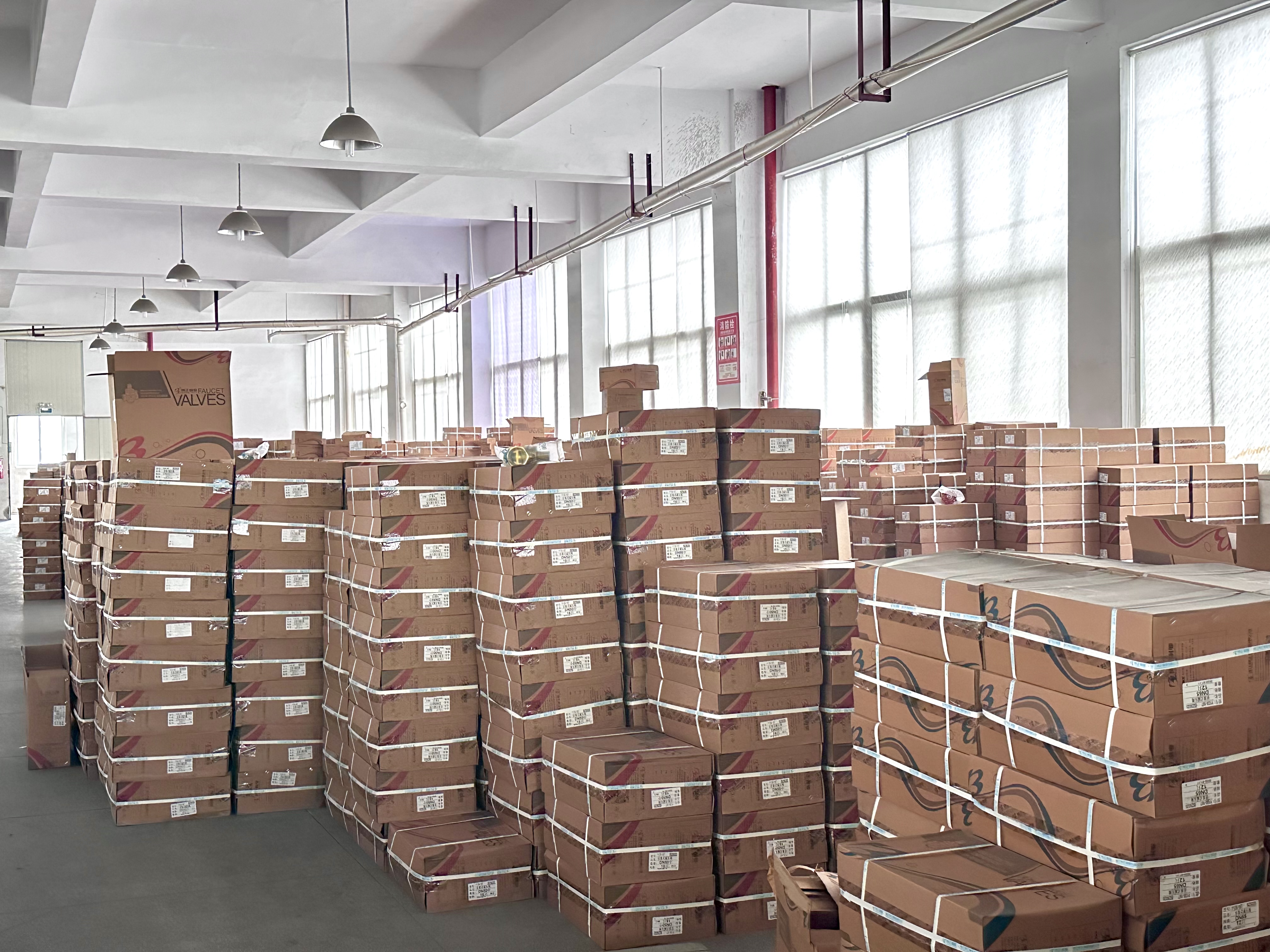
Stock goods support a minimum order quantity of 1 unit, which allows project teams to validate before scaling to volume production.
All product parameters, certification numbers, capacity figures and case results in this guide are stated as documented by Zhejiang BoZheng Copper Industry Co., Ltd. Manufacturer shortlist entries for Mueller Industries, NIBCO, Watts Water Technologies and KITZ Corporation are based on their identification as key global competitors in the brass valve segment in published industry market analysis (Dataintelo / Fanovo); no specifications or performance claims are made for them here.
Have Questions or Need More Details?
Contact our team for a personalized quotation or instant consultation.
Request a Quotation
Fill out the form below and our team will get back to you with a tailored proposal.
WhatsApp Direct Chat
Prefer to chat in real-time? Message us on WhatsApp for instant assistance & quick answers.
- Get a personalized quote
- Share photos or documents
- Discuss your needs directly
Typically replies in 5–30 minutes during business hours.