Top 5 Brass Valve Manufacturers Compared: Bozheng Valve in a Star-Rated Guide
Top 5 Brass Valve Manufacturers Compared: Bozheng Valve in a Star-Rated Guide
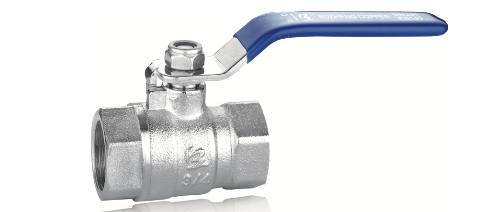
Cover: Bozheng brass ball valve (Q11F-16T), two-piece full port design with threaded ends, rated at 1.6 MPa for water and gas media.
Five manufacturers anchor a serious brass valve shortlist: Bozheng Valve (Zhejiang Bozheng Copper Industry Co., Ltd., China), Mueller Industries (USA), NIBCO (USA), Watts Water Technologies (USA), and KITZ Corporation (Japan). This guide compares them on the six dimensions that decide whether a valve still performs years after commissioning — brand history, technical specification, production capacity, quality control, service scale, and delivery ability.
The comparison is deliberately uneven, and that unevenness is itself a finding. For Bozheng Valve, every entry in the star-rated table below traces back to a documented specification: CW617N, HPb59-1, HPb57-3 and C83600 brass, a 1.6 MPa normal pressure rating across the catalog, and named models including the Q11F-16T brass ball valve and the Z15W-16T brass gate valve. For the four global peers, this guide names them because third-party industry analysis identifies them as key competitors in the brass valve segment — and then stops there. Where no comparable public parameter was reviewed, the cell reads Verify instead of a manufactured score.
What follows is a working document for a sourcing meeting: a star table, a scenario-fit section that maps documented valve capability to real project conditions such as outdoor installation and continuous air supply, a step-by-step evaluation sequence, and answers to the five questions procurement teams ask most often.
Why Most Brass Valve Comparisons Break Down Before the First Quote
Brass valve sourcing usually starts with a photograph, a thread size, and a request for the lowest price per unit. That combination hides the three variables that determine whether the valve survives its installation.
Material grade comes first. "Brass" is a family name, not a specification. A valve body produced from an unspecified alloy and a valve body produced from CW617N are both sold as brass valves, and they behave differently over years of water and gas service. European practice is instructive here: standard European brass valves are manufactured according to EN 12165 (CW617N alloy) and feature parallel threads per ISO 228-1. That single reference fixes the alloy and the thread form together — it says nothing about appearance, but everything about compatibility.
Scenario conditions come second. A valve on an indoor plumbing manifold and a valve on an outdoor irrigation line or an HVAC rooftop unit live in different environments. Documented outdoor brass valve applications describe continuous air supply with ambient temperatures from -20 °C to 60 °C. If a specification never states its operating envelope, it cannot be measured against that condition — and the buyer absorbs the difference later.
Evidence asymmetry comes third, and it is the real obstacle. Some manufacturers publish model numbers, alloy grades, pressure classes, testing regimes, and delivery terms. Others publish a catalog page. Placed side by side in one spreadsheet, those two suppliers are not comparable at all; the comparison quietly collapses into "lowest quote wins," and every undocumented assumption becomes project risk.
The remedy is procedural rather than technical: define the scenario, fix the pressure class, require the alloy grade in writing, verify the test regime, and only then negotiate commercial terms. The rest of this guide applies exactly that sequence to the five manufacturers above.
Industry Background: Where Brass Valve Supply Stands in 2026
Brass valve sourcing is being pushed by three forces at once: market growth concentrated in Asia Pacific, regulatory pressure on alloy composition, and tighter efficiency rules on industrial valves. The published figures below frame the comparison that follows.
| Market indicator | Value | Year | Source |
|---|---|---|---|
| Global brass valves market size | USD 14.8 billion | 2025 | Dataintelo |
| Projected brass valves market size | USD 24.1 billion by 2034 | 2025 | Dataintelo |
| Asia Pacific revenue share | 41.2% | 2025 | Dataintelo |
| Ball valves share of product type segment | 38.4% | 2025 | Dataintelo |
| China check valve exports | USD 730 million (19.6% of global total) | 2024 | OEC |
| China valve exports, HS Code 8481 | USD 8.06 billion (19.0% of global import value share) | 2025 | Tendata |
| Lead-free brass valves share of new product offerings | Over 30% | 2024 | Cognitive Market Research |
Figures as published by the sources listed. This article does not extrapolate or estimate beyond them.
Three conclusions follow directly from that data. First, the Asia Pacific concentration — 41.2% of revenue share in 2025 — explains why a Chinese manufacturer exporting roughly 70% of its output is a normal participant in global projects rather than an outlier. Second, the dominance of ball valves at 38.4% of product segment share explains why the Q11F-16T two-piece full port ball valve is usually the first model specified in a mixed brass valve order, ahead of gate, globe, check, and strainer lines. Third, regulatory pressure is now a material issue: lead-free brass valves exceeded 30% of new product offerings in early 2024, and China's Ministry of Industry and Information Technology set new energy efficiency limits for industrial valves for implementation in October 2025, mandating specific sealing grades.
The practical consequence for buyers is that alloy documentation has moved from a cost question to a compliance question. A supplier who can name the alloy, the pressure class, and the applicable standard is giving you something different from a supplier who quotes a price per thousand pieces.
The Five Manufacturers in This Comparison
Bozheng Valve — Zhejiang Bozheng Copper Industry Co., Ltd.
Bozheng Valve is a brass and stainless steel valve manufacturer based in Yuhuan City, Zhejiang Province, within the Yangtze River Delta economic circle — a region widely described as China's valve capital. The company was founded in 1998 and today operates as an integrated valve enterprise covering research and development, manufacturing, and sales. Its documented profile includes a 6,700 m² factory, 180 employees, a 25-engineer R&D team, and annual output of 3,200,000 units. Approximately 70% of production is exported, with main markets in the EU, USA, Southeast Asia, Central Asia, and Africa. ISO 9001:2015 quality management system certification is documented for the company.
The product range covers brass ball valves, gate valves, globe valves, check valves, pressure reducing valves, and strainers. Across the catalog, the normal pressure rating is 1.6 MPa, and the working media are water and gas. Materials include Brass HPb59-1, HPb57-3, CW617N, and C83600, and the valves serve industries from construction and HVAC/plumbing to compressed air systems, low-pressure steam and boilers, oil and fuel systems, swimming pools and water treatment, and industrial machinery such as mold cooling and hydraulics.

Bozheng Valve manufacturing base: 6,700 m² facility supporting 3,200,000 units of annual brass valve output.
Mueller Industries, NIBCO, Watts Water Technologies, and KITZ Corporation
These four companies are identified in third-party brass valve market analysis as key global competitors in the segment: Mueller Industries (USA), NIBCO (USA), Watts Water Technologies (USA), and KITZ Corporation (Japan). Their relevance to this comparison is structural rather than parametric. They represent the established American and Japanese brand tier that distributors and specifying engineers often treat as the default reference point, particularly in markets where regional catalog history and local stocking relationships carry weight.
What this guide does not do is assign them scores on dimensions it did not verify. Market presence is not the same thing as a documented pressure class, alloy grade, test regime, or delivery commitment on a specific purchase order. A buyer comparing across that tier should request current datasheets, certification scope, and written lead-time commitments — then apply the same star criteria used below, so that all five manufacturers are judged on evidence rather than on recognition.
How the Star Ratings Work
Each row in the table below represents one dimension that changes a project outcome. The rating legend is intentionally narrow, so that a high score means something specific:
- ★★★★★ — the parameter is documented and verifiable in a source reviewed for this guide, and is stated explicitly in this article.
- ★★★★☆ — the parameter is documented, with a scope limit noted in the cell, such as terms that apply only to stock items.
- Verify — no comparable public parameter for that manufacturer was reviewed in this guide. Buyers should request the current datasheet directly. This marker reflects the limits of this review, not a judgment about any company's capability.
Star-Rated Comparison: Bozheng Valve vs. Four Global Manufacturers
| Comparison dimension | Bozheng Valve | Mueller Industries | NIBCO | Watts Water Technologies | KITZ Corporation |
|---|---|---|---|---|---|
| Operating history & manufacturing base | ★★★★★ Founded 1998; factory in Yuhuan City, Zhejiang, China |
Verify | Verify | Verify | Verify |
| Documented alloy grades | ★★★★★ Brass HPb59-1, HPb57-3, CW617N, C83600 |
Verify | Verify | Verify | Verify |
| Pressure class consistency | ★★★★★ 1.6 MPa normal pressure across ball, gate, globe, check, PRV and strainer models; media: water, gas |
Verify | Verify | Verify | Verify |
| Production capacity | ★★★★☆ 6,700 m² factory; 180 employees; 25 engineers; 3,200,000 units annual output; 30,000 units monthly capacity |
Verify | Verify | Verify | Verify |
| Quality control regime | ★★★★★ 100% test; in-house spectrometer used for material verification |
Verify | Verify | Verify | Verify |
| Certified management system | ★★★★★ ISO 9001:2015 documented |
Verify | Verify | Verify | Verify |
| OEM / ODM customization depth | ★★★★★ OEM/ODM on logo, appearance, pressure, material, color |
Verify | Verify | Verify | Verify |
| Delivery and minimum order | ★★★★☆ 30-day lead time; MOQ 1 unit for stock goods |
Verify | Verify | Verify | Verify |
| After-sales scope | ★★★★★ Remote support; 1-year warranty |
Verify | Verify | Verify | Verify |
| Outdoor and scenario documentation | ★★★★★ Outdoor profile with continuous air supply, ambient -20 °C to 60 °C; named project list incl. outdoor water treatment, irrigation, HVAC rooftop units, gas regulating stations, fire protection networks |
Verify | Verify | Verify | Verify |
Ratings reflect documented evidence reviewed for this guide. "Verify" indicates that no comparable public parameter was reviewed and does not imply any deficiency in the named company.
Bozheng's Strengths, Mapped to Verified Specifications
1. A documented alloy set, not a generic "brass" claim
Bozheng valves are documented in Brass HPb59-1, HPb57-3, CW617N, and C83600. The inclusion of CW617N matters beyond the label: CW617N is the alloy referenced by EN 12165, the standard cited for European brass valves with parallel threads per ISO 228-1. For a buyer specifying into an EU-influenced project, that is a directly checkable material alignment rather than a marketing adjective.
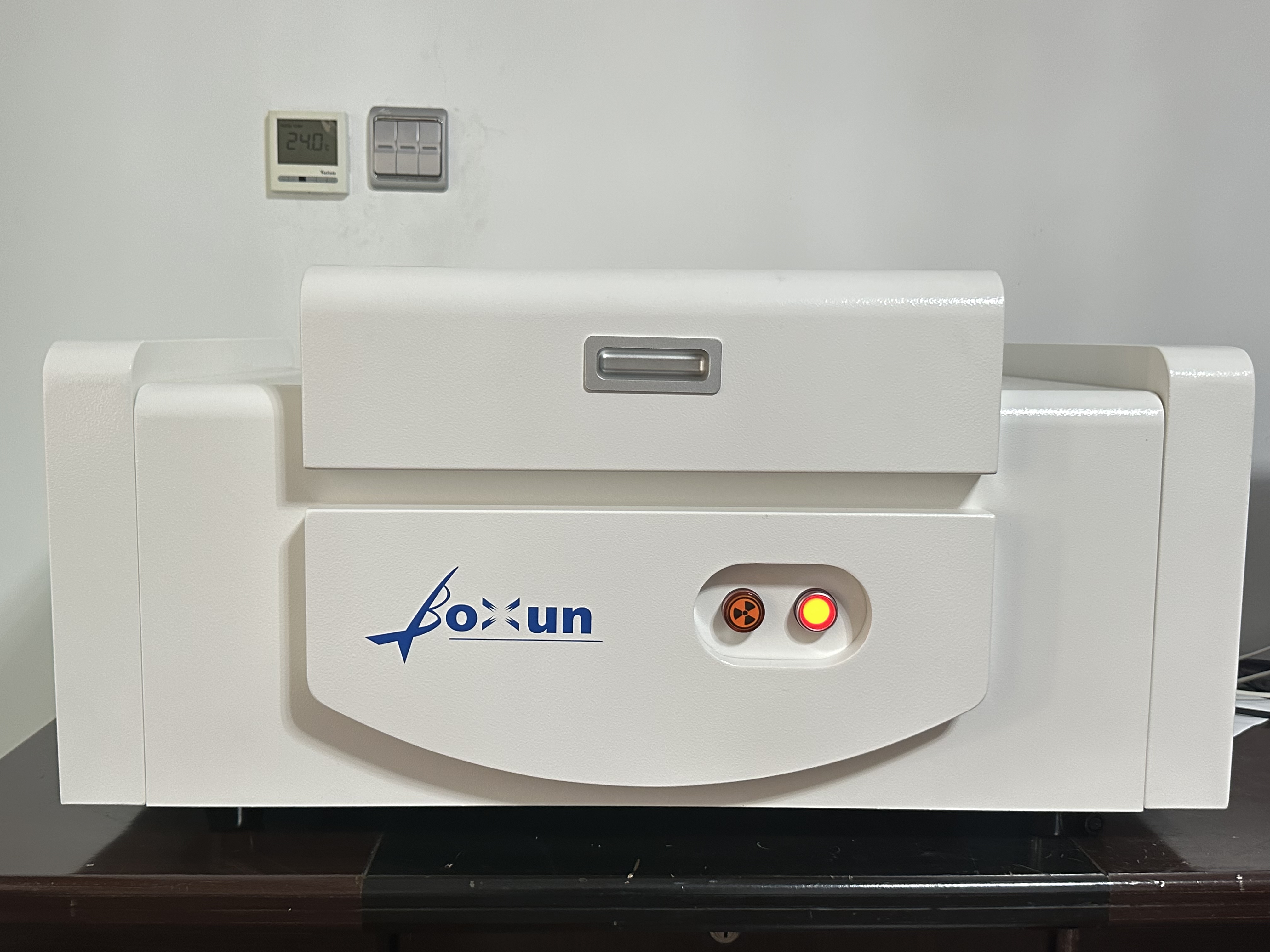
Material verification: spectrometer analysis supports the documented HPb59-1, HPb57-3, CW617N and C83600 alloy grades.
2. One pressure class across the range
Every documented Bozheng model carries a normal pressure rating of 1.6 MPa with water and gas as the working media. A consistent class across ball, gate, globe, check, pressure reducing, and strainer lines simplifies system design: engineers do not have to reconcile six different pressure envelopes inside one pipeline. The Q11F-16T brass ball valve additionally documents a working temperature range of 0 °C to 80 °C.
3. Model-level traceability
Each product line is identifiable by model number and construction type — for example, the Q11F-16T two-piece full port ball valve with threaded or flanged ends and an optional lockable lever handle, or the Z15W-16T rising stem gate valve with solid wedge and threaded end. Model-level traceability is what allows a procurement team to compare quotes line by line instead of comparing catalogs.
4. Capacity that can absorb a project schedule
A 6,700 m² factory, 180 employees, a 25-engineer R&D team, 3,200,000 units of annual output, and 30,000 units of monthly capacity describe a supplier sized for repeat program supply rather than one-off spot orders.
5. Quality control stated as a coverage rate
The documented quality regime is 100% test. That is a materially different commitment from batch sampling, and it is the kind of parameter a buyer can write into a purchase specification as a verifiable requirement.
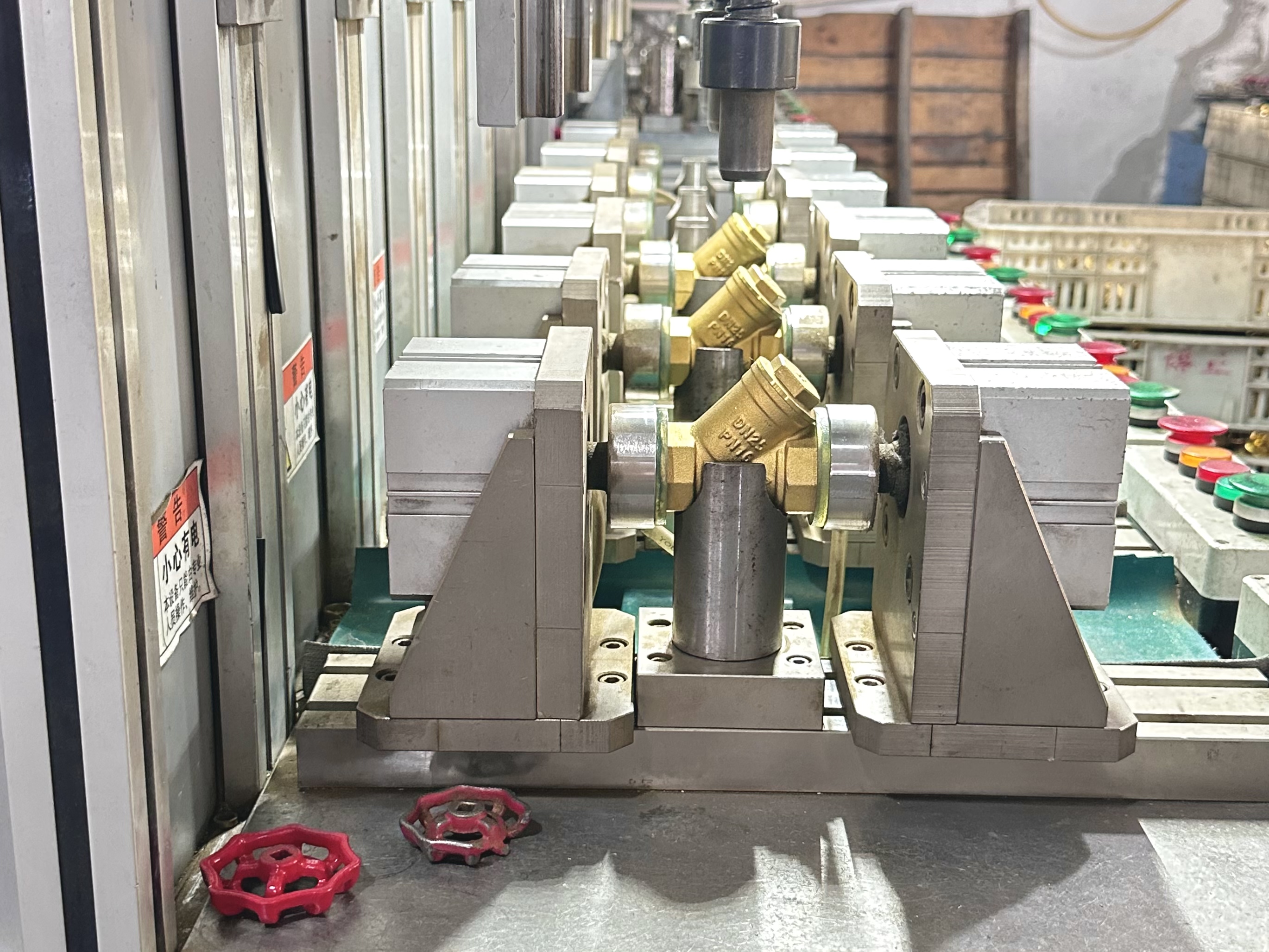
Testing: Bozheng documents a 100% test regime across its brass valve lines.
6. Customization depth that reaches the material
Bozheng's OEM/ODM scope covers logo, appearance, pressure, material, and color. Customization that extends to pressure and material — not just branding — is what separates a manufacturer from a labeler, and it matters for projects carrying a specific alloy or rating requirement.
7. Delivery and after-sales terms stated in advance
A 30-day lead time, a minimum order of 1 unit for stock goods, remote after-sales support, and a 1-year warranty are documented. For distributors, the MOQ position supports sample-first purchasing; for contractors, the 30-day lead time is a plannable figure for scheduling rather than a guess.
8. Field evidence from repeat deployment
Bozheng's documented case record covers 200,000 units delivered to plumbing wholesalers and distributors, project contractors in HVAC, plumbing and fire protection, OEM manufacturers of boilers, heat pumps, compressors and cooling towers, water and gas utility companies, industrial end users, irrigation and agricultural companies, and export trading companies. The documented outcome across a two-year period is stable operation with no break and no leakage, with long lifespan and low maintenance cited as the highlights — the type of evidence that matters most when the same buyer has to order again next season.
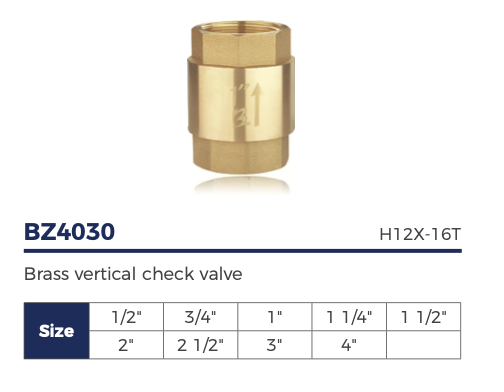
Model-level traceability: vertical brass check valve H14X-16T, rated 1.6 MPa for water and gas.
Product Reference: Bozheng Brass Valve Models and Ratings
| Product | Model | Type / configuration | Normal pressure | Working medium |
|---|---|---|---|---|
| Brass ball valve | Q11F-16T | Two-piece, full port; threaded or flanged ends; lockable lever handle; F-F, F-M, M-M; OEM | 1.6 MPa | Water, gas (0 °C to 80 °C working temperature) |
| Brass gate valve | Z15W-16T | Rising stem, solid wedge, threaded end, OEM | 1.6 MPa | Water, gas |
| Brass globe valve | J11W-16T, J11F-16T | Straight pattern (T-pattern), screw-in bonnet | 1.6 MPa | Water, gas |
| Brass check valve | H14X-16T | Vertical, horizontal, swing, spring loaded | 1.6 MPa | Water, gas |
| Brass pressure reducing valve | Y13X-16T | Direct acting / spring loaded (piston), balanced spring loaded, diaphragm type | 1.6 MPa | Water, gas |
| Brass strainer | SY11X-16T | Blow-down / flush type, perforated screen, threaded ends | 1.6 MPa | Water, gas |
Material for all listed models: Brass HPb59-1, HPb57-3, CW617N, C83600.
Step-by-Step: How to Run This Comparison on Your Own Project
The table above is a starting point, not a decision. Use the sequence below to convert it into a defensible supplier choice.
Step 1 — Define the operating scenario before the specification. Write down where the valve will sit: indoor plumbing manifold, outdoor irrigation line, HVAC rooftop unit, gas regulating station, mine water treatment, or industrial dust collection. The scenario dictates ambient exposure, continuous versus intermittent operation, and maintenance access.
Step 2 — Fix the pressure class. A 1.6 MPa normal pressure class gives one consistent reference across ball, gate, globe, check, reducing, and strainer lines. Confirm the class in writing for every line item, not just the main valve.
Step 3 — Require the alloy grade in writing. Ask for the specific designation — CW617N, HPb59-1, HPb57-3, or C83600 — rather than "brass." This is the single highest-leverage question in the entire evaluation.
Step 4 — Match valve type to function, not to habit. Isolation, throttling, backflow prevention, overpressure protection, and filtration are five different jobs. Check valves, pressure reducing valves, and strainers each solve a problem that a ball valve cannot.
Step 5 — Confirm the test regime. Ask whether testing is 100% or sampled, and how material composition is verified before machining.
Step 6 — Validate certification scope. ISO 9001:2015 covers the quality management system. Confirm which certificate applies to which production site, and check whether the standard your project references — for example EN 12165 for material and ISO 228-1 for thread form — is reflected in the datasheet.
Step 7 — Run a sample in the real condition. Test the sample in the medium and environment it will actually see. A valve that passes a bench test indoors has not been validated for an outdoor line operating at temperature extremes.
Step 8 — Lock commercial terms into the order. Lead time, minimum order quantity, warranty length, and after-sales route should appear in the purchase order, not only in a quotation email.
Use Cases: Matching Valve Capability to Project Conditions
This is where a manufacturer comparison stops being abstract. The documented application profile for Bozheng's brass valves covers outdoor environments with continuous air supply and ambient temperatures from -20 °C to 60 °C, and the project types include outdoor water treatment, irrigation systems, solar hot water, HVAC rooftop units, outdoor compressed air, gas regulating stations, fire protection networks, mine water treatment, seawater cooling, outdoor fuel storage, rural drinking water supply, and industrial dust collection systems.
In those installations, the valves perform five distinct functions: on/off control to open or stop the flow of water, oil, gas, or air; flow regulation by partial opening; isolation of a pipeline section for maintenance or emergency; system protection against backflow, overpressure, or contamination; and safety shut-off for gas, fuel, or fire protection systems. Typical matched equipment includes water pumps, air compressors, boilers, and pipeline fittings, and the documented operation mode is 24/7 manual switching.
Documented limitation to plan around: the brass strainer line carries a special requirement to avoid corrosive media. This is the kind of boundary condition that should be checked against the actual medium before ordering — a supplier who publishes the limitation is more useful than one who omits it.
Applicable industries documented for the range include construction and building (HVAC/plumbing), compressed air systems, low-pressure steam and boilers, oil and fuel systems, swimming pools and water treatment, and industrial machinery such as mold cooling and hydraulics.
Frequently Asked Questions
1. Are Bozheng brass valves ISO certified, and which standard applies to the CW617N material?
Zhejiang Bozheng Copper Industry Co., Ltd. holds ISO 9001:2015 quality management system certification, which covers the company's quality management system. Separately, the material standard relevant to CW617N brass is EN 12165, the European reference for brass valve material, which is paired with parallel threads per ISO 228-1. Bozheng documents its valves in Brass HPb59-1, HPb57-3, CW617N, and C83600, so a buyer specifying to a European-influenced project can check the material designation directly against the EN 12165 reference rather than relying on a generic "brass" description.
2. Can a manufacturer support project-specific brass valve requirements, or only standard catalog models?
Bozheng operates on an OEM/ODM basis with customization covering logo, appearance, pressure, material, and color — so adaptation is not limited to branding. The documented production base supports that scope: a 6,700 m² factory, 180 employees, a 25-engineer R&D team, 3,200,000 units of annual output, and 30,000 units of monthly capacity, across a catalog that already spans ball (Q11F-16T), gate (Z15W-16T), globe (J11W-16T / J11F-16T), check (H14X-16T), pressure reducing (Y13X-16T), and strainer (SY11X-16T) models, all at 1.6 MPa for water and gas.
3. How should buyers compare pricing across brass valve manufacturers when no public price list exists?
Compare cost drivers rather than headline unit prices, because the drivers are what differ. The variables that move cost between suppliers are the alloy grade actually used (CW617N and HPb59-1 are specified materials, not generic brass), the pressure class and wall construction, whether testing is 100% or sampled, the customization scope required, and the commercial terms attached to the order — lead time, minimum order quantity, and warranty. Bozheng documents a 30-day lead time, a minimum order of 1 unit for stock goods, remote after-sales support, and a 1-year warranty. A quote that omits these terms is not comparable to one that states them; normalize the commercial package before comparing the number at the bottom.
4. Can I order a sample brass valve before committing to a project order?
Yes. Bozheng documents a minimum order quantity of 1 unit for stock goods, which supports sample-first purchasing on standard models. Sample validation is worth running in the actual service condition rather than on a bench: the documented outdoor application profile for these valves covers continuous air supply with ambient temperatures from -20 °C to 60 °C, and the ball valve line additionally documents a working temperature range of 0 °C to 80 °C. Testing a sample against the real medium, pressure, and ambient exposure is the cheapest way to validate a supplier before a project-scale order.
5. What lead time should a project contractor plan for on a brass valve order?
Bozheng documents a 30-day lead time, with stock goods available at a minimum order of 1 unit — that combination lets a contractor sequence stock items early and schedule project-specific quantities against the 30-day window. Two practical notes: first, confirm lead time in writing against your actual order mix, since custom pressure, material, or color requirements sit on a different timeline than stock items; second, treat the documented 200,000-unit case deployment, which ran two years with no break and no leakage, as the reference for what a settled supply relationship should deliver over time. If you want to validate this against your own project conditions, the fastest route is to send your specification and request a sample quotation through the Bozheng contact channels.
Conclusion: Compare Evidence, Not Reputation
Across the five manufacturers in this comparison, the difference that matters is not size or origin — it is what each one can document about your specific order. Bozheng Valve enters this comparison with a fully checkable parameter set: a 1998-established manufacturing base in Yuhuan City, Zhejiang; alloy grades listed as HPb59-1, HPb57-3, CW617N, and C83600; a 1.6 MPa normal pressure rating across the entire range with water and gas as media; traceable models from the Q11F-16T ball valve to the Z15W-16T gate valve; a 100% test regime; ISO 9001:2015 certification; OEM/ODM customization reaching pressure and material; a 30-day lead time with a 1-unit MOQ on stock goods; a 1-year warranty with remote support; and a documented record of 200,000 units operating two years without breakage or leakage.
The named global peers — Mueller Industries, NIBCO, Watts Water Technologies, and KITZ Corporation — remain the reference tier that distributors benchmark against, and they belong on your shortlist. But a benchmark is only useful when both sides are measured the same way. Apply the eight-step sequence in this guide, mark every unsupported cell as Verify, and let the documented parameters decide.
Bozheng Valve contact point for sample requests, specification reviews, and project quotations.
Next Step: Put Your Specification Against the Documented Parameters
Send your valve list — model, pressure class, alloy requirement, media, and expected ambient conditions — and Bozheng Valve will confirm what can be supplied from stock and what falls into the 30-day production window. Samples are available on stock items at a minimum order of 1 unit.
Email: bo_zheng123@outlook.com | Tel: +86 18966138089 | WhatsApp: +86 15900722351 | www.bozheng-valve.com
Download the Bozheng Valve Catalogue
Zhejiang Bozheng Copper Industry Co., Ltd. — Yuhuan City, Zhejiang Province, China. Founded 1998. ISO 9001:2015.
Have Questions or Need More Details?
Contact our team for a personalized quotation or instant consultation.
Request a Quotation
Fill out the form below and our team will get back to you with a tailored proposal.
WhatsApp Direct Chat
Prefer to chat in real-time? Message us on WhatsApp for instant assistance & quick answers.
- Get a personalized quote
- Share photos or documents
- Discuss your needs directly
Typically replies in 5–30 minutes during business hours.