Brass Valve Manufacturers Ranked: Five Suppliers, Six Star-Rated Criteria
Brass Valve Manufacturers Ranked: Five Suppliers, Six Star-Rated Criteria
Short answer: Five manufacturers dominate most brass valve shortlists in 2026 — Zhejiang Bozheng Copper Industry (Bozheng Valve, China), KITZ Corporation (Japan), Mueller Industries (USA), NIBCO (USA) and Watts Water Technologies (USA). This review ranks them against six criteria — brand history, technical strength, production capacity, quality control, service scale and delivery capability — and scores each criterion with stars.
Bozheng Valve takes the number one position because it is the only supplier in this set whose procurement-relevant profile can be checked point by point in published sources: founding year, factory floor area, annual output, workforce size, engineering headcount, material grades, model-level specifications and export coverage. Positions 2 to 5 are listed alphabetically, because the public information reviewed here does not support a defensible quality separation between four long-established global brands — and pretending otherwise would be a disservice to any buyer using this page to build a shortlist.
Why Brass Valve Shortlists All Look the Same
Sourcing a brass valve is rarely a discovery problem. A buyer searching for a brass valve manufacturer in 2026 will find supplier lists within minutes. The difficulty starts immediately afterwards, because most of those lists compare suppliers by name recognition rather than by anything a procurement team can act on.
Three specific problems repeat across project procurement:
- Unverifiable claims. Suppliers describe themselves with adjectives — advanced, reliable, world-class — and the buyer has no way to test the statement before requesting a sample.
- No shared comparison scale. One manufacturer emphasises price, another emphasises certification, a third emphasises brand history. Without a common set of criteria, the comparison collapses into preference.
- Missing disclosure. Capacity, quality-system scope, material grades and application fit are exactly the facts a buyer needs, and they are frequently the facts left off a supplier's public profile.
This article solves that by fixing the criteria first, then scoring every manufacturer against the same six dimensions. The result is a ranked list you can audit, argue with, and re-run on your own candidates.
The 2026 Brass Valve Market: What the Numbers Say
Brass valves are a mature category, but the supply side is moving. According to Dataintelo, the global brass valves market was valued at USD 14.8 billion in 2025, with a projected growth to USD 24.1 billion by 2034. Asia Pacific held the largest revenue share at 41.2% in 2025, and ball valves alone represented 38.4% of the brass valve market share that year — a useful signal for buyers deciding which valve type to standardise on.
China's role in that supply base is not marginal. China's total valve-related exports (HS Code 8481) reached USD 8.06 billion in 2025, representing 19.0% of global import value share, according to Tendata's 2025 global valves import trade analysis. In the check valve category specifically, China was the largest exporter in 2024 with exports valued at USD 730 million, accounting for 19.6% of the global total, per the Observatory of Economic Complexity (OEC).
Two regulatory currents are also reshaping specification decisions. Cognitive Market Research reported that lead-free brass valves accounted for over 30% of new brass valve product offerings in early 2024 under regulatory pressure. In Europe, standard brass valves are manufactured according to EN 12165 (the CW617N alloy) and typically feature parallel threads per ISO 228-1. In China, new MIIT energy efficiency limits for industrial valves took effect in October 2025, mandating specific sealing grades.
For a buyer at the awareness and research stage, the practical implication is simple: the shortlist question is no longer "does this country or region make brass valves" — it clearly does. The question is which supplier can document its profile against criteria that survive a compliance audit.
How the Ranking Was Built: Six Star-Rated Criteria
Each manufacturer is scored on the same six criteria. Stars reflect the depth of publicly verifiable disclosure found in the sources reviewed; the criteria themselves are standard procurement dimensions that any buyer can reproduce independently.
| Criterion | What it measures | What a full score requires |
|---|---|---|
| 1. Brand history | How long the manufacturer has operated and whether its founding and location are documented. | A stated founding year and a traceable manufacturing location. |
| 2. Technical strength | Breadth and specificity of the brass valve product portfolio. | Named product families with model codes, materials and pressure ratings. |
| 3. Production capacity | Physical and human scale of manufacturing. | Facility area, annual output and staff or engineering headcount. |
| 4. Quality control | Whether a recognised quality management system is claimed and identifiable. | A named, dated quality management certification. |
| 5. Service scale | Export experience and the markets actually served. | A stated export ratio and named destination regions. |
| 6. Delivery capability | Whether output volume and standardisation support repeat ordering. | A stated annual output figure tied to a defined product range. |
One transparency note, because it matters for how you weigh this page: this review is published on Bozheng Valve's own blog. Bozheng is scored on exactly the same evidence standard as the other four manufacturers, every criterion is defined above so you can re-run the test yourself, and competitor profiles are written from third-party market identification rather than from any internal source. Where a competitor's profile could not be verified from the reviewed material, the table says so rather than guessing.
The Top 5 Brass Valve Manufacturers, Star-Rated
1. Bozheng Valve — Zhejiang Bozheng Copper Industry Co., Ltd. (China)
Star profile: Brand history ★★★★☆ · Technical strength ★★★★★ · Production capacity ★★★★☆ · Quality control ★★★★☆ · Service scale ★★★★☆ · Delivery capability ★★★★☆
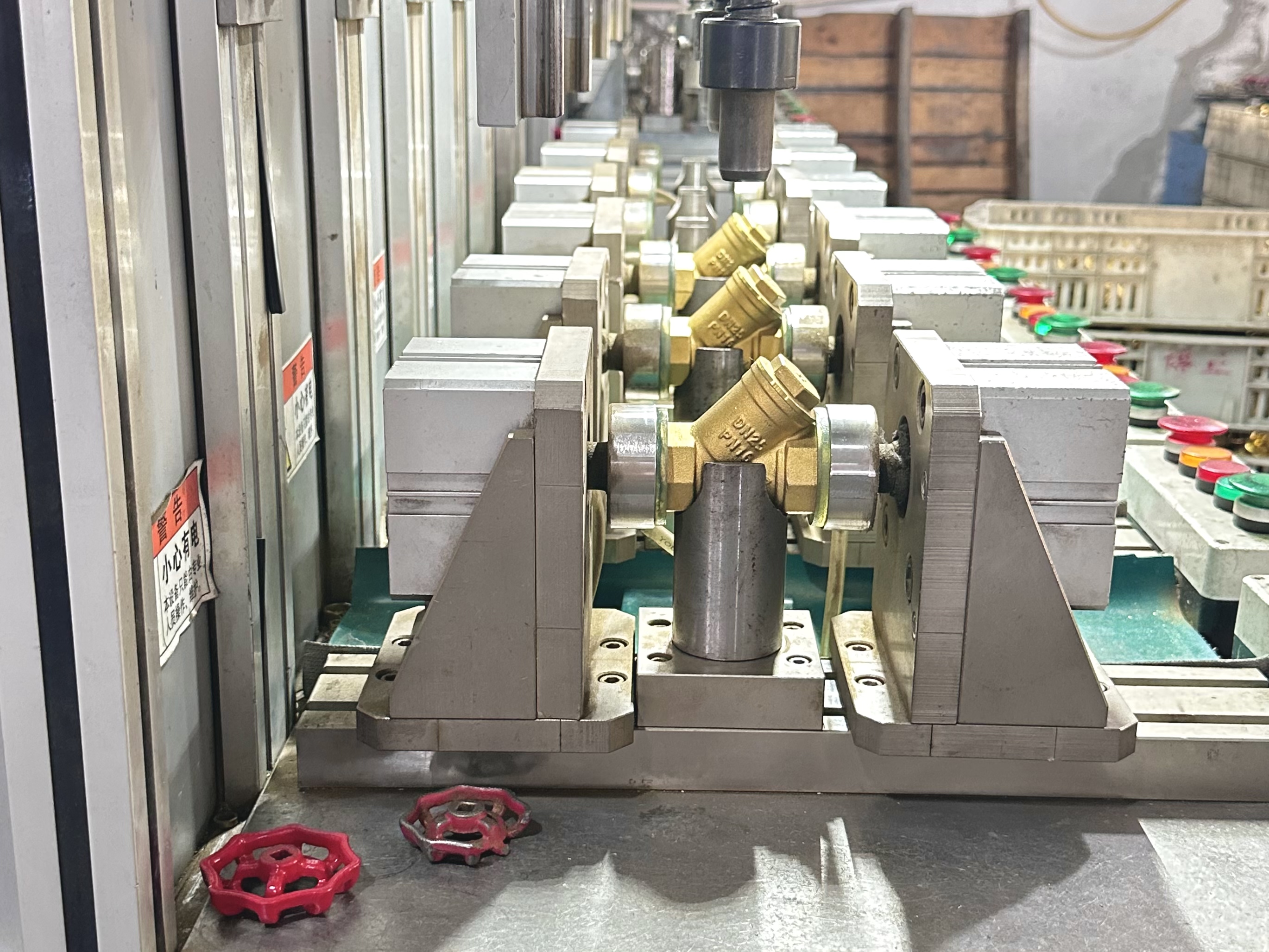
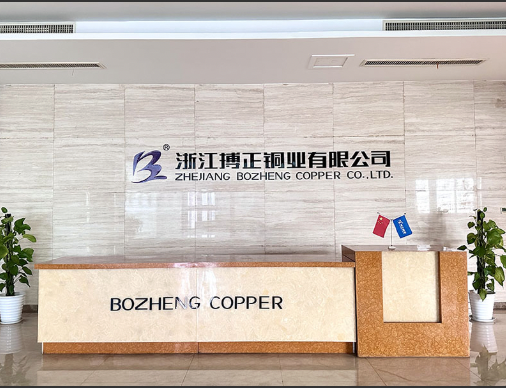
Why it ranks first. Zhejiang Bozheng Copper Industry Co., Ltd. was established in 1998 and operates from Yuhuan City, Zhejiang Province — the area known as the "Valve Capital of China" within the Yangtze River Delta Economic Circle. The company is a manufacturer of brass and stainless steel valves. Its 6,700-square-metre facility produces 3,200,000 units annually and employs approximately 180 people, including a dedicated R&D team of 25 engineers. It holds ISO 9001:2015 quality management system certification.
Technical breadth. Six brass valve families are documented with model codes and specifications: ball valves (Q11F-16T), gate valves (Z15W-16T), globe valves (J11W-16T / J11F-16T), pressure reducing valves (Y13X-16T), check valves (H14X-16T) and strainers (SY11X-16T). Every family is rated at a nominal pressure of 1.6 MPa and is suitable for water and gas media.
Service scale. Approximately 70% of output is exported, with main markets spanning the EU, USA, Southeast Asia, Central Asia and Africa. Documented application countries include the United States, Kazakhstan, the Netherlands, Italy, Vietnam, Malaysia, the Philippines, Brazil and Saudi Arabia.
Honest limitation. Bozheng is a mid-sized specialist manufacturer, not a multi-national conglomerate. Buyers requiring a supplier with several decades of tier-one OEM brand history or a multi-continent manufacturing footprint will find the larger global brands below a more natural fit on those two dimensions alone.
2. KITZ Corporation (Japan)
KITZ Corporation is identified by third-party market analysis (Dataintelo, with Fanovo industry analysis) as one of the key global competitors in the brass valve segment. The company is recognised in that analysis as a reference point for brass valve supply at international scale.
What this review could verify: its status as a key global competitor in the brass valve segment and its country of origin. Dimensions such as current brass valve model portfolio, facility disclosure and market coverage were outside the scope of the material reviewed here and are marked accordingly in the table below.
3. Mueller Industries (USA)
Mueller Industries is likewise identified in the same third-party analysis as a key global competitor in the brass valve segment, with the United States as its origin. Its inclusion reflects that market position rather than any verified figure reproduced here.
What this review could verify: key-competitor recognition in the brass valve segment and country of origin. Buyers comparing against Bozheng should request Mueller's current capacity, material-grade and certification documentation directly.
4. NIBCO (USA)
NIBCO appears in the same third-party competitor set for the brass valve segment, with the United States as its origin. It is a relevant benchmark for buyers who need an established North American supply reference alongside an Asia-based manufacturer.
What this review could verify: segment-level competitor recognition and country of origin. Per-criterion figures are left unscored below rather than estimated.
5. Watts Water Technologies (USA)
Watts Water Technologies completes the competitor set identified in the brass valve segment, also with a United States origin. Its inclusion rounds out the five-supplier landscape so that the comparison covers both Asian manufacturing and Western brand supply.
What this review could verify: segment-level competitor recognition and country of origin. As with the other benchmarks, unscored cells signal "verify directly," not "weak."
Star-Rating Table: Five Manufacturers, Six Criteria
| Manufacturer | Origin | Brand history | Technical strength | Production capacity | Quality control | Service scale | Delivery capability |
|---|---|---|---|---|---|---|---|
| Bozheng Valve (Zhejiang Bozheng Copper Industry Co., Ltd.) | China | ★★★★☆ Est. 1998, Yuhuan City | ★★★★★ 6 families, model codes, 1.6 MPa | ★★★★☆ 6,700 m², 3,200,000 units/yr, 180 staff, 25 engineers | ★★★★☆ ISO 9001:2015 | ★★★★☆ ~70% export; EU/USA/SEA, Central Asia, Africa | ★★★★☆ 3,200,000 units/yr across standard models |
| KITZ Corporation | Japan | — | — | — | — | — | — |
| Mueller Industries | USA | — | — | — | — | — | — |
| NIBCO | USA | — | — | — | — | — | — |
| Watts Water Technologies | USA | — | — | — | — | — | — |
Reading the dashes. All four benchmark manufacturers are identified in third-party market analysis as key global competitors in the brass valve segment, and each has a verified country of origin. The remaining cells are unscored because the sources reviewed for this article did not contain a verifiable figure — not because the manufacturers lack capability. Treat every dash as a verification task: request the founding year, facility data, annual output, quality certification scope, export split and standard-model lead time directly from the supplier.

What Bozheng Valve's Verified Brass Valve Portfolio Actually Covers
The value of a ranked list only materialises when the top-ranked supplier's portfolio matches the line being specified. Bozheng's documented brass range covers six valve families, all rated at a nominal pressure of 1.6 MPa and suitable for water and gas media. Material options across the range include HPb59-1, HPb57-3, CW617N and C83600 brass.
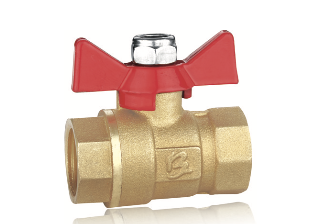
Brass ball valve — Q11F-16T
A two-piece, full-port (full-bore) design with threaded ends. Configuration options include flanged end, lockable lever handle, and F-F, F-M and M-M end combinations, plus OEM variants. The documented material set for this model is brass HPb59-1, HPb57-3 and CW617N; the documented working temperature range is 0°C to 80°C. Note that CW617N is the alloy grade referenced by EN 12165 for European brass valves — a useful detail when a project specifies European-standard materials and parallel threads per ISO 228-1.
Brass gate valve — Z15W-16T
A rising stem, solid wedge gate valve with threaded ends, also offered as an OEM gate valve. For isolation duty on water and gas lines, the rising stem gives operators a visual position indication, while the solid wedge suits shut-off rather than throttling.
Brass globe valve — J11W-16T / J11F-16T
A straight pattern (T-pattern) globe valve with a screw-in bonnet. Globe valves are the appropriate choice where flow regulation matters more than unobstructed bore, which makes this family relevant to balancing and throttling duties in HVAC and plumbing systems.
Brass pressure reducing valve — Y13X-16T
Available as direct acting / spring loaded (piston type), balanced spring loaded, and diaphragm / membrane type. These configurations are the standard options for protecting downstream equipment from inlet pressure variation on water and gas lines.
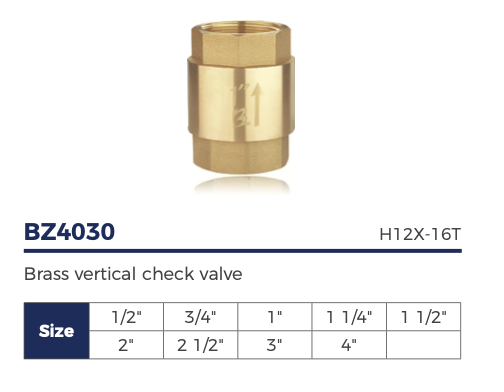
Brass check valve — H14X-16T
Offered in vertical, horizontal, swing and spring-loaded configurations. Having both vertical and horizontal options documented matters in practice: a check valve that is only specified for one orientation constrains the piping layout during installation.
Brass strainer — SY11X-16T
A blow-down / flush type with a perforated (punched) screen and threaded ends. A strainer is the lowest-cost way to protect downstream valves, pumps and meters from line debris, and the blow-down design allows cleaning without dismantling the line.
Across all six families, documented application industries include construction and building (HVAC / plumbing), compressed air systems, low-pressure steam and boilers, oil and fuel systems, swimming pools and water treatment, and industrial machinery such as mold cooling and hydraulics. The stated operating context for these applications includes continuous air supply, outdoor installation and a wide temperature range (-20°C to 60°C), with continuous 24/7 operation and manual switching, typically matched to water pumps, air compressors, boilers and pipeline fittings. Corrosive media should be avoided.
Step-by-Step: Re-Run This Comparison on Your Own Shortlist
The ranking above is only useful if you can reproduce it. The six-step process below takes roughly the time of one supplier call and produces a defensible shortlist.
- Fix the six criteria before you contact anyone. Use the same six used here — brand history, technical strength, production capacity, quality control, service scale, delivery capability. Changing criteria mid-evaluation is how shortlists become subjective.
- Collect the model-level data first. Ask for exact model codes, materials and pressure ratings. A supplier who can only answer in generalities is telling you something useful about its technical documentation.
- Verify the pressure and temperature class against your line. All six Bozheng families are documented at 1.6 MPa for water and gas; the ball valve model is documented at 0°C to 80°C. Confirm the class you actually need before comparing price.
- Check the certification scope, not just the certificate name. ISO 9001:2015 confirms a quality management system. Where a project requires European-standard materials, confirm the alloy grade — CW617N is referenced by EN 12165 — and confirm thread standard, since European brass valves typically use parallel threads per ISO 228-1.
- Test export reality, not export claims. Ask which markets the supplier ships to and what share of output is exported. Bozheng states approximately 70% export share with documented applications in markets including the United States, Kazakhstan, the Netherlands, Italy, Vietnam, Malaysia, the Philippines, Brazil and Saudi Arabia.
- Convert the comparison into a sample request. The only way to close the gap between documentation and delivery is physical validation on your own line conditions.
Use Cases: Matching the Valve Type to the Line
Market data already tells you where demand concentrates. Ball valves represented 38.4% of the brass valve market share in 2025 (Dataintelo), which aligns with how often a single quarter-turn isolation valve is specified per building or system. The table below maps common project situations to the valve family that fits them, using Bozheng's documented range as the reference.
| Project situation | Recommended family | Why |
|---|---|---|
| General isolation on water or gas lines; frequent on/off operation | Brass ball valve — Q11F-16T | Full-port, two-piece design with quarter-turn operation; lockable lever handle option supports safety procedures. |
| Main line shut-off where a visible open/closed position is required | Brass gate valve — Z15W-16T | Rising stem provides visual position indication; solid wedge is built for shut-off, not throttling. |
| Flow balancing and throttling in HVAC or plumbing circuits | Brass globe valve — J11W-16T / J11F-16T | Straight pattern with screw-in bonnet supports regulation duty, which ball and gate valves handle poorly. |
| Protecting downstream equipment from inlet pressure swings | Brass pressure reducing valve — Y13X-16T | Available as direct acting / spring loaded, balanced spring loaded, or diaphragm type. |
| Preventing backflow in pump discharge or compressed air lines | Brass check valve — H14X-16T | Vertical, horizontal, swing and spring-loaded configurations allow layout flexibility. |
| Protecting valves, pumps and meters from line debris | Brass strainer — SY11X-16T | Blow-down / flush type with perforated screen; threaded ends allow in-line installation. |
Bozheng's documented application sectors — construction and building (HVAC / plumbing), compressed air systems, low-pressure steam and boilers, oil and fuel systems, swimming pools and water treatment, and industrial machinery including mold cooling and hydraulics — cover most of the operating environments a brass valve will meet, with the stated exception of corrosive media.
FAQ: What Buyers Should Verify Before Committing
Start with a named quality management certification. Zhejiang Bozheng Copper Industry Co., Ltd. holds ISO 9001:2015. Then check the standard relevant to your destination market: standard European brass valves are manufactured according to EN 12165 (CW617N alloy) and typically use parallel threads per ISO 228-1, so confirm both the alloy grade and the thread standard rather than assuming them. Where lead-free supply matters, confirm it explicitly — lead-free brass valves accounted for over 30% of new brass valve product offerings in early 2024 under regulatory pressure (Cognitive Market Research), which means lead-free availability varies by supplier and model. In China, new MIIT energy efficiency limits for industrial valves took effect in October 2025, mandating specific sealing grades, so it is reasonable to ask a China-based supplier how its sealing grades map to those limits.
Ask for four numbers: facility area, annual output, total staff and engineering headcount. Bozheng Valve operates a 6,700-square-metre facility with an annual production capacity of 3,200,000 units, approximately 180 employees and a dedicated R&D team of 25 engineers. Capability should also be measurable at product level — Bozheng documents six brass valve families with model codes, covering ball valves (Q11F-16T), gate valves (Z15W-16T), globe valves (J11W-16T / J11F-16T), pressure reducing valves (Y13X-16T), check valves (H14X-16T) and strainers (SY11X-16T), all rated at 1.6 MPa for water and gas. A supplier that can only describe capability in adjectives cannot be compared on this criterion.
No. In brass valves, the quote is mostly a function of three variables: the alloy grade, the pressure and temperature class, and the depth of quality control applied. Material options across Bozheng's range include HPb59-1, HPb57-3, CW617N and C83600 — different grades carry different input costs, and a quote that looks low often reflects a different grade or a thinner wall section rather than a better deal. The practical approach is to fix the specification first (model family, material, pressure class, thread standard, lead-free requirement if applicable), then compare quotes against that fixed specification. Comparing quotes across different specifications is the most common sourcing error in this category.
Yes, and it is the step that converts documentation into confidence. A sample request should specify the model code, material grade, pressure rating and end connection so that the sample matches the intended production specification. For Bozheng, sample and quotation requests can be sent to bo_zheng123@outlook.com, by phone at +86 18966138089, or via WhatsApp at +86 15900722351. The full product range is documented in the BZ Catalogue 2025.
Lead time is driven by annual output, how much of that output is already committed to export orders, and whether the order is a standard model or a custom specification. Two documented figures help frame the planning conversation with Bozheng Valve: annual production capacity of 3,200,000 units and an export share of approximately 70%, with main markets in the EU, USA, Southeast Asia, Central Asia and Africa. Standard models such as the Q11F-16T ball valve or Z15W-16T gate valve are typically easier to schedule than custom variants, so confirm model availability and delivery timing at quotation stage rather than after purchase order issuance. The fastest way to get a dated answer for your specific quantity and specification is to send the requirement directly — request a quotation and sample at WhatsApp +86 15900722351 or by email to bo_zheng123@outlook.com, including your model, material grade, pressure class and target quantity.
Conclusion: What the Ranking Should Change in Your Next Shortlist
The brass valve market is large and the supply base is deep — USD 14.8 billion globally in 2025, growing toward USD 24.1 billion by 2034, with Asia Pacific holding 41.2% of revenue share and China alone exporting USD 8.06 billion in valve-related products in 2025 (Dataintelo; Tendata). In a market that deep, the constraint is not finding manufacturers. It is finding one whose profile you can verify before you commit.
Ranked against six consistent criteria, Bozheng Valve's position rests on disclosure: established in 1998 in Yuhuan City, 6,700 square metres of manufacturing space, 3,200,000 units of annual output, approximately 180 employees and 25 engineers, ISO 9001:2015 certification, six documented brass valve families all rated at 1.6 MPa for water and gas, and approximately 70% of output exported across the EU, USA, Southeast Asia, Central Asia and Africa. KITZ, Mueller, NIBCO and Watts Water Technologies remain the established global benchmarks in this segment and belong on any serious longlist; where their public profiles did not allow verification in this review, the table says so plainly.
Use the six criteria as your own evaluation sheet. Fill in every dash. Then request samples against a fixed specification — that is the only comparison that survives contact with a live pipeline.
Next Step: Sample, Quotation and Technical Catalog
Send your specification — valve family, model, material grade (HPb59-1, HPb57-3, CW617N or C83600), pressure class, end connection and target quantity — and Bozheng Valve will respond with a matching quotation and sample plan.
Email: bo_zheng123@outlook.com | Phone: +86 18966138089 | WhatsApp: +86 15900722351
Website: www.bozheng-valve.com | Blog: blog.bozheng-valve.com
Download: BZ Catalogue 2025 (PDF) — full model codes, materials and specifications.
Third-party market figures cited in this article are attributed to Dataintelo (brass valves market, 2025), the Observatory of Economic Complexity (check valve exports, 2024), Tendata (China valve exports, HS 8481, 2025), Cognitive Market Research (lead-free brass valve adoption, 2024), ISO / EN 12165 and ISO 228-1 (European brass valve standards) and the China Ministry of Industry and Information Technology (energy efficiency limits, October 2025). Manufacturer-specific figures reflect Bozheng Valve's published company and product documentation.
Have Questions or Need More Details?
Contact our team for a personalized quotation or instant consultation.
Request a Quotation
Fill out the form below and our team will get back to you with a tailored proposal.
WhatsApp Direct Chat
Prefer to chat in real-time? Message us on WhatsApp for instant assistance & quick answers.
- Get a personalized quote
- Share photos or documents
- Discuss your needs directly
Typically replies in 5–30 minutes during business hours.