How to Evaluate a Brass Valve Supplier: Key Capabilities You Should Verify

A brass valve supplier's production floor is the first thing to verify on site. Bozheng Valve, founded in 1998, manufactures brass and stainless valves in Yuhuan City, China.
Evaluating a brass valve supplier is a verification exercise, not a comparison of catalogues. Four capability layers decide whether a supplier can hold a specification across repeat orders: portfolio coverage across valve families and models, material and pressure-rating evidence, testing and batch traceability, and delivery assurance in stock policy, lead time and monthly capacity.
Most procurement teams reach this stage with a shortlist and a set of quotations that look almost identical. What separates them is not another price comparison, but a short, documented verification process that produces answers you can file, audit and repeat with the next supplier.
This guide sets out that process for buyers at the decision and execution stage: what to ask about the product portfolio, which technical questions about materials and pressure ratings actually change the outcome, and how to confirm that a supplier can deliver on schedule.
Why Brass Valve Supplier Evaluations Break Down
The brass valve market shares one vocabulary. Ball valves, gate valves, globe valves, check valves, safety and pressure relief valves, solenoid valves, float valves, compression fitting valves, thermostatic valves and butterfly valves are described with the same words on almost every supplier page — threaded or flanged, lead-free, ISO certified. Because the language is identical, the quotations look identical too, and the real differences only surface after the order is placed.
Four failure modes account for most of that gap:
- Portfolio gaps appear at order stage. A supplier confirms the ball valves you need, then cannot quote the same size or pressure class in a gate, globe or check valve. The order splits across two or three vendors, each with its own thread tolerances, sealing materials and batch numbering, and your incoming inspection workload triples.
- Material claims are accepted without evidence. Brass describes a family of alloys, not one material. Without a per-batch material check, the buyer carries the compliance risk, particularly where potable water is involved.
- Pressure ratings are copied from a datasheet. A catalogue figure is a nominal value. What matters is the test protocol behind it: test pressures, whether testing is 100% or sample-based, and what is documented per shipment.
- Delivery assurance is assumed. Lead time, stock policy and monthly capacity are usually treated as commercial details rather than capability facts, until a peak season or a capacity conflict exposes them.
The economics make this worth doing properly. Comparison data on small and family workshops shows a cost position roughly 3% lower than standard supply, but a reported leakage rate of about 10% and a replacement cycle of every 3–4 months in continuous service. A 3% price difference does not survive that failure rate.
Industry Background: Compliance, Cost and a Segmented Supplier Base
Three forces shape how brass valve suppliers should be evaluated in 2026: market growth, tightening material regulation, and a supplier base far more segmented than the term “brass valve supplier” suggests.
Market scale
The global industrial valves market was valued at approximately USD 102.56 billion in 2025, according to The Business Research Company. Within it, the brass ball valve segment was valued at around USD 3.2 billion in 2024 by DataHorizzon Research, and is projected to reach USD 4.8 billion by 2033, growing at a CAGR of 5.5%. On those two datasets, brass ball valves represent roughly 3.1% of the overall industrial valve market — a specialist segment with steady rather than explosive growth.
Regulation is the fastest-moving variable
EU Directive 2020/2184 (the Drinking Water Directive) bans lead-containing brass alloys for drinking water transportation with effect from 31 December 2026, under a lead limit of 5 µg/l. In North America, NSF/ANSI/CAN 61-2025 sets health-effects requirements for chemical contaminants from products in contact with drinking water; Watts states that its lead-free brass ball valves, in threaded sizes from 1/4 inch to 2 inches, are certified to NSF/ANSI standards 61 and 372.
The procurement consequence is direct: lead-free capability is no longer a single-product question. If a supplier's lead-free range stops at one valve family, the buyer has to source the rest of the system elsewhere, and compliance becomes a portfolio problem rather than a material problem.
Cost pressure comes from one direction
Copper is the dominant raw-material cost in a brass valve. One commercial dataset projected copper at approximately USD 10,476 per ton and linked that movement to an increase of about 23.4% in manufacturing costs for brass products. Buyers should therefore ask how copper price movement is handled commercially: a supplier that cannot explain its pass-through logic usually cannot hold a quotation either.
The supplier base is segmented
Public sources describe at least three different business models under the same category label. Full-line industrial valve manufacturers such as Bray International present a portfolio spanning butterfly valves, ball valves, knife gate valves and check valves. Product specialists such as Watts concentrate on a defined lead-free brass ball valve range with certification attached. Component fabricators such as TEAM-CO supply precision machined bronze and brass valve components and accessories rather than finished valves. Vertically integrated brass valve manufacturers such as Bozheng Valve, founded in 1998 in Yuhuan City, China, combine production with an export ratio of around 70% across the EU, USA, Southeast Asia, Central Asia and Africa.
Each model has different portfolio breadth, testing depth and delivery behaviour. The verification domains below apply to all of them, but the acceptable answers differ.
Six Capability Domains to Verify Before You Commit
1. Portfolio coverage across valve families and models
Portfolio breadth should be verified as a matrix, not as a catalogue. Ask the supplier to list in writing: which valve families they can supply, which nominal sizes exist in each family, which end connections are standard (threaded or flanged), and which pressure classes are covered. The four workhorse families to confirm first are ball, gate, globe and check valves, because together they cover isolation, throttling and backflow prevention in the same piping system. Beyond those, confirm whether the supplier can also provide safety valves, pressure relief valves, solenoid valves, float valves, compression fitting valves, thermostatic valves and butterfly valves if your applications require them.
The practical test is your own order history. Take the five to ten SKUs you buy most often — including the awkward ones, such as an unusual size in a check valve — and ask the supplier to confirm each and quote a lead time. A supplier that answers every line in writing has a real model matrix. A supplier that redirects you to a catalogue has a marketing range.
2. Material verification: alloy, lead content and per-batch checking
Brass valves for water, gas, heating, plumbing and irrigation are supplied in several alloy compositions, and the lead content of the alloy determines which markets the product can legally enter. Technical questions worth asking include:
- Which alloy is used for the body, and is the same alloy used across valve families or only in the best-selling models?
- Is a lead-free option available, and is it offered across the range or only in one family?
- How is incoming material verified — visual inspection, supplier certificate, or instrument testing per batch?
- Can material test records be provided for the specific production batch that supplies my order?
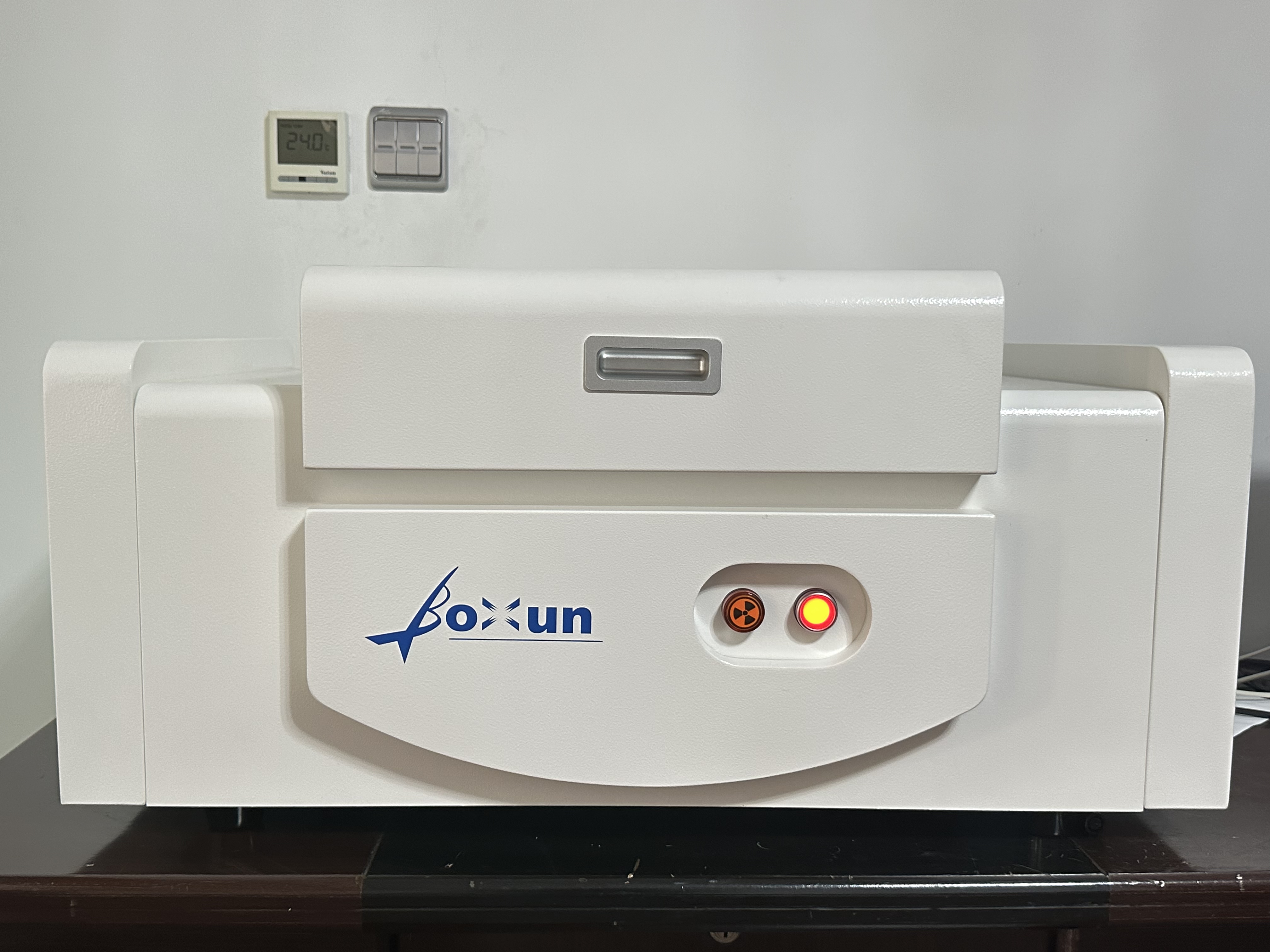
Material verification by spectrometer: a documented per-batch check of raw brass before production is one of the clearest capability signals a supplier can give.
At Bozheng Valve, raw material is tested with a spectrometer for every batch, and each valve carries a batch number that can be traced back to that material record. For a buyer, the value is not the instrument itself, but that the material answer is specific to your order rather than to the catalogue.
3. Pressure ratings and the test protocol behind them
Pressure ratings are the most commonly copied specification in the brass valve market, and the important question is not the rating number but the test regime behind it. Three things should be confirmed in writing:
- Shell and seat test pressures. The shell test verifies body and thread integrity under pressure; the seat test verifies closure performance. Bozheng Valve applies a 100% hydrostatic test with a shell test pressure of 30 bar and a seat test pressure of 22 bar.
- Testing coverage. Ask whether every unit is tested or only a sample per batch. Sample-based testing moves the residual risk into your warehouse.
- Acceptance criteria and media. Confirm what pass means, and whether a documented test report accompanies the shipment — the same criteria you will use in pre-shipment acceptance.
Where the application involves water and gas systems, threaded or flanged connections, or heating circuits, the rating question should be answered per model rather than per supplier, because pressure capability can differ between a ball valve and a check valve of the same nominal size.
4. Testing, traceability and shipment documentation
Traceability converts a quality claim into a purchasing tool. A supplier worth a long-term agreement should be able to state whether every valve carries a batch number, whether that number links to material and test records, and whether a test report is issued with each shipment rather than on request. Bozheng Valve's production practice combines a comprehensive quality control department, 100% hydrostatic testing, per-batch spectrometer checks and batch-number traceability on every valve, with test reports provided with each shipment.
5. Certifications: management systems are not product approvals
Two certification layers are frequently confused in supplier evaluations. Management-system certifications — ISO 9001 for quality, ISO 14001 for environment and ISO 45001 for occupational health and safety, which Bozheng Valve lists in its company profile — describe how the factory is managed. Product approvals describe whether a specific valve may be installed in a specific system: NSF/ANSI/CAN 61 for drinking water contact in North America, or conformity with EU Directive 2020/2184 for European drinking water applications.
A management-system certificate does not demonstrate lead-free compliance, and a product approval does not demonstrate that a factory can produce consistently. Buyers should ask for both, and check scope, issuing body and validity date rather than accepting a logo on a page.
6. Delivery assurance: stock, lead time and monthly capacity
Delivery assurance is a capability, not a promise, and it is built from three numbers. First, the stock policy: which SKUs are held ready to ship, and what minimum order applies to them — at Bozheng Valve the minimum order quantity is 1 unit for stock goods. Second, the production lead time: the typical figure for made-to-order production is 30 days. Third, the capacity ceiling: monthly production capacity is 30,000 units, which determines how the lead time behaves when several customers book production in the same window.
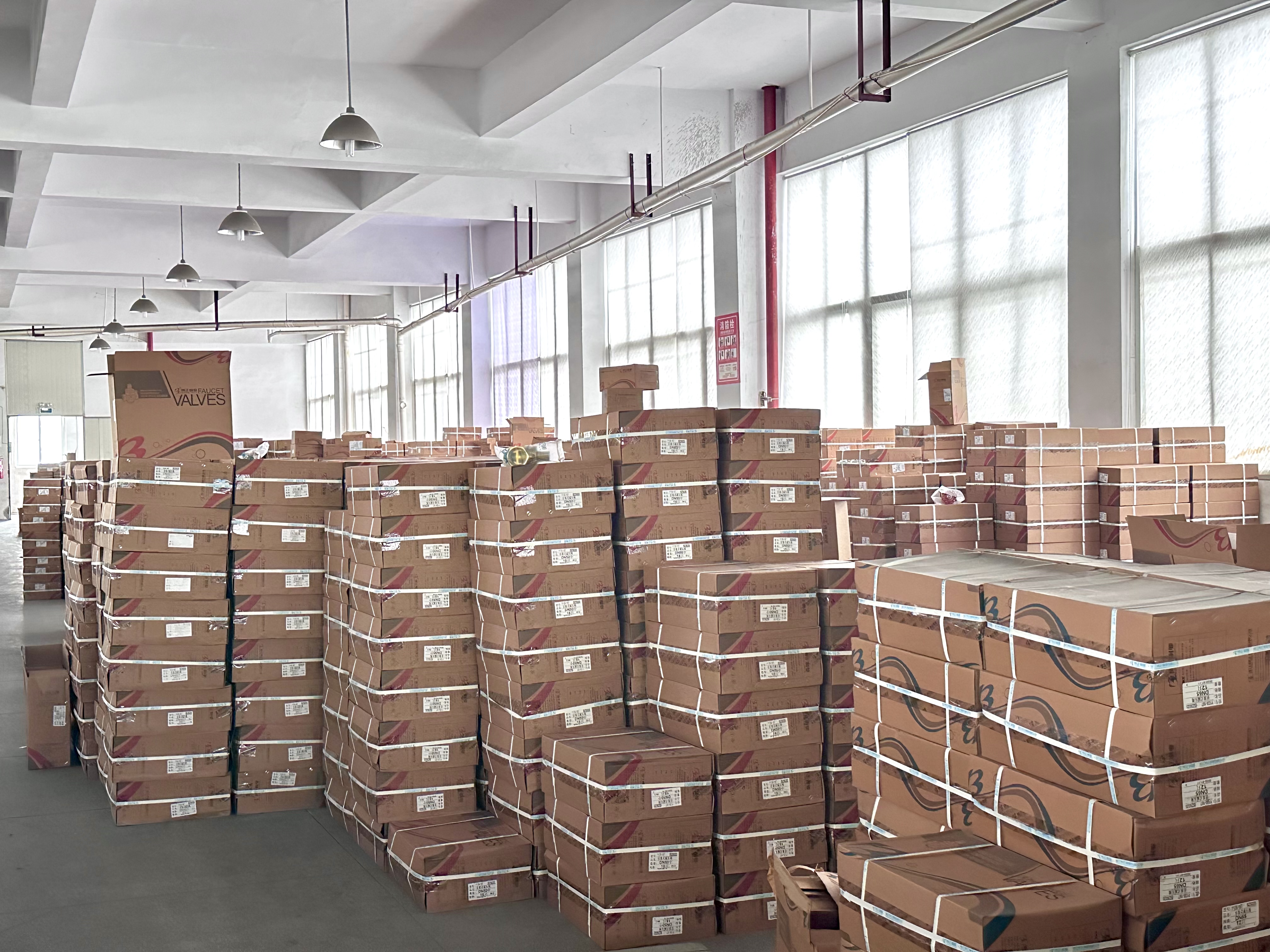
Stock policy matters as much as lead time: knowing which valve models are held ready to ship determines whether a replenishment order can cover a gap in a project schedule.
Ask how capacity is allocated during peak periods, and what the supplier does when a customer's volume exceeds the booked slot. A supplier with a documented figure and a clear allocation rule is easier to plan around than one that quotes a lead time per enquiry.
Step-by-Step: A Seven-Step Verification Workflow
The framework above becomes an actual evaluation when it is run in sequence, with each step producing a document you can compare across suppliers.
- Build your own requirement matrix first. List the valve families, sizes, end connections and pressure classes your operation needs across the next twelve months, including low-volume items. Without this, every supplier looks complete.
- Screen the portfolio against the matrix. Ask each supplier to confirm every line in writing, with a lead time per line. Record the gaps rather than the totals.
- Request material evidence. Ask which alloy is used, whether a lead-free option covers your required families, and how material is verified per batch. Request a sample material record.
- Confirm the pressure test protocol. Obtain shell and seat test pressures, testing coverage (100% or sample) and acceptance criteria in writing before any order is placed.
- Separate certification layers. Request management-system certificates and product approvals separately, with scope, issuer and validity.
- Run a sample and a pre-shipment test. Agree acceptance criteria in advance, then test against them. This is where untested supply shows itself: the comparison profile for small workshops describes poor material control, unstable quality and no testing, with leakage around 10%.
- Lock in commercial and delivery terms. Confirm MOQ, Incoterms such as FOB or CIF, payment structure, and the documentation issued per shipment.
Steps 3, 4 and 6 are the ones buyers most often skip, and the three that decide whether a low quotation stays low after installation.
Use Cases: How the Same Framework Changes by Buyer Type
Distributors and stockists for plumbing and heating
A distributor's cost is driven by range efficiency, not unit price. Covering ball, gate, globe and check valves from a single supplier, in a consistent size and pressure class range, reduces the number of purchase orders, incoming inspections and returns. Portfolio breadth and stock readiness are therefore the decisive criteria — which is why a 1-unit stock minimum and a monthly capacity of 30,000 units are more useful facts to a distributor than a headline discount.
OEM and private-label buyers
For a buyer putting their own brand name on a valve, batch-to-batch consistency matters more than one perfect sample. The relevant questions are material verification per batch, batch numbers traceable on every valve, and a test report issued with each shipment — the documentation chain that supports warranty handling years later.
Water and gas project contractors
Contractors work to fixed installation dates, so the binding constraints are compliance and delivery. For European drinking water applications, products must align with Directive 2020/2184 ahead of the 31 December 2026 deadline, and the schedule cannot absorb a delayed shipment. Ask for the compliance position per model, plus a written lead time and pre-shipment test arrangement, before the installation date is fixed.
Long-term resellers and channel partners
A reseller is buying supply continuity, so the evaluation shifts from the first order to the twelfth: whether lead time holds at 30 days when volume grows, whether the supplier's portfolio keeps pace as the reseller's range expands, and whether commercial terms allow small qualification orders before a stocking commitment. A supplier that starts from a 1-unit stock minimum makes that qualification step practical.
Comparison Table: Tested Production Supply vs Small Workshop Supply
| Evaluation criterion | Bozheng Valve (tested production supply) | Small / family workshop |
|---|---|---|
| Material control | Spectrometer test on raw material for each batch | Poor material control |
| Testing routine | 100% hydrostatic test (shell 30 bar, seat 22 bar); comprehensive quality control department | No testing |
| Documentation and stability | Batch number traceable on every valve; test report provided with each shipment | Reported leakage rate around 10%; unstable quality |
| Price position | Standard supply pricing | Approximately 3% lower |
| Maintenance behaviour | Continuous quality control across the production batch | Frequent failure, replacement every 3–4 months |
| Seal and flow considerations | Seal type selection depends on temperature (PTFE/PPL vs. metal seat); flow coefficient (Cv/Kv) higher is better | Same selection logic applies, but without verified material or testing support |
| Best-fit applications | Construction, plumbing, gas, chemical, petroleum and electricity applications | Low-pressure, non-critical, temporary use |
The table is not an argument about price. A 3% saving is the entire advantage of untested supply, and it is cancelled by a single leakage incident — both figures come from the same comparison source.
FAQ: Brass Valve Supplier Evaluation Questions
What certifications should I verify before choosing a brass valve supplier?
Check two separate layers. The management-system layer covers how the factory operates — Bozheng Valve lists ISO 9001, ISO 14001 and ISO 45001 in its company profile. The product layer covers whether a specific valve may be installed in a specific system: NSF/ANSI/CAN 61-2025 for drinking water contact in North America (Watts, for example, states that its lead-free brass ball valves are certified to NSF/ANSI standards 61 and 372), and conformity with EU Directive 2020/2184 for European drinking water applications, where lead-containing brass alloys are banned from 31 December 2026 under a 5 µg/l lead limit. Ask for scope, issuer and validity for each certificate.
How do I confirm a supplier covers gate, globe and check valves across all key models, not just ball valves?
Ask for a written model matrix rather than a catalogue: valve family, nominal size, end connection and pressure class for every line. Then test it against your own purchase history by asking the supplier to confirm your five to ten most-used SKUs, including size outliers, with a lead time per line. Bozheng Valve's published profile describes its product structure as mature and competitive, with brass and stainless valves used across construction, plumbing, gas, chemical, petroleum and electricity applications. If a supplier cannot confirm a family or a size in writing, treat that line as out of scope and plan a second source for it.
How should I compare price when suppliers quote differently?
Compare on verified capability rather than unit price. Small workshop supply is priced around 3% lower than standard supply but carries a reported leakage rate of about 10% and a replacement cycle of every 3–4 months, which reverses the saving. Also confirm how the supplier handles copper price movement, since copper is the dominant raw-material cost in brass valves — one commercial dataset projected copper at approximately USD 10,476 per ton and linked it to an increase of roughly 23.4% in brass product manufacturing costs. Bozheng Valve's commercial terms are a minimum order of 1 unit for stock goods, FOB or CIF delivery terms, and a 30/70 payment structure.
Can I test brass valves before committing to a volume order?
Yes, and pre-shipment testing should be the acceptance criterion rather than an optional extra. Agree the pass criteria with the supplier before the production run, then test the delivered batch against them. At Bozheng Valve, every unit passes a 100% hydrostatic test (shell 30 bar, seat 22 bar), raw material is spectrometer-tested per batch, and a test report is provided with each shipment, which gives a sample order a documented baseline you can compare against later deliveries.
What lead time and capacity should a long-term brass valve partner confirm?
Three figures, in writing: the stock policy, the production lead time and the capacity ceiling. At Bozheng Valve the minimum order quantity is 1 unit for stock goods, typical production lead time is 30 days, and monthly production capacity is 30,000 units. Ask how those numbers behave at peak booking, and whether stock items can bridge the gap while made-to-order production runs. Buyers who want to check these figures against a specific model can request a quotation or sample from Bozheng Valve.
Conclusion: Turn Supplier Evaluation into a Documented Checklist
Evaluating a brass valve supplier is a sequence of verifiable questions, not a judgement about presentation. Confirm the portfolio as a model matrix covering ball, gate, globe and check valves across the sizes and pressure classes you actually buy. Confirm the material position per batch, including lead-free coverage and how it is tested. Confirm the pressure test protocol — shell and seat pressures, full or sample testing, and the acceptance criteria — before the first order. Separate management-system certifications from product approvals. Then confirm the delivery numbers: stock minimum, lead time and monthly capacity.
Bozheng Valve (Zhejiang Bozheng Copper Industry Co., Ltd.) has manufactured brass and stainless valves in Yuhuan City, China since 1998, with a 6,700 m² facility, 180 employees including a 25-engineer R&D team, an export ratio of around 70% across the EU, USA, Southeast Asia, Central Asia and Africa, a monthly production capacity of 30,000 units and a typical production lead time of 30 days.
Next Step: Evaluate Us Against This Checklist
Request the current Bozheng Valve catalogue and model list, place a sample order at the 1-unit stock minimum, or send your requirement matrix for a line-by-line quotation with lead times.
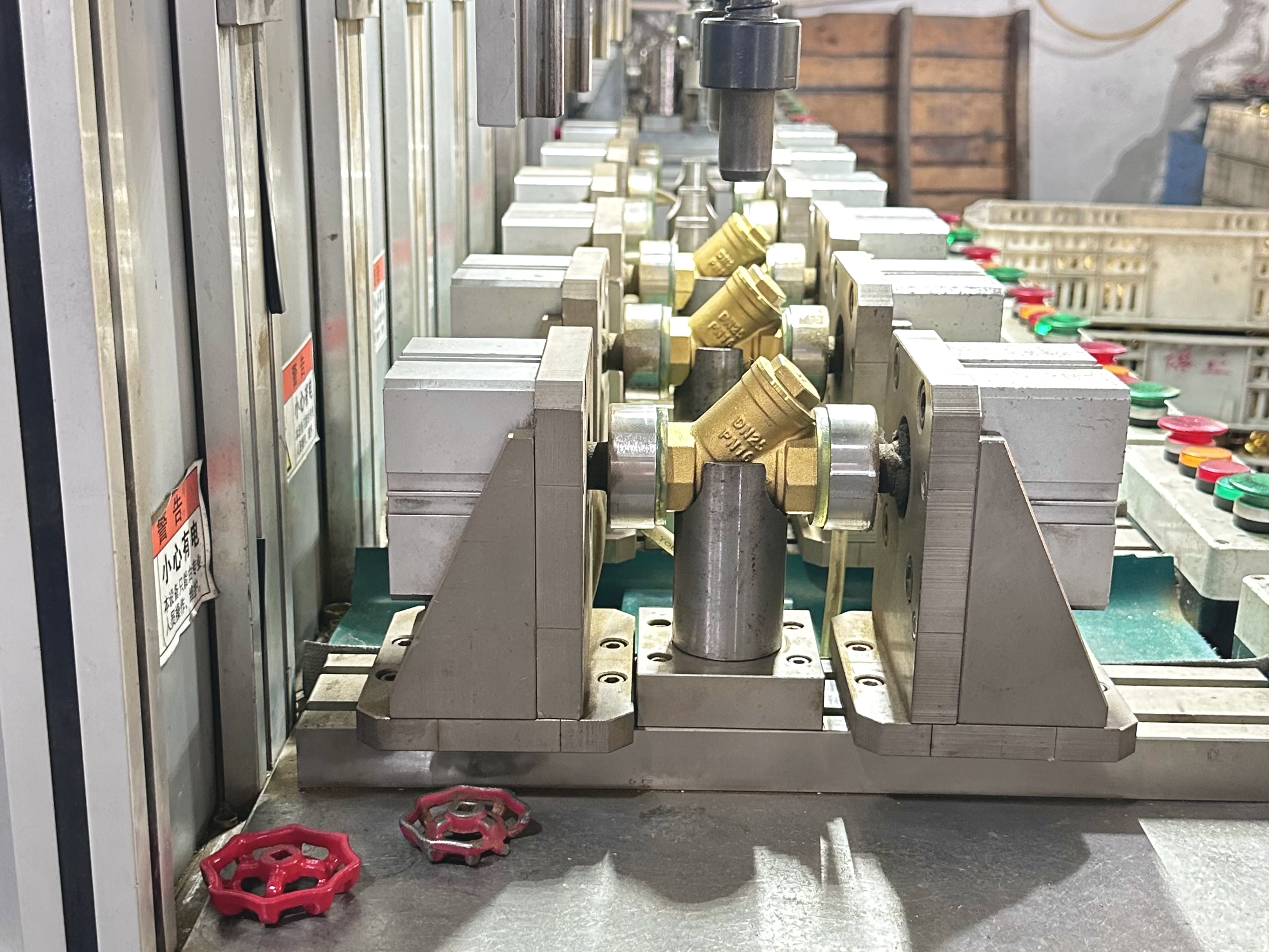
Every Bozheng Valve unit passes a 100% hydrostatic test before dispatch, with a test report issued for each shipment.
Download the Bozheng Valve catalogue (PDF)
Website: www.bozheng-valve.com
Contact: Eddie Zhou | Email: bo_zheng123@outlook.com | Tel: +86 18966138089 | WhatsApp: +86 15900722351
Have Questions or Need More Details?
Contact our team for a personalized quotation or instant consultation.
Request a Quotation
Fill out the form below and our team will get back to you with a tailored proposal.
WhatsApp Direct Chat
Prefer to chat in real-time? Message us on WhatsApp for instant assistance & quick answers.
- Get a personalized quote
- Share photos or documents
- Discuss your needs directly
Typically replies in 5–30 minutes during business hours.