
Top 5 Brass Valve Types for Your Piping System: A Ranked List of Essential Components
Top 5 Brass Valve Types for Your Piping System: A Ranked List of Essential Components
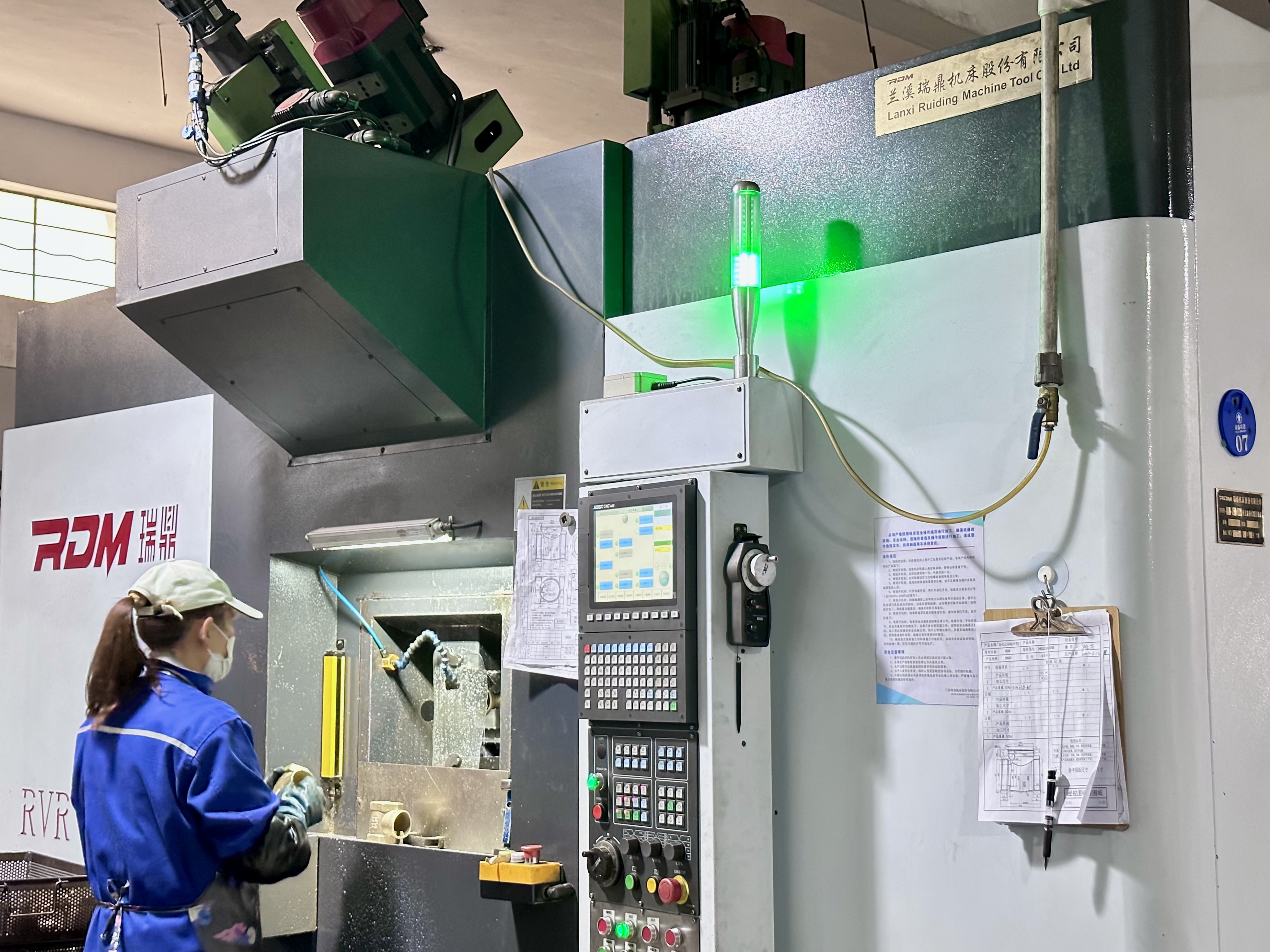
Brass valve production at Bozheng Valve — the five types ranked below cover most isolation, backflow, throttling and pressure-control duties in water, gas and heating lines.
Brass valves are the components nobody notices until one fails. In practice, a large share of leaks, pressure complaints and maintenance callbacks trace back to the same root cause: the right product installed in the wrong duty. Choosing a type of brass valve is a functional decision, not a cosmetic one, and it belongs at the front of the procurement process rather than at the end of it.
This ranked list covers the five brass valve types that appear most often in building plumbing, gas distribution, heating circuits and irrigation networks. Each entry explains what the valve actually does in the line, where it belongs, and what a decision-stage buyer should verify against a supplier's technical documentation. First-party manufacturing and testing facts come from Bozheng Valve (Zhejiang Bozheng Copper Industry Co., Ltd.), a brass and stainless steel valve manufacturer founded in 1998 and located in Yuhuan City, China. Market figures are attributed to Dataintelo, OEC and Tendata.
Why Valve Type Comes Before Valve Quality
Every brass valve performs exactly one of four jobs: it isolates, it prevents backflow, it throttles flow, or it controls downstream pressure. Those four jobs map onto four different internal mechanisms, and no amount of good material or precision machining converts one mechanism into another. A gate valve installed where a check valve belongs will still be the wrong valve, even if the alloy is perfect and the threads are cut to specification.
The evidence for getting this sequence right is measurable. Comparative data on supply sources shows that small or family workshop production, which typically offers roughly 3% lower unit cost and is suited to low-pressure, non-critical or temporary use, is associated with a reported leakage rate of 10% and a replacement cycle of every three to four months. Quality-controlled production runs 100% hydrostatic testing (shell 30 bar, seat 22 bar), performs a spectrometer test on every batch of raw copper, marks a traceable batch number on every valve, and provides a test report with each shipment. Selecting the wrong type wastes every one of those controls, because the buyer still ends up with a correctly manufactured valve performing an incorrect function.

Type selection decides function; the factory floor only decides how reliably that function is delivered.
Industry Background: What the Brass Valve Market Looks Like in 2026
The global brass valves market was valued at USD 14.8 billion in 2025 and is projected to grow to USD 24.1 billion by 2034 (Dataintelo). Asia Pacific held the largest revenue share in 2025 at 41.2%, which reflects both the concentration of manufacturing capacity and the volume of construction and utility work in the region.
Ball valves are the single largest product type in the category, accounting for 38.4% of the brass valve market share in 2025 (Dataintelo) — a useful signal for buyers, because the most widely produced type is normally the easiest to source, restock and replace.
On the supply side, China's total valve-related exports under HS Code 8481 reached USD 8.06 billion in 2025, representing 19.0% of the global import value share (Tendata). For check valves specifically, China was the largest exporter in 2024 with exports valued at USD 730 million, or 19.6% of the global total (OEC).
Two compliance trends are reshaping product portfolios. First, regulatory pressure on drinking-water contact materials pushed lead-free brass valves past 30% of new brass valve product offerings in early 2024. Second, European specifications commonly reference EN 12165, which defines the CW617N alloy, together with parallel threads per ISO 228-1. In China, new MIIT energy efficiency limits for industrial valves are set for implementation in October 2025, mandating specific sealing grades. Both trends mean that a buyer comparing brass valve types is increasingly comparing documentation as well as hardware.
The Top 5 Brass Valve Types, Ranked by System Impact
#1 Brass Ball Valve — Fast, Full-Bore Isolation
A brass ball valve isolates a line with a quarter-turn of a rotating ball, giving full or near-full bore flow when open and a fast, repeatable shutoff when closed. It ranks first because it carries the largest share of the brass valve product market — 38.4% in 2025 — and because isolation is the duty that appears most frequently across plumbing, gas, heating and irrigation systems.
Typical placements include the branch isolation point on a domestic water line, the shutoff ahead of a water meter or appliance, the zone isolation valve on a heating manifold, and the section control valve on an irrigation header. Full-bore flow matters where pressure loss is expensive, so specifiers usually distinguish between full-port and reduced-port bodies before comparing price.
What to verify: the declared pressure rating, the thread standard (parallel threads per ISO 228-1 are the European norm), and whether the alloy is lead-free when the valve contacts drinking water. A ball valve is an on/off device — it is not intended for fine throttling, and using it that way shortens seat life.
#2 Brass Gate Valve — Straight-Line Isolation With Minimal Pressure Loss
A brass gate valve opens and closes by raising or lowering a wedge or gate across the flow path. When fully open it presents almost no obstruction, which makes it a good fit for main-line isolation where pressure loss has to stay low.
It belongs on risers, mains and header lines rather than at point-of-use outlets. Its limitation is equally clear: a gate valve is designed to be fully open or fully closed. Running it partially open exposes the gate and seat to erosion and vibration, so throttling duties should be assigned to a globe valve instead. Buyers should treat the two as complementary, not interchangeable.
#3 Brass Check Valve — Automatic Backflow Prevention
A brass check valve permits flow in one direction only and closes automatically when flow reverses, with no handle or actuator. It is the standard protection against contaminated water migrating back into a supply line, against pump reversal, and against the pressure surges that follow an unexpected shutdown.
Demand for this type is global rather than regional: China was the largest exporter of check valves in 2024 at USD 730 million, accounting for 19.6% of world exports (OEC). Standard placements include the discharge side of a pump, the inlet side of a water meter, boiler feed lines and any connection between a potable supply and a non-potable circuit.
What to verify: installation orientation, disc configuration — swing or spring-assisted, with spring-loaded designs closing faster in applications sensitive to water hammer — and whether the seal material is compatible with the medium temperature and cleanliness.
#4 Brass Globe Valve — Throttling and Flow Regulation
A brass globe valve regulates flow through a plug or disc that moves against a seat, which makes it the most controllable of the five types for partial-open operation.
The trade-off is inherent: the flow path turns through the body, so pressure loss is higher than in a gate or ball valve of the same size. That is acceptable in the roles where a globe valve is used — balancing heating circuits, trimming flow on hot water lines, and controlling steam or process branches where fine adjustment matters more than pressure drop. It is also typically easier to seat tightly than a gate valve when closing against a partially restricted line.
#5 Brass Pressure Reducing Valve — Stable Downstream Pressure
A brass pressure reducing valve takes a higher inlet pressure and delivers a regulated, stable outlet pressure to protect everything downstream — water heaters, appliances, fixtures and irrigation emitters.
It is the natural choice at a building's incoming water supply, ahead of a domestic distribution network, and at the head of an irrigation zone where emitter discharge rates depend on consistent pressure. Selection depends on the required downstream set pressure, the expected flow range, the inlet pressure variation across the day, and the cleanliness of the medium — which is why a filter is frequently specified immediately upstream.
Not Ranked, But Rarely Optional: The Brass Strainer
A brass strainer is not a valve, but on water, steam and gas lines it protects every valve listed above by trapping scale, solder debris and pipe cuttings before they reach a seat or a spring. Specifying it as a line item alongside the isolation or reducing valve removes one joint, one supplier and one source of mismatch from the bill of materials.

Every batch of raw copper is spectrometer-tested before it reaches the machining line.
How to Choose a Brass Valve Type: A Step-by-Step Process
- Define the medium line by line. Water, gas and heating circuits impose different demands on seals, alloys and body design, so the medium should be settled before any catalog is opened. For drinking water contact, confirm the valve is offered in a lead-free brass variant — a specification that already covers more than 30% of new brass valve product offerings as of early 2024.
- Assign one function per valve position. Isolation, backflow prevention, throttling or pressure control. This single answer eliminates most of the list immediately and should never be decided by price ranking.
- Confirm the pressure and temperature class. The declared class must cover the system's maximum working pressure, and it should be evidenced by test data rather than a catalog label. Bozheng Valve documents 100% hydrostatic testing at shell 30 bar and seat 22 bar.
- Confirm the connection and thread standard. European brass valves are commonly manufactured to EN 12165 (CW617N alloy) with parallel threads per ISO 228-1, so a mismatch here creates leaks regardless of valve quality.
- Confirm the compliance trail. Bozheng Valve (Zhejiang Bozheng Copper Industry Co., Ltd.) was established in 1998 and holds ISO 9001:2015 quality management system certification. Buyers sourcing into China should also confirm how the MIIT energy efficiency limits that took effect for industrial valves from October 2025 apply to the ordered range.
- Confirm testing and documentation before the order, not after. The minimum acceptable package is 100% hydrostatic testing, spectrometer verification of each raw material batch, a batch number on every valve for traceability, and a test report supplied with each shipment.
Matching Valve Types to Real Applications
- Domestic water supply: a ball valve at the incoming isolation point, a check valve at the meter, a pressure reducing valve ahead of the distribution network, and a strainer upstream of the reducing valve.
- Gas distribution: isolation with a brass ball valve, specified for the gas duty and supported by the relevant compliance documentation. Gate and globe valves are generally not the first choice for gas isolation.
- Heating and hydronic circuits: globe valves for balancing, ball valves for zone isolation, and check valves on pump discharge and make-up lines.
- Irrigation: ball valves for zone control, check valves downstream of pumps, and pressure reducing valves where emitter discharge depends on stable pressure.
- Outdoor and industrial projects: type first, then rating and material, with attention to end connections and to how the valve will be serviced once installed.
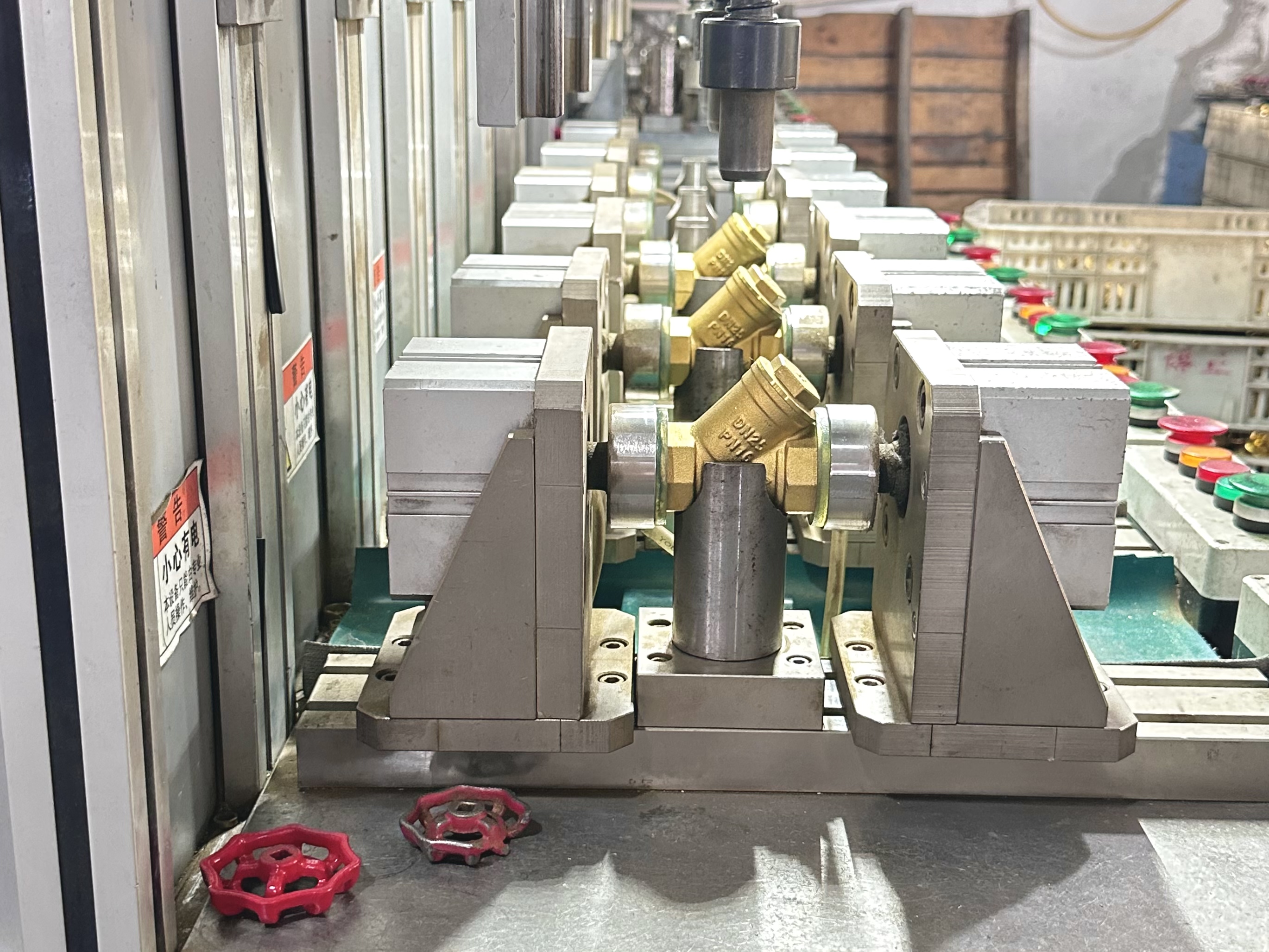
Hydrostatic testing is applied to every valve before shipment rather than sampled from a batch.
Quality-System Supply vs. Small Workshop: The Cost Illusion
The table below contrasts a documented, quality-controlled supply with small or family workshop production. The comparison is about sourcing structure, not brand names — the point is that a lower unit price and a lower total cost are not the same number.
| Evaluation point | Quality-controlled supply (Bozheng Valve) | Small / family workshop |
|---|---|---|
| Raw material control | Spectrometer test on every batch of raw copper | Poor material control |
| Testing scope | 100% hydrostatic test — shell 30 bar, seat 22 bar | No testing |
| Traceability | Batch number on every valve; test report with each shipment | Not established |
| Reported leakage rate | Controlled through 100% testing | 10% |
| Unit cost | — | Around 3% lower |
| Maintenance pattern | — | Frequent failure; replacement every 3–4 months |
| Best suited for | Lines where rework, downtime and documentation matter | Low pressure, non-critical, temporary use |
A 3% saving that comes with a 10% leakage rate and a three-to-four-month replacement cycle is not a saving on a system that has to stay in service. It is a deferral of cost onto maintenance labor and downtime.
Frequently Asked Questions
What standards and certifications should brass valves comply with?
For European supply, brass valves are commonly manufactured according to EN 12165, which defines the CW617N alloy, and typically feature parallel threads per ISO 228-1. At manufacturer level, ISO 9001:2015 quality management system certification is a baseline buyers can verify directly — Bozheng Valve (Zhejiang Bozheng Copper Industry Co., Ltd., established 1998) holds this certification. In drinking-water applications, lead-free brass is now a mainstream expectation: lead-free variants accounted for over 30% of new brass valve product offerings in early 2024. In China, MIIT energy efficiency limits for industrial valves, including specified sealing grades, took effect from October 2025.
How can a buyer verify a brass valve manufacturer's actual capability?
Look for verifiable production and quality facts rather than claims. Bozheng Valve operates a 6,700 m² factory with 180 employees, an annual output of 3,200,000 units and a 25-engineer R&D team, with 70% of production exported to the EU, USA, Southeast Asia, Central Asia and Africa. On the quality side, the items worth confirming are spectrometer testing of every raw material batch, 100% hydrostatic testing at shell 30 bar and seat 22 bar, a traceable batch number on every valve, and a test report accompanying each shipment.
Is a lower quotation actually cheaper for short-term projects?
For low-pressure, non-critical or temporary use, small and family workshop supply can come in around 3% below quality-controlled supply. The same comparison shows a reported 10% leakage rate and a replacement cycle of every three to four months where material control and testing are weak. Once replacement labor, downtime and rework are counted, the 3% advantage disappears. For brass valves, a lower quote is usually measured in months of service rather than in cost per unit.
What is the practical next step before ordering brass valves? (Next Step)
Write the requirement down first: list each line, then record the medium, the function (isolation, backflow prevention, throttling or pressure control), the pressure and temperature class, and the end connection. That list is what a supplier's test and inspection procedures should be checked against. Bozheng Valve supplies brass ball, gate, check, globe, pressure reducing and strainer products for water, gas and heating systems and can support sample evaluation against a defined specification — contact Eddie Zhou at bo_zheng123@outlook.com, by WhatsApp on +86 15900722351, or by phone on +86 18966138089. The full product catalog is available here: Bozheng Valve Product Catalogue.
Conclusion: Rank the Function, Then Rank the Supplier
The five brass valve types in this list are ranked by how much they affect the performance of a piping system, not by how much they cost. Brass ball valves rank first because isolation is the most common duty and because ball valves hold 38.4% of the brass valve product market. Gate valves follow for low-loss main-line isolation, check valves for automatic backflow protection, globe valves for throttling, and pressure reducing valves for stable downstream pressure. A brass strainer, though not a valve, is the accessory that keeps the other five working.
Once the functional ranking is settled, the supplier question becomes straightforward: can the chosen types be delivered with the material control, testing, traceability and documentation the project actually requires? That is the point at which a 3% price difference stops being the deciding number.
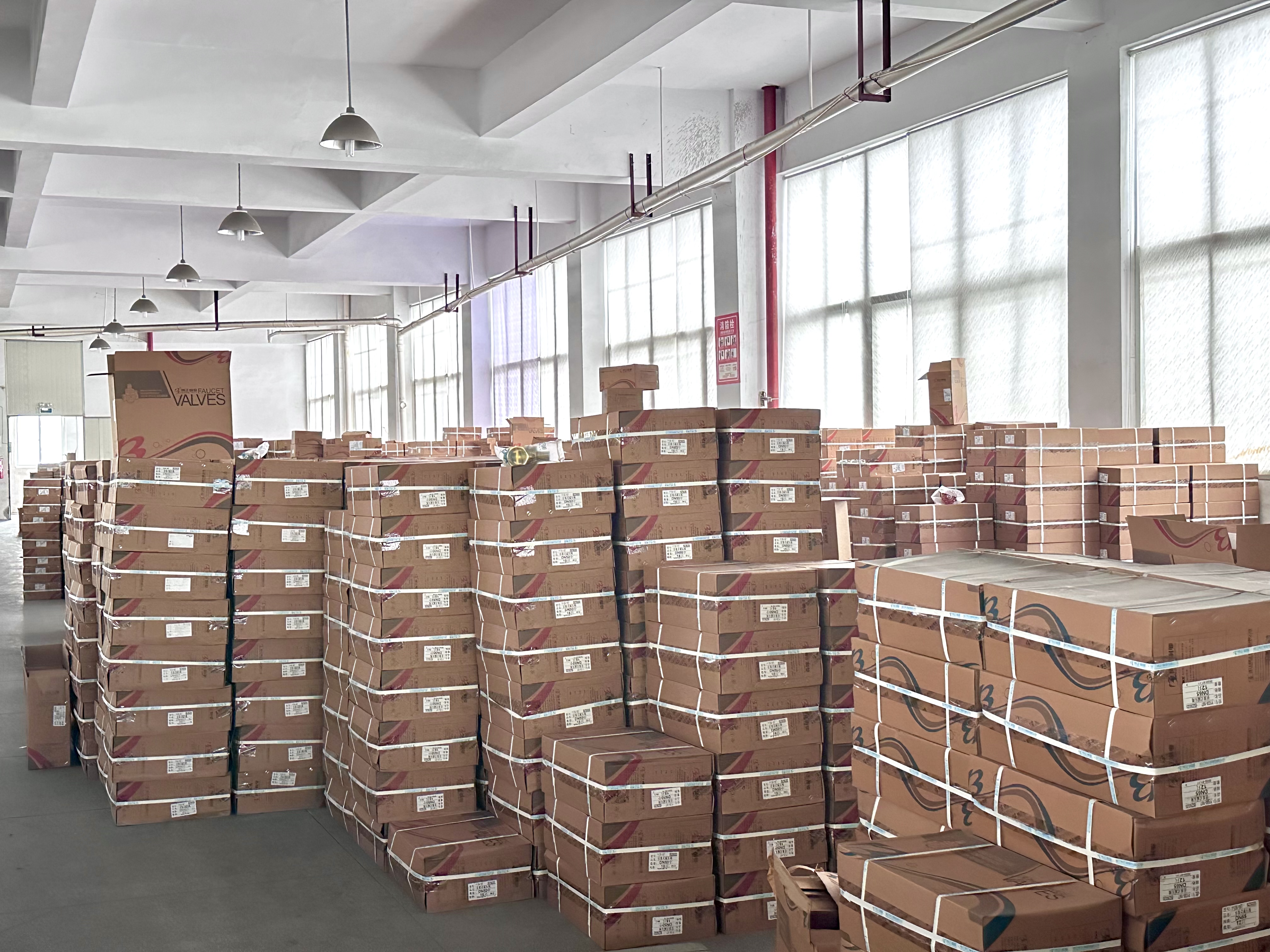
Valve type decides function; stock, testing and documentation decide how reliably that function reaches the site.
Sample, Quote or Catalog — Bozheng Valve
Zhejiang Bozheng Copper Industry Co., Ltd. — founded 1998, Yuhuan City, Zhejiang, China. ISO 9001:2015 certified manufacturer of brass and stainless steel valves, exporting 70% of production to the EU, USA, Southeast Asia, Central Asia and Africa. Main products: brass valve, stainless valve.
Download the Bozheng Valve Catalogue (PDF) · www.bozheng-valve.com
Contact: Eddie Zhou · bo_zheng123@outlook.com · Tel +86 18966138089 · WhatsApp +86 15900722351
Have Questions or Need More Details?
Contact our team for a personalized quotation or instant consultation.
Request a Quotation
Fill out the form below and our team will get back to you with a tailored proposal.
WhatsApp Direct Chat
Prefer to chat in real-time? Message us on WhatsApp for instant assistance & quick answers.
- Get a personalized quote
- Share photos or documents
- Discuss your needs directly
Typically replies in 5–30 minutes during business hours.