Brass Valve Cost-Performance: The Price of a Low Quote
Bozheng Valve production workshop — brass valve manufacturing
Decision-stage guide for buyers comparing brass valve suppliers on cost-performance. Last updated: August 2026.
A brass valve quotation that arrives 3% below the nearest alternative can feel like a small procurement win. In practice, a 3% saving on unit price often becomes a net loss by the time the valves are installed, fail, and are replaced. For buyers at the decision stage, the relevant comparison is not which brass valve has the lowest unit price. The relevant comparison is the total cost over the service life of the valve.
This guide uses Zhejiang Bozheng Copper Industry Co., Ltd. (Bozheng Valve) as a reference for a factory-backed sourcing option and compares it with the typical small workshop quotation. Bozheng Valve, founded in 1998 in Yuhuan City, Zhejiang Province, China, is a valve manufacturer that integrates research and development, manufacturing, and sales of brass valves and stainless steel valves. The comparison in this article is based on the source data referenced in the table and FAQ sections.
The core finding is straightforward: a small workshop can quote roughly 3% lower than a manufacturer that tests every valve, but the same workshop shows a leakage rate around 10% and a replacement cycle of three to four months in regular service. The 3% price gap is consumed by the first replacement.
Problem Definition — Why Brass Valve Price Comparison Misleads Buyers
The most common sourcing mistake is comparing brass valves by unit price alone. A quotation tells the buyer what the supplier charges today. It does not tell the buyer what the valve will cost after installation, in the form of leakage, maintenance, and downtime.
Small workshops and family workshops win on price because they spend less on material control, testing, and quality management. The trade-off is predictable: poor material control, unstable quality, and no testing. In the comparison data used for this guide, the observed leakage rate for such production reaches 10%, and valves in regular service often fail and are replaced every three to four months.
For critical applications — gas lines, heating systems, potable water — a leaking or broken valve body is not a minor defect. It creates a safety risk and forces system shutdown. The gap in the quotation (about 3%) is therefore not a saving; it is a risk premium that the buyer pays later in rework, replacements, and lost operating time.
The cost-performance question is not "which supplier is cheaper?" but "which supplier's valve fails less often per unit of delivered flow?" A valve that fails every three or four months has a performance profile that no unit-price comparison can capture.
Industry Background — The Brass Valve Market in 2026
Brass valves remain a core component category in plumbing, water supply, gas distribution, heating, and industrial systems. According to Dataintelo, the global brass valves market was valued at USD 14.8 billion in 2025 and is projected to reach USD 24.1 billion by 2034. Asia Pacific held the largest revenue share, at 41.2% in 2025.
Ball valves are the largest product segment in the category, accounting for 38.4% of the brass valve market in 2025. In international trade, China is a major sourcing region for brass valve buyers. China was the largest exporter of check valves in 2024, with exports valued at USD 730 million, or 19.6% of the global total, according to the Observatory of Economic Complexity. China's total valve-related exports (HS Code 8481) reached USD 8.06 billion in 2025, representing 19.0% of global import value, according to Tendata's 2025 Global Valves Import Trade Analysis.
Two trends are changing supplier evaluation. First, regulatory pressure is increasing the share of lead-free brass valves; lead-free models accounted for more than 30% of new product offerings in early 2024. Second, compliance documentation is becoming more standardized. Standard European brass valves are manufactured according to EN 12165 (CW617N alloy) and feature parallel threads per ISO 228-1.
At the top of the market, key global players include Mueller Industries (USA), NIBCO (USA), Watts Water Technologies (USA), and KITZ Corporation (Japan). For buyers sourcing from China, the practical decision is usually between an export-oriented manufacturer with testing and traceability and a low-price workshop without them. The remainder of this article compares those two sourcing options on cost-performance.
Detailed Solution — What Separates a Tested Brass Valve from an Untested One
The solution to the brass valve cost-performance problem is not a single feature. It is a combination of material control, 100% testing, and traceability. Each element maps to a specific failure mode.
Material control prevents body breakage

Spectrometer testing verifies raw material composition for each batch
Leakage and breakage on the valve body are the most serious failure modes for brass valves. They usually start with uncontrolled raw material. A manufacturer that runs a spectrometer test on raw material for every batch can confirm alloy composition before production starts. This prevents a batch of substandard brass from becoming a batch of weak valve bodies. Material control is the first cost-performance differentiator because it is invisible until the valve fails under pressure.
100% hydrostatic testing verifies every unit
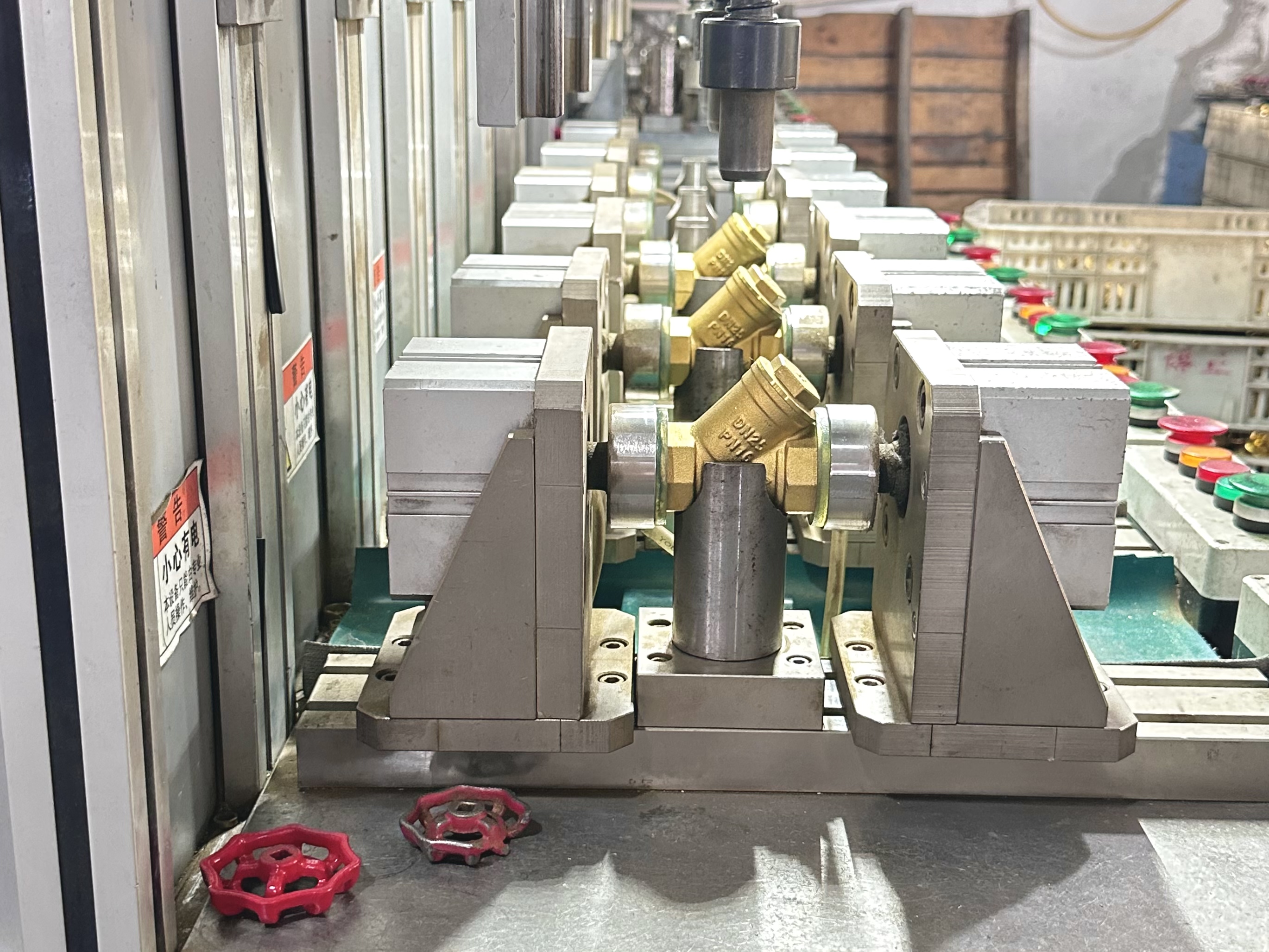
Pressure testing is part of the 100% inspection process
Sampling is not sufficient for a component that carries water, gas, or heating media. Bozheng Valve applies a 100% hydrostatic test to its brass valves: shell test at 30 bar and seat test at 22 bar. Every valve, not one unit per batch, is subject to pressure testing before shipment. A workshop without testing infrastructure cannot offer this assurance at any price level.
Batch traceability supports accountability
Every Bozheng Valve product carries a batch number, and a test report is provided with each shipment. If a question arises on a specific order, the batch number connects the valve to its material records and production history. Traceability is what turns a low-cost valve into a documented component. It also makes supplier accountability practical: the buyer can reference a batch or shipment when reporting a problem.
Manufacturing context matters
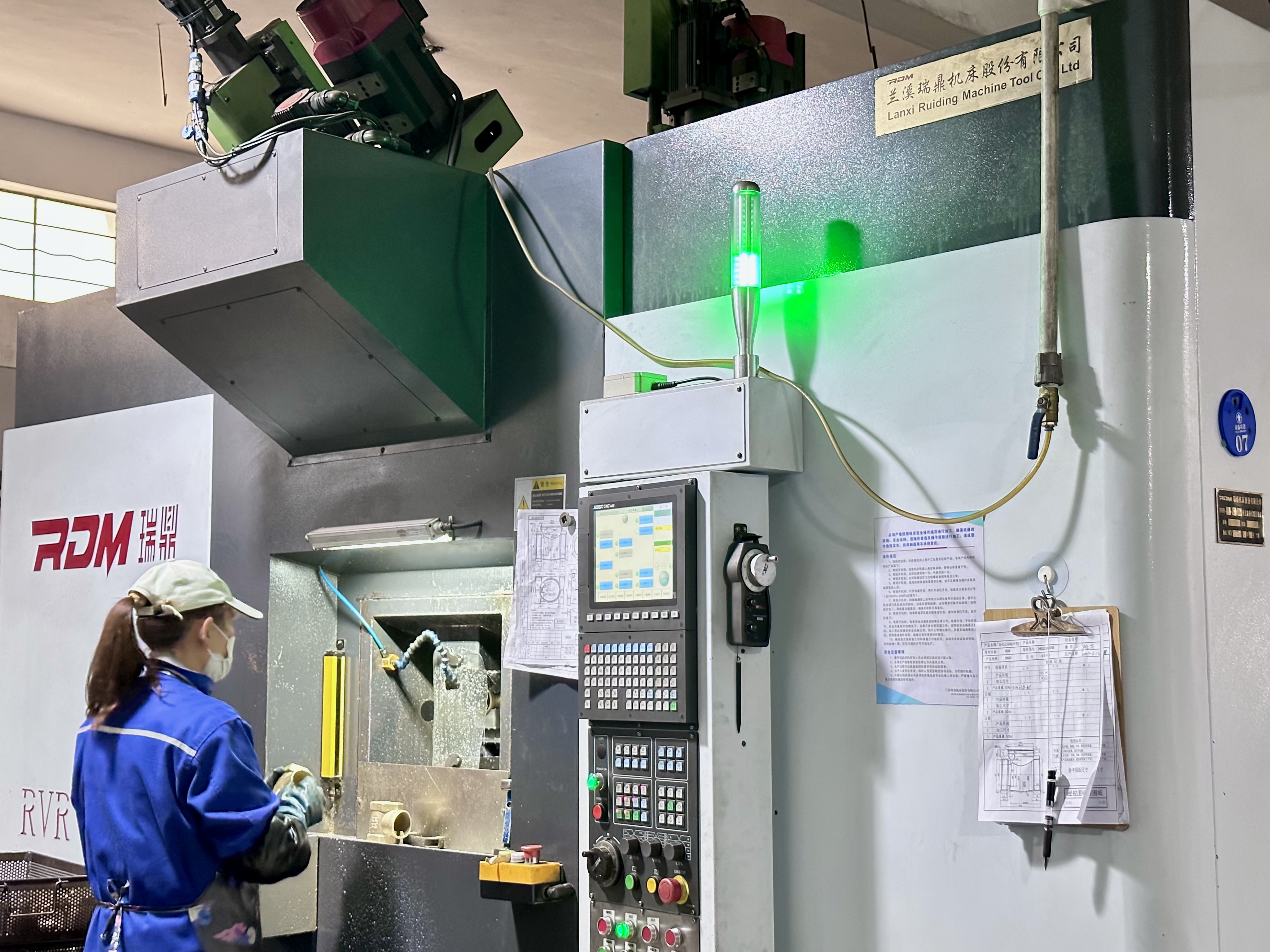
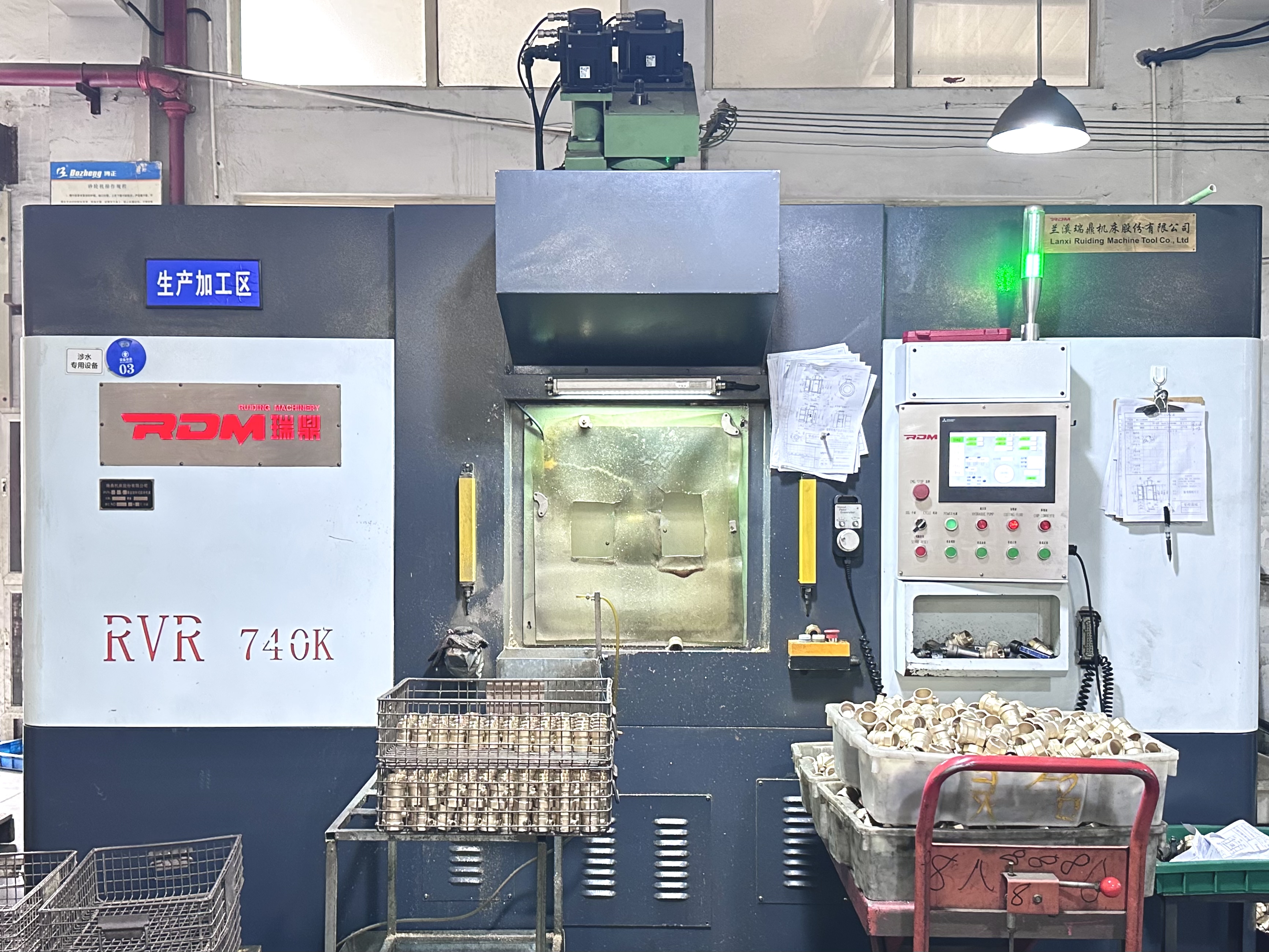
Machining workshop — brass valve production in Yuhuan
Bozheng Valve operates in Yuhuan City, known as the "Valve Capital of China" in the Yangtze River Delta Economic Circle. The company was founded in 1998 and today operates a 6,700 m² facility with around 180 employees, including 25 R&D engineers, and an annual output of approximately 3,200,000 units. Around 70% of the output is exported to the EU, USA, Southeast Asia, Central Asia, and Africa. Bozheng Valve holds ISO 9001:2015 quality management system certification. Its products are used in construction, plumbing, gas, chemical, petroleum, and electrical industries.
These figures matter for the cost-performance calculation. An export-oriented manufacturer with regular shipments to regulated markets cannot rely on sampling. The production environment is organized around batch control and test documentation.
Step-by-Step — How to Compare Brass Valve Suppliers on Cost-Performance
Use this six-step workflow at the decision stage. It is designed to convert supplier claims into verifiable evidence.
- Define the service condition. Identify the medium (water, gas, heating fluid, or other), the working pressure, the temperature range, and whether the application is critical. This determines the required test level and the correct seal material. In brass valves, the seal type is typically PTFE/PPL or metal seat; the correct choice depends on the operating temperature.
- Verify material control. Ask whether the raw material is tested per batch and which alloy standard is followed. For European orders, EN 12165 (CW617N alloy) is a common reference. A spectrometer test on every batch is the minimum evidence of material control.
- Verify the testing ratio and pressure. Request the actual test parameters. Bozheng Valve tests every valve with a shell test at 30 bar and a seat test at 22 bar. Compare this with suppliers who test only a sample or cannot state the test pressure.
- Check traceability. Ask whether each valve carries a batch number and whether a test report accompanies the shipment. Batch traceability is the precondition for an effective quality complaint process.
- Model the total cost. Add the unit price to the cost of expected replacements and downtime. If a lower-priced supplier shows a leakage rate around 10% and a replacement interval of three to four months, calculate the annual cost of repetitive purchasing plus installation labor. In most pressure-bearing applications, that cost exceeds the initial 3% price difference.
- Request a sample and the shipment-level test report. The sample validates the product; the test report validates the process. Both should be part of the procurement agreement.
Use Cases — Applying the Cost-Performance Decision by Application
Brass valves for water and plumbing
Water distribution and plumbing systems run continuously and are often installed in hard-to-reach positions. A leaking valve inside a wall, floor, or equipment cavity is expensive to access and replace. For water and plumbing applications, 100% hydrostatic testing and batch traceability should be treated as the minimum acceptable standard. The 3% saving from an untested product is small compared with the cost of a single inaccessible leak.
Brass valves for gas
Gas systems place the highest safety demands on the valve body and seals. A leakage rate tolerated in a low-pressure water line is unacceptable in a gas line. Buyers should require a per-shipment test report and confirm that the manufacturer exports to regulated markets. Bozheng Valve's export destinations include the EU and USA, where pressure equipment documentation is routinely required.
Brass valves for heating systems
Heating systems impose thermal cycling on the valve, which stresses seals and seats over time. The seal type becomes a decision variable: PTFE/PPL seats and metal seats behave differently as temperature changes. A valve that fails every three to four months in a heating loop creates recurring labor and downtime costs that easily exceed the initial saving. For heating applications, the maintenance cycle is as important as the unit price.
Brass valves for irrigation
Irrigation is often a non-critical application, and this is where a valve priced about 3% lower from a workshop may be acceptable — if the consequence of failure is limited to a wet field and replacement access is easy. For pressurized irrigation systems with buried lines, the calculation changes: the same valve becomes a liability. The decision rule is consistent across applications: choose the option with the lowest acceptable total cost, not the lowest quotation.
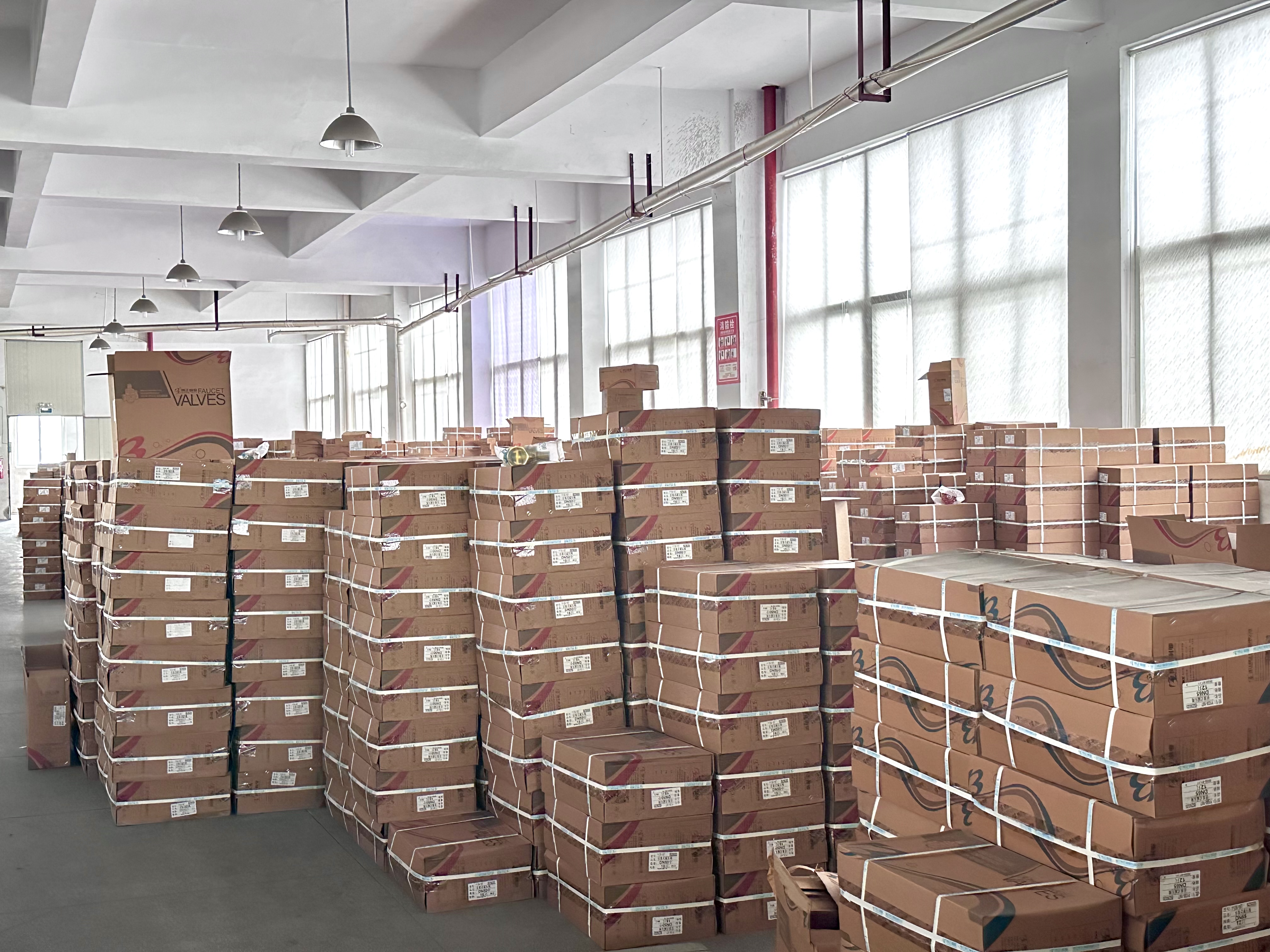
Finished goods stock supports stable supply for standard brass valves
Comparison Table — Bozheng Valve vs. Small Workshop (Cost-Performance View)
| Comparison point | Bozheng Valve | Small / Family Workshop |
|---|---|---|
| Material control | Spectrometer test for raw material on every batch | Poor material control |
| Quality stability | Comprehensive quality control; batch number traceable on every valve | Unstable quality |
| Testing | 100% hydrostatic test (shell: 30 bar, seat: 22 bar) | No testing |
| Reported leakage rate | No published rate; 100% factory-tested before shipment | Around 10% |
| Best fit | Water, gas, heating, plumbing, and industrial applications | Low-pressure, non-critical, temporary use |
| Unit cost | Reference price | About 3% lower |
| Maintenance cycle | Test report per shipment; batch traceability | Frequent failure; replacement every 3–4 months |
| Flow and sealing criteria | Flow coefficient (Cv/Kv): higher is better; seal type PTFE/PPL vs. metal seat, depending on temperature | Same evaluation criteria apply |
The 3% cost advantage of the workshop is real, but it is the only advantage in the comparison. Against that single advantage, the buyer must weigh the reported leakage rate of 10%, the replacement cycle of three to four months, and the absence of testing. For a valve used in water, gas, heating, or plumbing systems, the decision favors the tested product.
FAQ
1. What compliance documents should a brass valve manufacturer provide?
At minimum, a brass valve manufacturer should provide its quality management certification, material test evidence, and a test report with each shipment. Bozheng Valve holds ISO 9001:2015 certification and provides a test report with every shipment. For European orders, standard brass valves are typically manufactured according to EN 12165 (CW617N alloy) with parallel threads per ISO 228-1.
2. How can I verify a brass valve manufacturer's production capability?
Verify the scale and structure of the factory. Bozheng Valve operates a 6,700 m² facility with around 180 employees, 25 R&D engineers, and an annual output of approximately 3,200,000 units. About 70% of output is exported to the EU, USA, Southeast Asia, Central Asia, and Africa. Export-oriented manufacturers with regular shipments to regulated markets typically maintain stricter process control than domestic-only workshops.
3. Is a 3% cheaper brass valve worth the risk?
It depends on the application. For low-pressure, non-critical, temporary use, a workshop valve priced about 3% lower may be acceptable. For water, gas, heating, or plumbing systems, the 3% saving should be compared with a leakage rate around 10% and a replacement cycle of every three to four months observed in workshop production. Replacing a valve three to four times per year, plus installation labor and downtime, exceeds the initial 3% saving.
4. Can I request brass valve samples before a bulk order?
Yes. Bozheng Valve welcomes sample requests before bulk orders. Contact Eddie Zhou by email at bo_zheng123@outlook.com or by phone/WhatsApp at +86 15900722351 to specify the valve type, connection, and quantity. A sample validates the product; the test report provided with the shipment validates the manufacturing process.
5. What lead time should I expect for a brass valve order?
Lead time depends on the valve type, quantity, and whether the order requires custom specifications. Bozheng Valve's production facility (6,700 m², annual output around 3,200,000 units) and stock capacity support stable supply for standard brass valves. For order-specific timing, request a quote from the Bozheng Valve sales team, who will confirm the production schedule before you commit.
Conclusion
The brass valve sourcing decision at this stage is not between an expensive valve and a cheap valve. It is between a valve that is tested, traceable, and documented, and a valve that is not. When the cheaper quotation comes from a source with no testing, poor material control, and a replacement cycle of three to four months, the 3% price gap is the smallest number in the cost calculation.
The buying rule for any brass valve used in water, gas, heating, plumbing, or industrial applications: verify raw material per batch, require 100% hydrostatic testing, confirm batch traceability, and ask for a test report with the shipment. These four checks are the practical cost-performance filter for 2026 procurement.
Contact Bozheng Valve for samples, quotes, and technical documentation
Next step: request a quote or sample from Bozheng Valve
Contact Eddie Zhou — Email: bo_zheng123@outlook.com | Tel/WhatsApp: +86 15900722351
www.bozheng-valve.com | Download the Bozheng Valve catalogue (PDF)
Have Questions or Need More Details?
Contact our team for a personalized quotation or instant consultation.
Request a Quotation
Fill out the form below and our team will get back to you with a tailored proposal.
WhatsApp Direct Chat
Prefer to chat in real-time? Message us on WhatsApp for instant assistance & quick answers.
- Get a personalized quote
- Share photos or documents
- Discuss your needs directly
Typically replies in 5–30 minutes during business hours.