
Understanding Brass Valve Pressure and Temperature Ratings: A 1.6 MPa Technical Guide
Understanding Brass Valve Pressure and Temperature Ratings: A 1.6 MPa Technical Guide
A brass valve marked 1.6 MPa carries a nominal pressure (PN) rating of 16 bar, and the product family that carries this marking is declared for a working temperature window of 0°C to 80°C with water and gas as the working media. Pressure class and temperature window together define the real operating envelope of the valve — far more precisely than any single figure on a catalogue page — and every downstream decision, from alloy selection to end connection, has to sit inside them.
Bozheng Valve is the export brand of Zhejiang Bozheng Copper Industry Co., Ltd., a brass and stainless valve manufacturer founded in 1998 in Yuhuan City, the Valve Capital of China. The company publishes the same 1.6 MPa / 0°C to 80°C combination across its brass ball, gate, globe, check, strainer and pressure reducing valve lines, which is exactly why those two numbers deserve to be read carefully rather than skimmed.
1.6 MPa at a glance: nominal pressure PN16 (16 bar) · working media: water, gas · working temperature: 0°C ≤ T ≤ 80°C · body materials: HPb59-1, HPb57-3, CW617N, C83600 · verified by 100% hydrostatic test (shell 30 bar, seat 22 bar) and spectrometer testing of every raw-material batch.
Why 1.6 MPa Became the Standard Class in Brass Valve Supply
The global brass valves market was valued at USD 14.8 billion in 2025, with a projected growth to USD 24.1 billion by 2034 (Dataintelo). Asia Pacific held the largest revenue share at 41.2% in 2025, and ball valves were the largest single product type segment at 38.4% of market share. A large share of that volume serves building services, plumbing, HVAC and low-pressure gas distribution — applications that are typically specified around the 1.6 MPa class.
A pressure class only becomes meaningful once it is tied to a temperature range. For brass valve ranges used in these applications, the declared window of 0°C ≤ T ≤ 80°C covers the majority of normal service conditions, while still leaving clear boundaries that a designer or a procurement engineer can check against.
What the 1.6 MPa Marking Actually Means on a Brass Valve
1.6 MPa is a nominal pressure class. It is not a burst pressure, and it is not the maximum load any single component can survive. On a brass valve, it states that the body is dimensioned against a 16 bar reference, and that the valve performs at that pressure when the actual temperature, medium and installation conditions fall inside the declared envelope.
In the Bozheng Valve range, the class is written directly into the model code. The “-16” segment in Q11F-16T, Z15W-16T, J11W-16T, J11F-16T, H14X-16T, Y13X-16T and SY11X-16T all refer to the same 16 bar nominal pressure class. A buyer reading a nameplate or a model list can trace the rating from the part number alone.
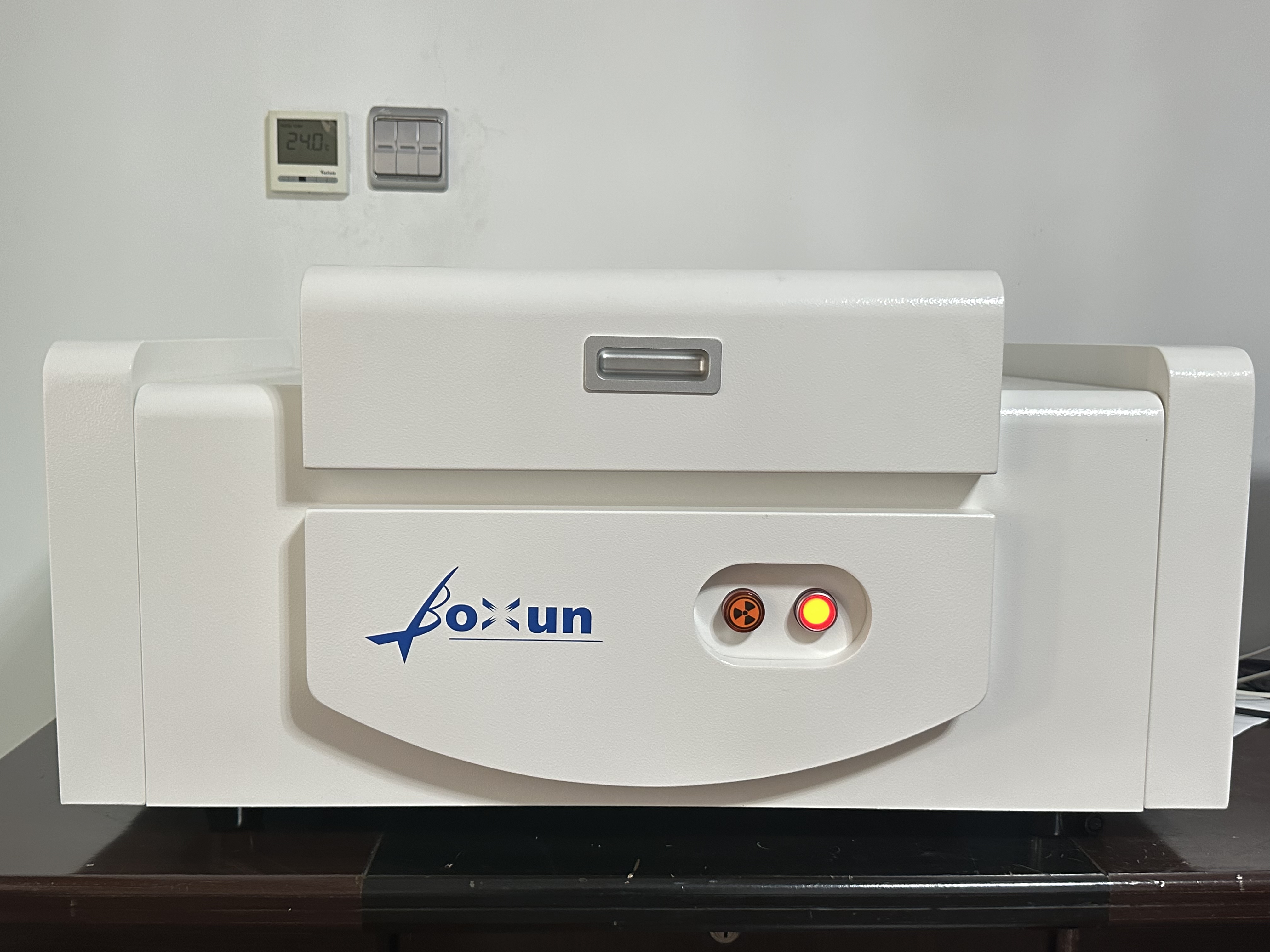
A published nominal pressure is only credible because of the testing behind it. Bozheng Valve applies a 100% hydrostatic test to every valve: the shell is tested at 30 bar and the seat at 22 bar. Both figures sit above the 16 bar nominal pressure, and the shell test at 30 bar is roughly 1.9 times the nominal class. The purpose is to validate casting integrity and closure sealing before shipment rather than after installation. Alongside the pressure test, every batch of raw brass is checked on a spectrometer, so the alloy grade in the finished body can be confirmed rather than assumed.
Why the Working Temperature Window Is 0°C to 80°C
The 0°C lower boundary matters more than most buyers expect. Brass does not become brittle at low temperature; the damage comes from trapped water freezing inside the valve cavity. Once liquid freezes in a closed body, the expansion is strong enough to crack the body — the failure mode associated with leakage or body breakage in cold-service installations. A 0°C floor is therefore a design statement, not a formality.
The 80°C upper boundary is driven by the sealing system. Seats, gaskets and packing in a valve declared for 0°C to 80°C are selected and tested against that range. Running above it accelerates seal ageing and shortens leak-free service life, unless a different configuration is confirmed with the manufacturer.
Neither boundary is a technical footnote. Together they describe an application band: domestic hot and cold water, HVAC circulation, low-pressure gas distribution, compressed air, swimming pool and water treatment loops, and industrial machinery circuits all sit inside it. Applications outside 0°C to 80°C — including the low-pressure steam and boiler loops that appear among the served industries — need case-by-case confirmation against actual operating conditions rather than an assumed rating.
Material Grades: HPb59-1, HPb57-3, CW617N and C83600
The pressure and temperature rating is only as stable as the alloy behind it. Bozheng Valve offers its 1.6 MPa brass valves in four published grades, and the choice between them is a specification decision rather than a performance hierarchy: all four are offered across the range at the same nominal pressure and temperature window.
| Grade | Availability in the range | Specification note |
|---|---|---|
| HPb59-1 | Ball, gate, globe, check, strainer and pressure reducing valve bodies | Common brass grade for Chinese and general export project specifications |
| HPb57-3 | Same product lines | Alternative grade where a 57-series copper content is specified |
| CW617N | Same product lines | Referenced in European specifications; standard European brass valves are manufactured according to EN 12165 (CW617N alloy) with parallel threads per ISO 228-1 |
| C83600 | Same product lines | Grade specified on projects that name a red-brass / bronze alloy in the bill of materials |
The practical risk is not picking the wrong grade from this list. It is receiving a body whose declared grade and actual grade do not match. That is why batch-level spectrometer testing matters more than the grade printed on a drawing: it converts a paper claim into a verifiable one, batch after batch. For repeat supply programmes — where a project is topped up over several years — consistent alloy sourcing is what keeps the pressure and temperature rating stable across deliveries.
End Connections and the System Interface
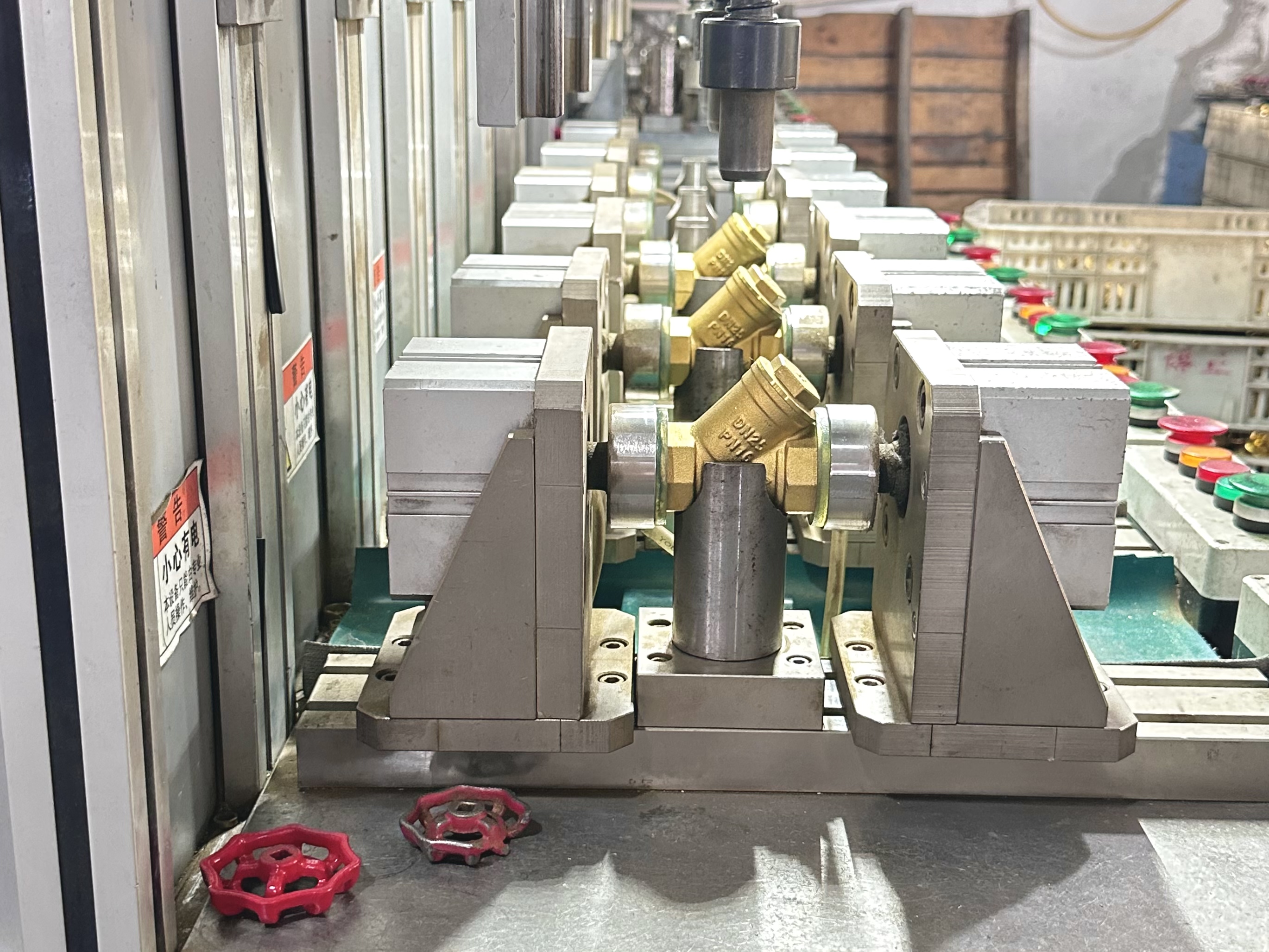
End connections determine whether the valve physically fits the pipeline, while the 1.6 MPa class defines what the joint has to hold. Bozheng brass ball valves are offered with threaded ends and flanged ends, in F-F, F-M and M-M configurations, with two-piece full-port, full-bore and lockable lever handle variants. Brass gate valves are supplied as rising-stem, solid-wedge, threaded-end valves, and brass globe valves use a straight-pattern body with a screw-in bonnet.
For European specifications, the relevant thread standard is ISO 228-1 parallel thread, which pairs with EN 12165 CW617N bodies in the standard European brass valve build. Matching the thread standard to the market is not cosmetic: a mismatch between valve thread and system thread becomes a leak path at 16 bar regardless of how well the body itself is made. The factory test regime covers this risk from the other side by pressurising the shell at 30 bar and the seat at 22 bar on every unit before it leaves.
Medium Suitability: Water, Gas and Adjacent Services
The declared working media for these valves are water and gas, at 0°C to 80°C and 1.6 MPa. Water and gas are not interchangeable duty in practice: gas service places stricter demands on body soundness and sealing than most water circuits, which is why pressure testing and material verification carry more weight in gas-side procurement than in general plumbing.
Within those two media, the published application scope lists construction and building (HVAC and plumbing), compressed air systems, low-pressure steam and boilers, oil and fuel systems, swimming pools and water treatment, and industrial machinery such as mould cooling and hydraulics. Where a project sits at the edge of this list, the temperature window is the first thing to confirm — not the pressure class.
Model-Level Reference: Bozheng's 1.6 MPa Brass Valve Range
Every model below shares the same declared pressure class, temperature window, media and material options, which makes the range straightforward to specify as a single package across a project.
| Product | Model | Nominal pressure | Working temperature | Working medium |
|---|---|---|---|---|
| Brass ball valve | Q11F-16T | 1.6 MPa | 0°C ≤ T ≤ 80°C | Water, gas |
| Brass gate valve | Z15W-16T | 1.6 MPa | 0°C ≤ T ≤ 80°C | Water, gas |
| Brass globe valve | J11W-16T, J11F-16T | 1.6 MPa | 0°C ≤ T ≤ 80°C | Water, gas |
| Brass check valve | H14X-16T | 1.6 MPa | 0°C ≤ T ≤ 80°C | Water, gas |
| Brass pressure reducing valve | Y13X-16T | 1.6 MPa | 0°C ≤ T ≤ 80°C | Water, gas |
| Brass strainer | SY11X-16T | 1.6 MPa | 0°C ≤ T ≤ 80°C | Water, gas |
Step-by-Step: How to Specify Against a 1.6 MPa Rating
- Establish steady-state system pressure, not peak spike pressure. A 1.6 MPa valve belongs on a line whose normal operating pressure sits below 16 bar, with surge and water-hammer effects treated as a separate design question.
- Fix the real operating temperature band. Confirm the fluid stays between 0°C and 80°C. Drain-down and freeze protection should be addressed at system level for any line exposed to sub-zero conditions.
- Select the alloy grade against the destination market. Choose from HPb59-1, HPb57-3, CW617N or C83600 according to the project specification, then require batch-level verification rather than a certificate of grade alone.
- Match the end connection to the pipeline standard. Decide threaded or flanged, and confirm the thread standard — ISO 228-1 parallel thread where European specification applies — before quoting.
- Choose the valve type by function, not by habit. Ball for isolation, gate for straight-line shutoff, globe for throttling, check for backflow prevention, strainer for debris protection, pressure reducing valve for downstream pressure control.
- Verify the evidence trail. Ask for 100% hydrostatic test data (shell 30 bar, seat 22 bar), spectrometer records per raw-material batch, batch numbers traceable on the valve body itself, and a test report supplied with each shipment.
- Lock the parameters for repeat orders. For multi-phase projects, the specification that matters is the one that survives the third and fourth delivery unchanged.
Use Cases Where the 1.6 MPa Class Fits
| Application | Why the rating fits | Typical valve types |
|---|---|---|
| Building plumbing and domestic water | Mains water pressure normally sits well below 16 bar; 0°C to 80°C covers hot and cold supply | Ball, gate, check, strainer |
| HVAC and heating circuits | Circulation temperatures remain inside the 80°C ceiling | Ball, globe, pressure reducing valve |
| Low-pressure gas distribution | Gas is a declared working medium with the same ratings | Ball, gate, check |
| Irrigation and swimming pool loops | Water medium within ordinary ambient temperature range | Ball, gate, check, strainer |
| Compressed air and mould cooling | Industrial machinery circuits operating inside the pressure and temperature window | Ball, globe, check |
| Oil and fuel systems | Listed application scope at the same nominal class | Ball, gate, check |
Comparison: Documented Supplier Practice vs. Unverified Workshop Supply
The gap between a documented 1.6 MPa valve and an unverified one rarely shows up in the catalogue figure. It shows up in what happens after installation, and the differences are measurable rather than rhetorical.
| Evaluation dimension | Documented supplier practice (Bozheng Valve) | Unverified workshop supply |
|---|---|---|
| Material control | Spectrometer test on every raw material batch | Poor material control, no recorded verification |
| Factory testing | 100% hydrostatic test — shell 30 bar, seat 22 bar | No recorded testing |
| Traceability | Batch number traceable on every valve; test report with each shipment | Not traceable |
| Leakage performance | Full pressure and seal verification before shipment | Leakage rate recorded at 10% |
| Unit price | Reference price basis | Approximately 3% lower |
| Maintenance interval | Service life consistent with the declared rating | Frequent failure, replacement every 3–4 months |
| Best fit | Water and gas systems at 1.6 MPa, 0°C to 80°C | Low pressure, non-critical, temporary use |
The 3% price difference is the smallest number in that table, and it is the one that most often decides a purchase. The maintenance interval and the leakage rate are the numbers that actually set the cost of ownership over a project's life.

Frequently Asked Questions
What documentation should come with a 1.6 MPa brass valve?
Bozheng Valve supplies a test report with each shipment, applies a 100% hydrostatic test (shell 30 bar, seat 22 bar), runs a spectrometer test on every raw material batch, and marks a traceable batch number on every valve. ISO 9001:2015 quality management system certification is held by Zhejiang Bozheng Copper Industry Co., Ltd., established in 1998.
Why is the declared working temperature limited to 0°C to 80°C instead of a wider range?
Because the valve is validated against that specific window. Below 0°C, freezing water inside a closed body can crack it; above 80°C, the seat and gasket materials run past the range they were selected and tested for. The window is a declared operating envelope for water and gas service at 1.6 MPa, not an arbitrary catalogue figure.
How do I choose between HPb59-1, HPb57-3, CW617N and C83600?
All four grades are offered across the 1.6 MPa brass valve range at the same nominal pressure and temperature window, so the decision is driven by the specification of the destination market and the customer's bill of materials. For European specifications, CW617N is the reference grade under EN 12165, with parallel threads per ISO 228-1 where that standard applies.
Can I validate a batch before committing to a production order?
Yes. The minimum order quantity is 1 unit for stock goods, which allows a sample to be checked against the project requirement before volume ordering. Pre-shipment testing is part of the standard process, and the resulting test data accompanies the goods.
What do lead time and supply continuity look like for long-term programmes?
Monthly production capacity is 30,000 units with a typical production lead time of 30 days. Payment terms are 30/70, delivery is available on FOB or CIF terms, and the minimum order quantity is 1 unit for stock goods — a structure that suits both sample orders and scheduled repeat deliveries. For projects that run across multiple phases, request a specification review before the first order so the same rating, grade and thread standard carry through every subsequent shipment.
Conclusion
Reading a brass valve correctly means reading two numbers together. The 1.6 MPa marking sets a 16 bar nominal class, verified on every unit by a shell test at 30 bar and a seat test at 22 bar. The 0°C to 80°C window sets the temperature envelope for water and gas service, and it is the boundary that most installations actually come close to. Alloy grade, end connection and test documentation then decide whether that rating holds on delivery three, four and five — which is the point at which a technical rating becomes a supply relationship question.
Next step: download the full Bozheng brass valve catalogue with model-level specifications, or request a sample and quotation against your project parameters.
Bozheng Valve Catalogue 2025 (PDF) | bozheng-valve.com | WhatsApp: +86 15900722351 | Email: bo_zheng123@outlook.com

Have Questions or Need More Details?
Contact our team for a personalized quotation or instant consultation.
Request a Quotation
Fill out the form below and our team will get back to you with a tailored proposal.
WhatsApp Direct Chat
Prefer to chat in real-time? Message us on WhatsApp for instant assistance & quick answers.
- Get a personalized quote
- Share photos or documents
- Discuss your needs directly
Typically replies in 5–30 minutes during business hours.