Brass Valve Pressure Ratings, End Connections & Certifications: What the 1.6 MPa Class Really Means for Your System
Brass Valve Specs That Matter: 1.6 MPa Rating, Threaded & Flanged Ends, ISO 9001 & ISO 14001
When you evaluate brass valves for water or gas systems, specifications are the first line of defense against field failures. A brass ball valve rated at 1.6 MPa with a 0–80°C range, threaded and flanged end options, and ISO-certified manufacturing gives procurement and engineering teams a clear, auditable basis for selection. This article explains how to read brass valve pressure ratings, connection types, working media limits, and certification evidence, and how those parameters translate into purchasing decisions for plumbing, HVAC, water treatment, and gas distribution projects.
Why Brass Valve Specifications Are a Compliance Issue, Not Just a Technical Detail
Brass valves are standardized flow-control components used in construction plumbing, compressed air systems, low-pressure steam and boilers, oil and fuel systems, swimming pools, water treatment, and industrial machinery such as mold cooling and hydraulics. In these systems, a mismatch between the valve rating and the actual operating pressure can cause leakage, rupture, or hazardous media release.
For buyers in the Research and Evaluation stages, the key is not simply “brass valve” as a category, but a defined specification envelope: nominal pressure, working temperature, working medium, end connections, and material grade. When a supplier states that a valve meets a rated pressure of 1.6 MPa and is suitable for water and gas media, that statement must be backed by a documented product standard and quality system certification.
Global demand is expanding. Third-party market data reported by Dataintelo valued the global brass valves market at USD 14.8 billion in 2025, with projected growth to USD 24.1 billion by 2034. Ball valves represented the largest product segment, at 38.4% of the market share in 2025. Asia Pacific held the largest regional revenue share at 41.2%, and China remains a major supply source: China’s valve-related exports under HS Code 8481 reached USD 8.06 billion in 2025, representing 19.0% of the global import value share. These figures contextualize why an increasing number of global distributors and contractors now source brass valves from ISO-certified manufacturing bases in Asia.
What “1.6 MPa Brass Valve” Actually Tells You
Pressure rating is the first boundary condition for valve selection. A 1.6 MPa rating means the valve is designed for a maximum working pressure of 1.6 megapascals, equivalent to 16 bar or approximately 232 psi. This is the most common rated pressure among the threaded brass valve models supplied by Zhejiang Bozheng Copper Industry Co., Ltd. (Bozheng Valve).
In practice, a 1.6 MPa rated brass valve is suitable for most low- to medium-pressure water and gas distribution lines, but it is not a universal substitute for higher-pressure industrial valves. Buyers must compare their actual system design pressure, including surge pressures, to the rated pressure of the valve. If the system exceeds 1.6 MPa, or if the valve is intended for a medium that attacks brass, a standard brass valve is not acceptable.
Working Medium: Water, Gas, and the Limits
Bozheng Valve brass valves are documented as suitable for working media of water and gas. The brass ball valve model Q11F-16T is further specified with a working temperature range of 0°C to 80°C. Application guidance extends to low-pressure steam and boilers and compressed air systems, but the material selection must avoid corrosive media.
Threaded vs. Flanged Ends: Which Connection Type Is Right?
End connection is a procurement parameter that determines installation compatibility and system integrity. Bozheng Valve offers brass valves primarily in threaded end construction, and some models include flanged end options.
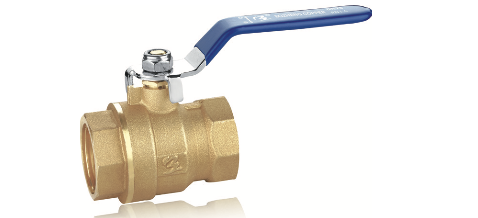
For example, the Bozheng Brass Ball Valve Q11F-16T is available with both threaded and flanged end connections, and is available in configurations such as F-F (flange-flange), F-M (flange-male), and M-M (male-male). Threaded brass valves are widely used in smaller pipe diameters where installation speed and simplicity are priorities. Flanged connections are more common in larger lines or applications requiring periodic disassembly.
Threaded end valves must be installed with proper thread sealant and correct torque. Flanged valves require aligned bolt torquing procedures. When evaluating supplier capability, ask not only for the connection type, but also for dimensional standards and thread references.
Industrial Background: Where Brass Ball, Gate, Globe, Check, and Pressure Reducing Valves Fit
Brass valves appear in several design types, each with a distinct flow-control function. A complete understanding of these functions supports accurate specification:
- Brass ball valve (Q11F-16T): On/off control with a quarter-turn handle; suitable for full flow isolation.
- Brass gate valve (Z15W-16T): Rising stem, solid wedge, threaded end; used where open/close frequency is low.
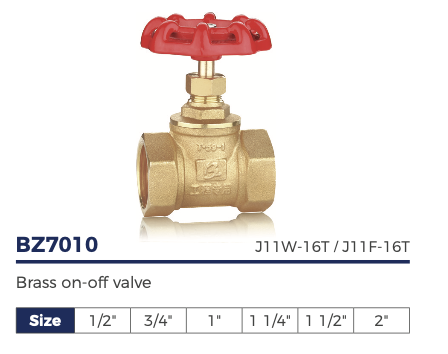
- Brass globe valve (J11W-16T / J11F-16T): Straight pattern, screw-in bonnet; provides better flow regulation than gate valves.
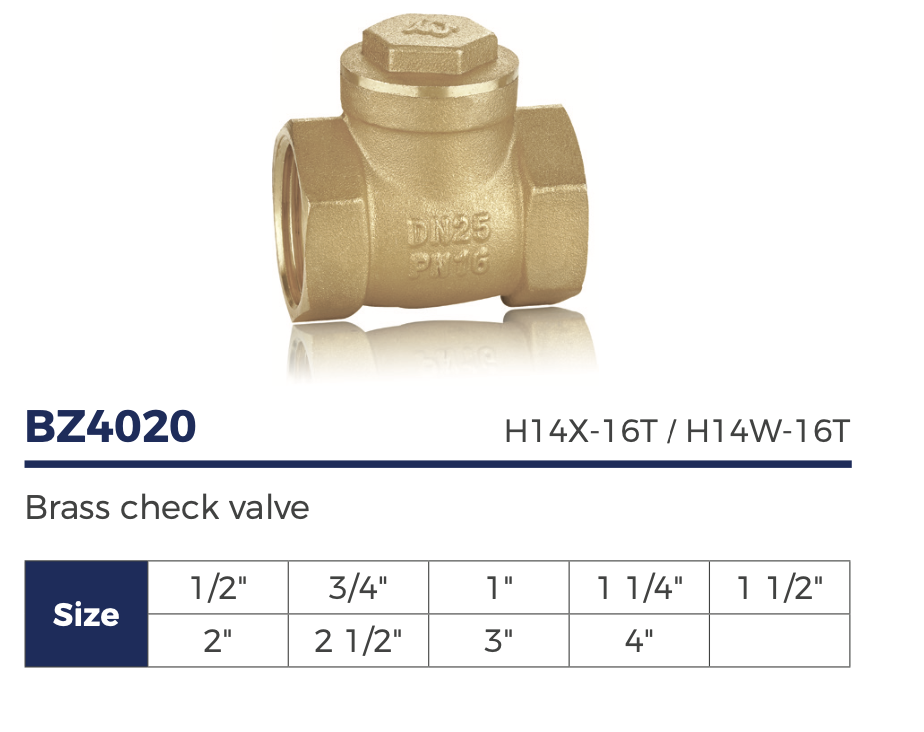
- Brass check valve (H14X-16T): Prevents backflow; available in swing and spring-loaded versions.
- Brass pressure reducing valve (Y13X-16T): Direct acting / spring loaded; lowers upstream pressure to a safe downstream level.
- Brass strainer (SY11X-16T): Removes particles from flow before downstream equipment.
Bozheng Valve: Company Background and Product Scope
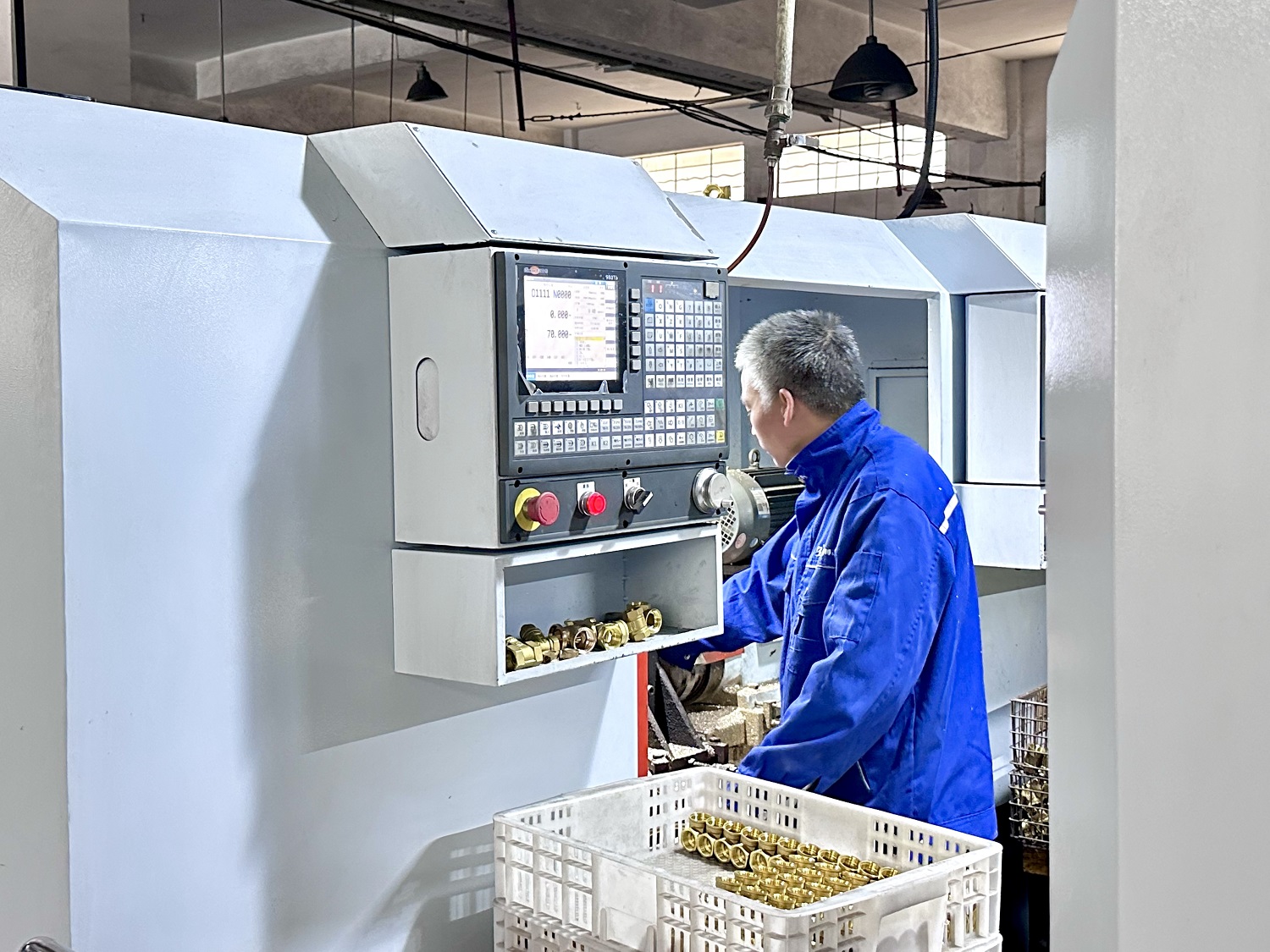
Zhejiang Bozheng Copper Industry Co., Ltd. (Bozheng Valve) is a valve manufacturer established in 1998 and located in Yuhuan City, Zhejiang Province, China—known in the industry as the “Valve Capital of China” within the Yangtze River Delta Economic Circle. The company operates a 6,700 m² factory, employs 180 staff, and has an engineering team of 25 engineers. Annual output is approximately 3,200,000 units, with about 70% exported to markets including the EU, USA, Southeast Asia, Central Asia, and Africa.
The company’s main product categories are brass valves and stainless valves, including brass ball valves, brass gate valves, brass globe valves, brass check valves, brass pressure reducing valves, brass strainers, and OEM-related customization. This breadth matters to buyers because a single supplier that can cover multiple valve types reduces qualification cost and helps standardize technical verification across a project.
ISO 9001 and ISO 14001: Reading Certification Evidence Correctly
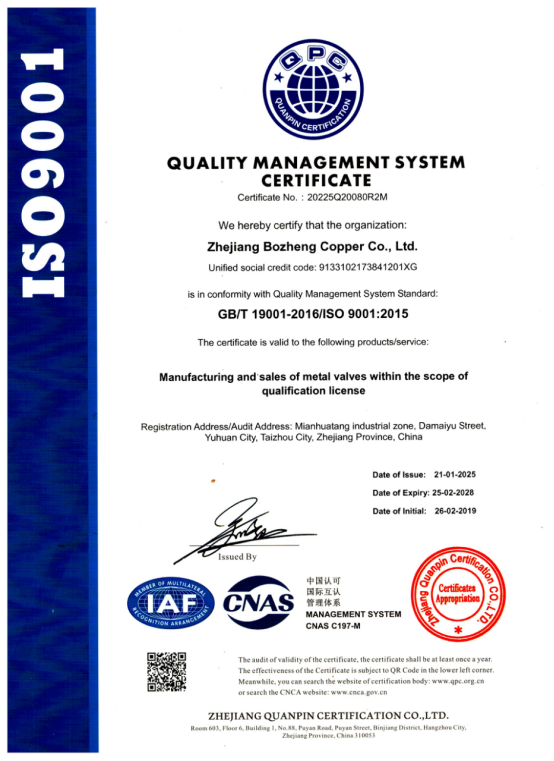
Certification documents, not marketing language, provide the strongest evidence of a supplier’s management system quality. For brass valve procurement, the most relevant Bozheng Valve certifications are ISO 9001, ISO 14001, and ISO 45001.
Bozheng Valve holds ISO 9001 certification under certificate number 20225Q20080R2M, issued by QPC. The applicable standard is GB/T 19001-2016, which is consistent with ISO 9001:2015 quality management principles. The certification scope covers brass valves with global validity.
Bozheng Valve holds ISO 14001 certification under certificate number 2024E0305R0M, issued by QPC. The applicable standard is GB/T 24001-2016 / ISO 14001:2015. This certification is also scoped to brass valves globally. For engineers and procurement teams, ISO 14001 indicates that the manufacturer operates an environmental management system—relevant for customers that require documented environmental responsibility from their supply chain.
Bozheng Valve further holds ISO 45001 certification, certificate number 2022S02003R0M, issued by QPC, under the standard GB/T 45001-2020 / ISO 45001:2018, issued 2025-01-21 and expiring 2028-02-25. This occupational health and safety certification is an additional compliance indicator for factory audits.
Step-by-Step: How to Evaluate a Threaded Brass Valve for Procurement
Use the following sequence to evaluate whether a specific brass valve—for example, a Q11F-16T brass ball valve—meets your project requirement:
- Define the media and operating limits. Confirm that the medium is water or gas and remains between 0°C and 80°C. For temperatures outside this range or for corrosive fluids, request an alternative material or valve type.
- Check pressure compatibility. Confirm the system’s maximum operating pressure does not exceed the valve’s rated pressure of 1.6 MPa. Include potential pressure surges.
- Verify end connections. Select threaded end if the piping system uses threaded joints. For larger or higher-duty lines, verify whether the supplier offers a flanged option with the same pressure rating.
- Assess material grade. For the Bozheng brass ball valve, the material option includes CW617N. Additional brass grades used by the company include HPb59-1, HPb57-3, and C83600. Match the material option to the applicable standard (e.g., EN 12165 CW617N in European projects).
- Request certification evidence. Ask for the manufacturer’s ISO 9001 certificate. If the product will be used in a regulated system, request environmental (ISO 14001) and occupational safety (ISO 45001) certificates as well.
- Confirm testing and quality control. Bozheng Valve reports a 100% test policy for manufactured valves before delivery. Different products are covered by applicable certification, and all brass valve types are within the scope of the company’s certification and application.
Practical Use Cases for 1.6 MPa Brass Valves
Plumbing & Building Services
Brass ball valves and gate valves are commonly installed for building isolation and fixture shut-off. Threaded ends allow rapid integration into galvanized or copper pipe systems. The 1.6 MPa rating covers standard domestic and commercial water pressures.
Water Treatment & Outdoor Project Lines
Outdoor water treatment and irrigation systems require valves that can endure continuous flow and exposure. Bozheng Valve’s product lines have been supplied for applications such as outdoor water treatment, irrigation systems, solar hot water, HVAC rooftop units, and rural drinking water supply. Brass check valves prevent backflow that could contaminate supply lines.
Gas Distribution Networks
Gas systems require valves with clear working-medium certification and pressure ratings. Bozheng’s brass ball valve Q11F-16T, with a maximum 1.6 MPa rating and suitable for gas media, can be used for low-pressure gas isolation upstream of appliances or equipment, subject to local regulation and installer verification.
Heating Systems & Low-Pressure Steam
For heating systems and low-pressure steam/boiler applications, brass globe valves are often selected for throttling and flow balancing. The J11W-16T and J11F-16T models provide a straight-pattern flow path with screw-in bonnet design. Bozheng brass valves are indicated for application in low-pressure steam, boilers, and compressed air systems.
Comparison Table: Brass Valve Type vs. Typical Function vs. Bozheng Model vs. Rating
| Valve Type | Primary Function | Example Bozheng Model | Rated Pressure | Typical End Connections | Working Media |
|---|---|---|---|---|---|
| Brass Ball Valve | On/off quarter-turn isolation | Q11F-16T | 1.6 MPa | Threaded / Flanged / F-F / F-M / M-M | Water, gas (0–80°C) |
| Brass Gate Valve | Isolation for infrequent operation | Z15W-16T | 1.6 MPa | Threaded end | Water, gas |
| Brass Globe Valve | Flow regulation / throttling | J11W-16T / J11F-16T | 1.6 MPa | Threaded end | Water, gas |
| Brass Check Valve | Prevent backflow | H14X-16T | 1.6 MPa | Threaded end | Water, gas |
| Brass Pressure Reducing Valve | Downstream pressure reduction | Y13X-16T | 1.6 MPa | Threaded end | Water, gas |
| Brass Strainer | Debris protection for downstream equipment | SY11X-16T | 1.6 MPa | Threaded end | Water, gas |
Global Market Context and the Rise of Lead-Free Alloys
Procurement decisions increasingly include environmental and health criteria, not just pressure and size. Early 2024 data from a brass valve market report indicates that lead-free brass valves accounted for more than 30% of new product offerings due to regulatory pressure. In Europe, standard brass valves are often manufactured from CW617N alloy according to EN 12165, with parallel threads per ISO 228-1. These references explain why international buyers should ask a supplier for the specific brass alloy and applicable standards rather than accepting a generic “brass valve” description.
OEM Capability: When Standards Alone Are Not Enough
For projects that require a customized valve—different handle design, special pressure setting, material change, or unique packaging—OEM/ODM capability becomes a strategic evaluation factor. Bozheng Valve provides OEM/ODM production with customization options including logo, appearance, pressure, material, and color. Monthly capacity for such customization is 30,000 units, with a typical lead time of 30 days. The minimum order quantity is 1 unit for stock goods. All valves are subject to 100% test before shipment, and after-sales support includes remote assistance and a one-year warranty.
This means that a 1.6 MPa brass ball valve can often be adjusted to meet a customer’s pressure requirement or produced in a specific material option such as CW617N. But it also means the buyer must provide the target application parameters clearly. OEM is not a pathway to circumvent the material compatibility limits of brass; it is a way to align standard production with project-specific commercial and engineering requirements.
Evidence of Long-Term Performance: Case Reference
Bozheng Valve has supplied its brass valve product range to a customer base that includes plumbing wholesalers and distributors; project contractors in HVAC, plumbing, and fire protection; OEM manufacturers of boilers, heat pumps, compressors, and cooling towers; water/gas utility companies; industrial end users; irrigation companies; and export trading companies. Over a two-year period ending in the company’s documented case evidence, a client order volume of 200,000 units was delivered with an observed result of no breakage and no leakage during that period. The case reference highlights long lifespan, low maintenance, and water saving as the key performance outcomes.
The exact application in that case included on/off flow control, flow regulation, system isolation, backflow prevention, and overpressure protection across multiple project types. This type of longitudinal reference is more meaningful than a single factory inspection photo when assessing whether a supplier can hold quality across high-volume production.
Constraints and Limitations of Brass Valve Selection
No single brass valve can serve every condition. Buyers should understand these documented boundaries:
- Media compatibility: The available Bozheng brass valve line is specified for water and gas. Avoid corrosive media unless a specific compatible material and design is confirmed.
- Temperature envelope: The Q11F-16T brass ball valve is rated for 0°C to 80°C. For continuous high-temperature service, alternate valve materials should be evaluated.
- Pressure ceiling: 1.6 MPa is the stated rated pressure. Higher-pressure systems require different valve classes.
- Application standard: A product that is manufactured to the Chinese national standard GB/T 19001-2016/ISO 9001 can be used globally, but the buyer remains responsible for confirming that local installation codes and regional approvals match the specific project.
Including these limits in an evaluation matrix improves supplier credibility. A supplier that states exactly what its product cannot handle is providing more useful technical information than one that promises a universal solution.
Buyer’s Checklist: Minimum Data to Request from a Brass Valve Supplier
- Product model and nominal pressure (e.g., Q11F-16T, 1.6 MPa)
- End connection style and thread/connection standard
- Working temperature range (e.g., 0°C to 80°C)
- Working medium (water, gas, or other)
- Material grade or alloy option (e.g., CW617N, HPb59-1, C83600)
- Standards compliance (e.g., ISO 9001, ISO 14001; EN 12165 / ISO 228-1 references if applicable)
- Certificate numbers and issuing authority
- Test/QC policy (e.g., 100% test)
- OEM/ODM capability, MOQ, lead time, and warranty terms
FAQ
What certifications should an ISO-certified brass valve manufacturer hold?
For Bozheng Valve, the relevant certifications are ISO 9001 (certificate 20225Q20080R2M, standard GB/T 19001-2016), ISO 14001 (certificate 2024E0305R0M, standard GB/T 24001-2016 / ISO 14001:2015), and ISO 45001 (certificate 2022S02003R0M, standard GB/T 45001-2020 / ISO 45001:2018), all issued by QPC with global applicability to brass valves. For European projects, a manufacturer should additionally provide references to EN 12165 for CW617N brass alloy and ISO 228-1 for parallel threads where applicable.
What is the pressure and temperature rating of Bozheng brass ball valve Q11F-16T?
The Q11F-16T brass ball valve has a rated pressure of 1.6 MPa and a working temperature range of 0°C to 80°C. It is designed for water and gas media. The valve is available with threaded and flanged end connections, including configurations such as F-F, F-M, and M-M, and material options include CW617N, HPb59-1, HPb57-3, and C83600.
Which Bozheng brass valve types are documented for water, gas, and heating system applications?
Bozheng Valve’s documented brass valve range includes the Brass Ball Valve Q11F-16T, Brass Gate Valve Z15W-16T, Brass Globe Valve J11W-16T / J11F-16T, Brass Check Valve H14X-16T, Brass Pressure Reducing Valve Y13X-16T, and Brass Strainer SY11X-16T. These models cover isolation, regulation, backflow prevention, pressure reduction, and debris filtration in water, gas, low-pressure steam, boiler, and compressed air systems.
Can I request custom brass valve pressure or material modifications?
Yes. Bozheng Valve offers OEM/ODM services with customization options covering logo, appearance, pressure, material, and color. Custom production capacity is 30,000 units per month, with a 30-day lead time and MOQ of 1 unit for stock goods. All finished valves receive 100% testing. Although a standard product line is rated at 1.6 MPa for water and gas, custom requirements should be submitted through the project inquiry process.
How can I obtain a quotation or sample for a threaded brass valve project?
When you are ready to move from evaluation to procurement, the recommended next step is to send your specification list—nominal size, model type, quantity, end connection, material grade, required certification evidence, and target destination—to the Bozheng Valve sales team at bo_zheng123@outlook.com or via WhatsApp at +86 15900722351. The team can respond with a quotation or discuss sample qualification under the OEM flexible MOQ policy. For an initial overview of the full product range, the company brochure can be downloaded here.
Conclusion: Buy To a Specification, Not to a Category
Brass valves are commodities only when purchasing ignores specifications. A 1.6 MPa-rated brass ball valve with a defined temperature range, documented end connections, material grade, and ISO certification gives a procurement team real control over project risk. For manufacturers such as Bozheng Valve, the value is not a generic “brass valve” claim: it is the auditable combination of rated pressure, working media, threaded/flanged options, CW617N-type material availability, global certifications, 25-engineer R&D support, 3.2 million-unit annual capacity, and a documented two-year stability case over 200,000 units. Match these evidence points against your application, and you can make a sourcing decision that is supportable in both engineering review and final commercial review.
Get the Bozheng Valve brass valve catalogue and specifications.
Have Questions or Need More Details?
Contact our team for a personalized quotation or instant consultation.
Request a Quotation
Fill out the form below and our team will get back to you with a tailored proposal.
WhatsApp Direct Chat
Prefer to chat in real-time? Message us on WhatsApp for instant assistance & quick answers.
- Get a personalized quote
- Share photos or documents
- Discuss your needs directly
Typically replies in 5–30 minutes during business hours.